
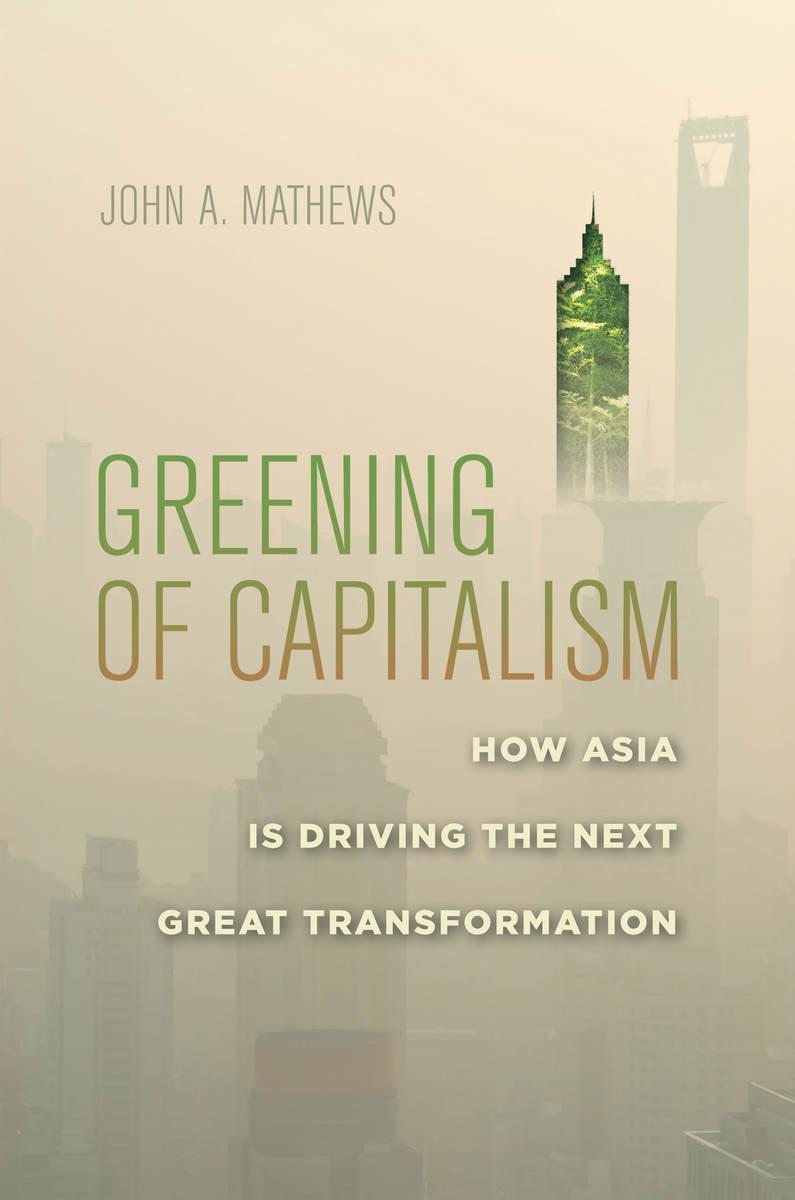
As China, India, and other industrializing giants grow, they are confronted with an inconvenient truth: They cannot rely on the conventions of capitalism as we know them today. Western industrialism has achieved miracles, promoting unprecedented levels of prosperity and raising hundreds of millions out of poverty. Yet, if allowed to proceed unencumbered, this paradigm will do irreversible harm to the planet.
By necessity, a new approach to environmentally conscious development is already emerging in the East, with China leading the way. Positioning its argument against zero-growth advocates and free-market environmentalists, Greening of Capitalism charts this transformation and sketches out a framework for more sustainable capitalism.
State-mandated changes in energy use (as opposed to carbon taxes), a circular flow of resources (as opposed to emissions standards), and the introduction of new financial instruments that support green growth are cornerstones of China's framework. John A. Mathews argues that these tenets will be emulated around the world—first in India and Brazil. In light of this emerging shift, Mathews considers core debates over national security, international relations, and economic policy, ultimately addressing the question of whether these measures will be far-reaching or timely enough to prevent further damage.
Płać wygodnie kartą, Klarną, Apple Pay lub Google Pay. Nie jesteś zadowolony? Zawsze masz 14-dniową gwarancję zwrotu pieniędzy. Więcej przeczytasz w naszych warunkach. Masz pytania? Napisz do nas na hello@memmo.org.
Memmo ułatwia naukę – gdziekolwiek jesteś na świecie. U nas znajdziesz podręczniki i sprytne narzędzia do nauki w jednym miejscu: streszczenia, quizy, podcasty i fiszki. A do tego Ted, Twój kumpel do nauki, który odpowie na wszystko, co Cię nurtuje. Ponad 50 000 studentów już tu się uczy – stworzone, byś uczył się szybciej i mniej stresował.