
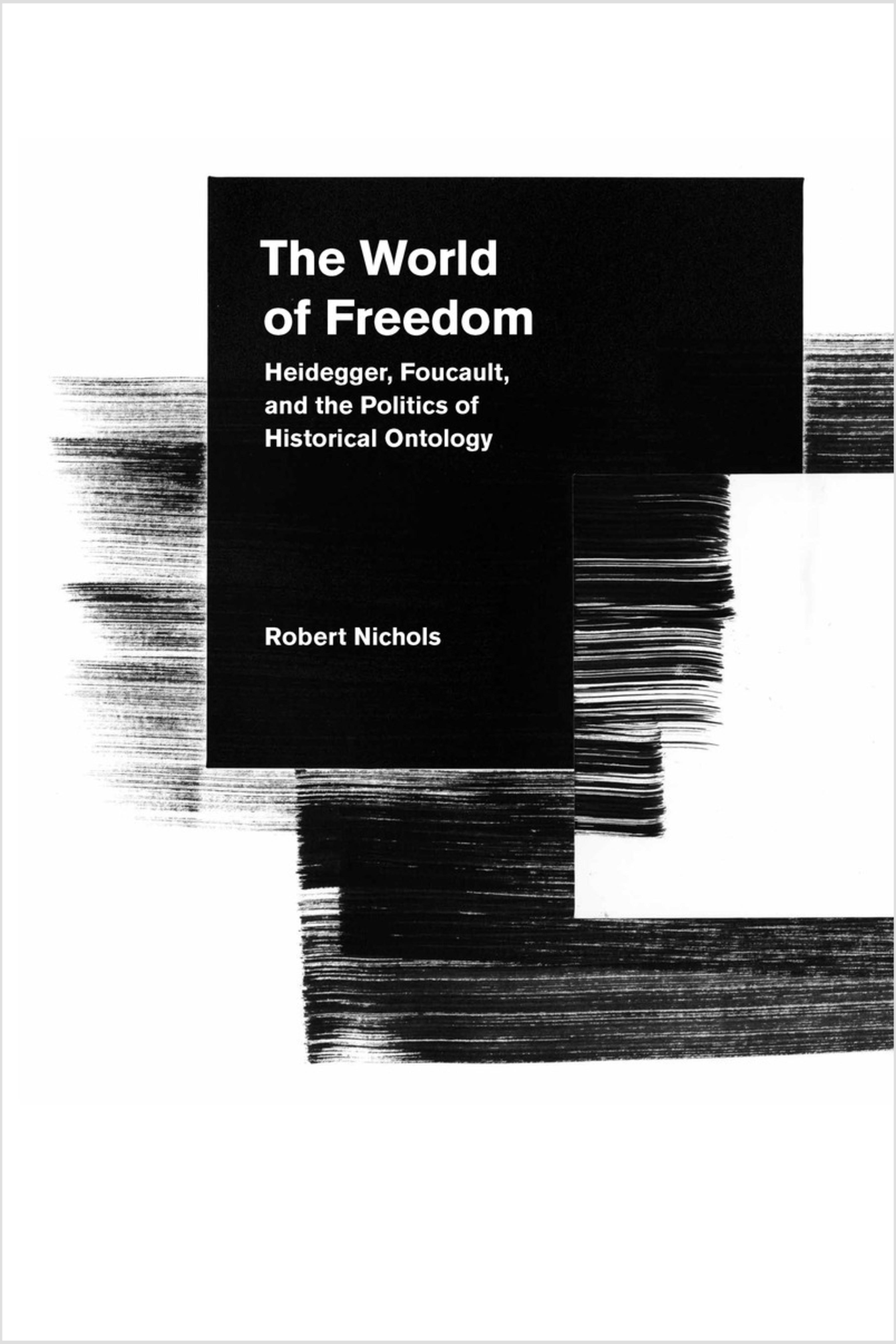
Martin Heidegger and Michel Foucault are two of the most important and influential thinkers of the twentieth century. Each has spawned volumes of secondary literature and sparked fierce, polarizing debates, particularly about the relationship between philosophy and politics. And yet, to date there exists almost no work that presents a systematic and comprehensive engagement of the two in relation to one another. The World of Freedom addresses this lacuna.
Neither apology nor polemic, the book demonstrates that it is not merely interesting but necessary to read Heidegger and Foucault alongside one another if we are to properly understand the shape of twentieth-century Continental thought. Through close, scholarly engagement with primary texts, Robert Nichols develops original and demanding insights into the relationship between fundamental and historical ontology, modes of objectification and subjectification, and an ethopoetic conception of freedom. In the process, his book also reveals the role that Heidegger's reception in France played in Foucault's intellectual development—the first major work to do so while taking full advantage of the recent publication of Foucault's last Collège de France lectures of the 1980s, which mark a return to classical Greek and Roman philosophy, and thus to familiar Heideggerian loci of concern.
Płać wygodnie kartą, Klarną, Apple Pay lub Google Pay. Nie jesteś zadowolony? Zawsze masz 14-dniową gwarancję zwrotu pieniędzy. Więcej przeczytasz w naszych warunkach. Masz pytania? Napisz do nas na hello@memmo.org.
Memmo ułatwia naukę – gdziekolwiek jesteś na świecie. U nas znajdziesz podręczniki i sprytne narzędzia do nauki w jednym miejscu: streszczenia, quizy, podcasty i fiszki. A do tego Ted, Twój kumpel do nauki, który odpowie na wszystko, co Cię nurtuje. Ponad 50 000 studentów już tu się uczy – stworzone, byś uczył się szybciej i mniej stresował.