
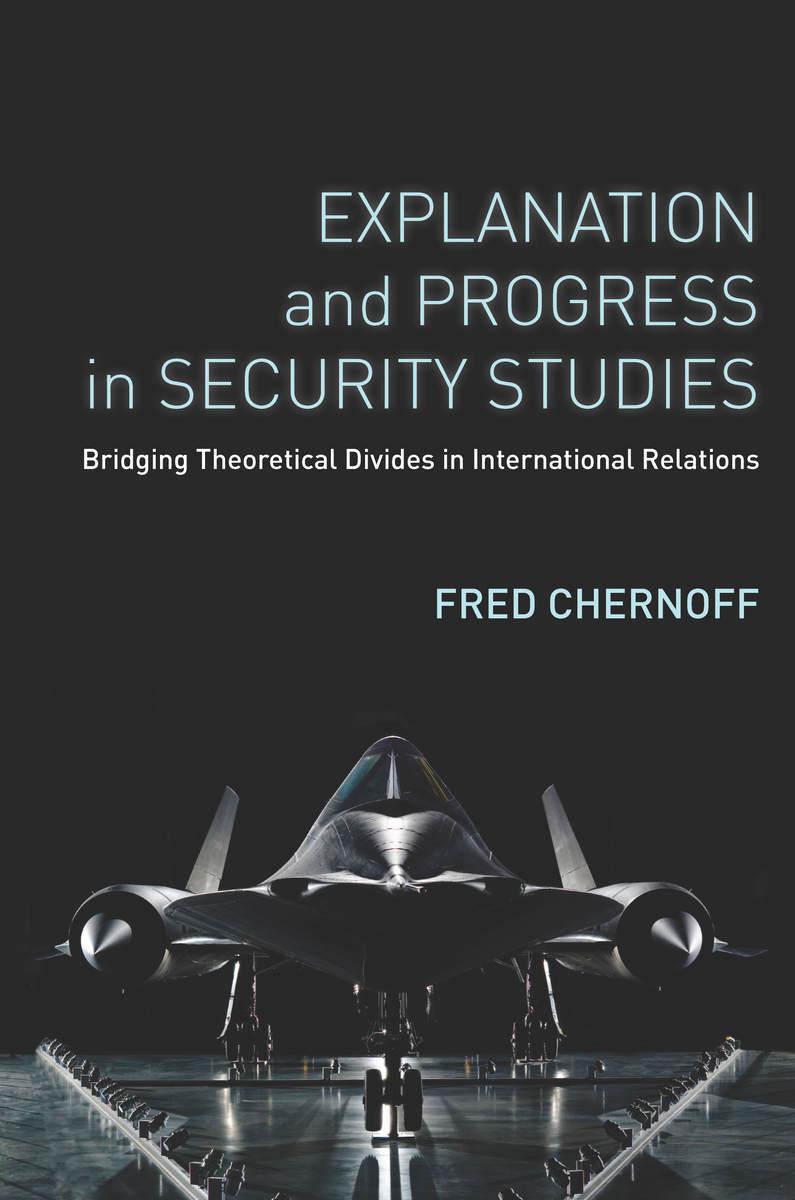
Explanation and Progress in Security Studies asks why Security Studies, as a central area of International Relations, has not experienced scientific progress in the way natural sciences have—and answers by arguing that the underlying reason is that scholars in Security Studies have advanced a range of different notions of "explanation" or different criteria of "explanatory superiority" to show that their positions are better than rival positions.
To demonstrate this, the author engages in in-depth content analysis of the generally recognized exemplars of explanation and explanatory superiority in three of the core debates in the disciplines: Why do states pursue policies of nuclear proliferation? Why do states choose to form the alliances they do? And why do liberal democratic states behave the way they do toward other liberal democracies?
The book reveals that authors in the debates that have shown the most progress use similar criteria in arguing for and against the key explanations. In the nuclear proliferation debate, there is wide divergence in the criteria the most visible authors use, and there is wide divergence in the explanations offered. In the alliance formation/balance-of-power debate, there is some overlap of criteria the most important authors use, and there has been some limited movement toward consensus. In the democratic peace debate there has been much more overlap of criteria the most prominent authors use, and there is agreement on both some positive and negative conclusions.
Płać wygodnie kartą, Klarną, Apple Pay lub Google Pay. Nie jesteś zadowolony? Zawsze masz 14-dniową gwarancję zwrotu pieniędzy. Więcej przeczytasz w naszych warunkach. Masz pytania? Napisz do nas na hello@memmo.org.
Memmo ułatwia naukę – gdziekolwiek jesteś na świecie. U nas znajdziesz podręczniki i sprytne narzędzia do nauki w jednym miejscu: streszczenia, quizy, podcasty i fiszki. A do tego Ted, Twój kumpel do nauki, który odpowie na wszystko, co Cię nurtuje. Ponad 50 000 studentów już tu się uczy – stworzone, byś uczył się szybciej i mniej stresował.