
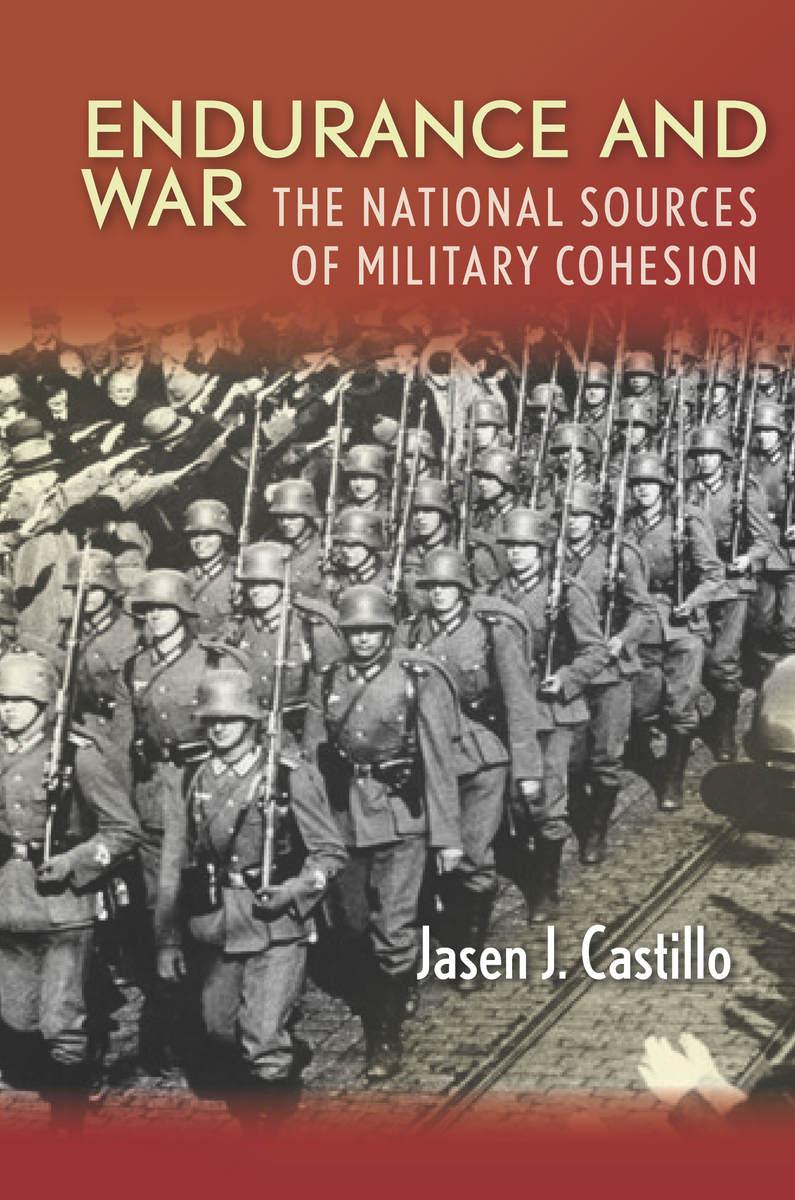
Scholars and military practitioners alike have long sought to understand why some country's militaries fight hard when facing defeat while others collapse. In Endurance and War, Jasen Castillo presents a new unifying theory—cohesion theory—to explain why national militaries differ in their staying power. His argument builds on insights from the literatures on group solidarity in general and military effectiveness in particular, which argue that the stronger the ties binding together individuals in a group of any kind, the higher the degree of cohesion that a group will exhibit when taking collective action, including fighting in war. Specifically, he argues that two types of ties determine the cohesion, and therefore the resilience, of a nation's armed forces during war: the degree of control a regime holds over its citizens and the amount of autonomy the armed forces possess to focus on training for warfighting.
Understanding why armed forces differ in their cohesion should help U.S. military planners better assess the military capabilities of potential adversaries, like Iran and North Korea. For scholars of international politics, cohesion theory can help provide insights into how countries create military power and how they win wars.
Płać wygodnie kartą, Klarną, Apple Pay lub Google Pay. Nie jesteś zadowolony? Zawsze masz 14-dniową gwarancję zwrotu pieniędzy. Więcej przeczytasz w naszych warunkach. Masz pytania? Napisz do nas na hello@memmo.org.
Memmo ułatwia naukę – gdziekolwiek jesteś na świecie. U nas znajdziesz podręczniki i sprytne narzędzia do nauki w jednym miejscu: streszczenia, quizy, podcasty i fiszki. A do tego Ted, Twój kumpel do nauki, który odpowie na wszystko, co Cię nurtuje. Ponad 50 000 studentów już tu się uczy – stworzone, byś uczył się szybciej i mniej stresował.