
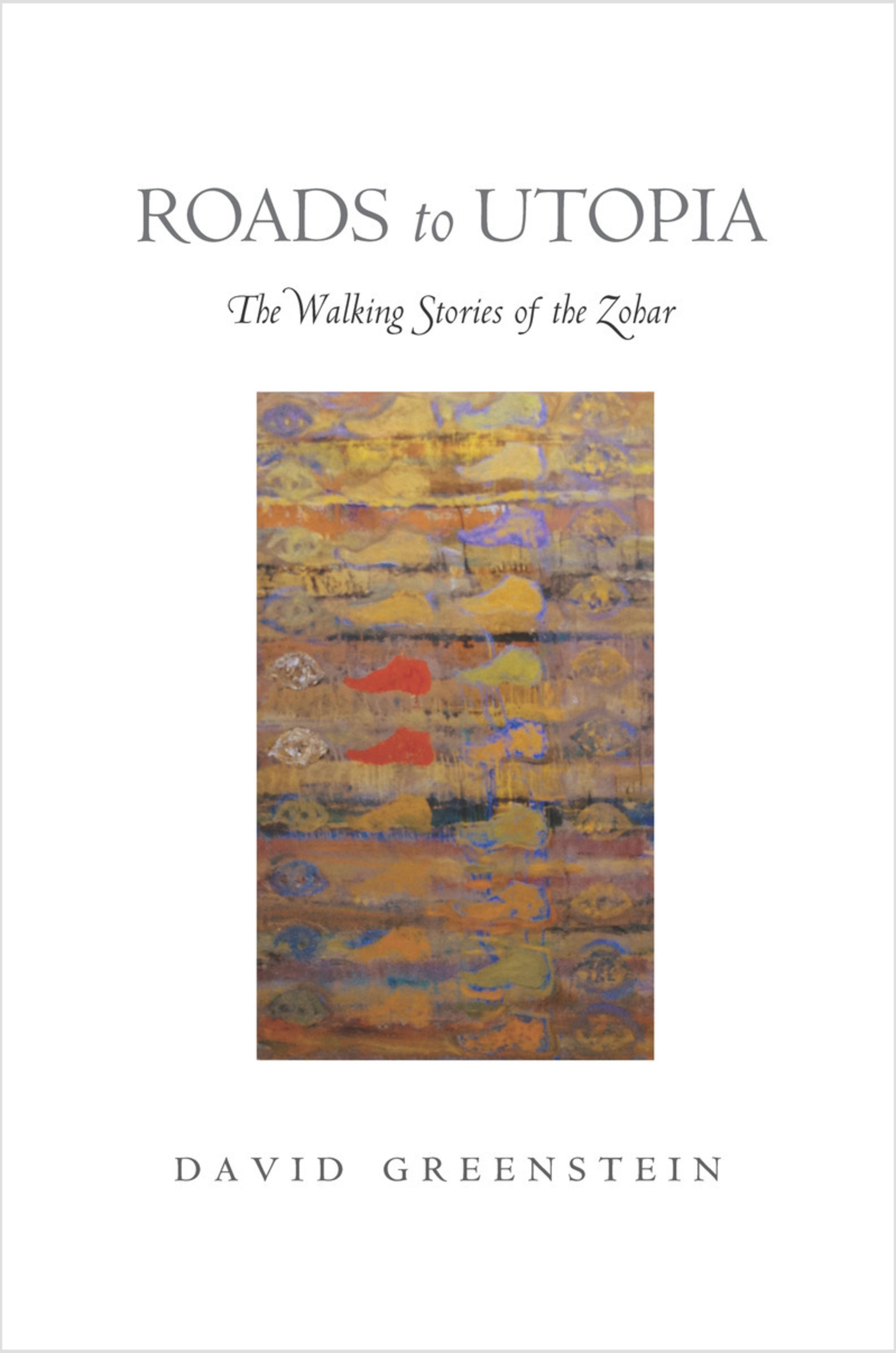
As the greatest book of Jewish mysticism, the Zohar is a revered and much-studied work. Yet, surprisingly, scholarship on the Zohar has yet to pay attention to its most unique literary device—the presentation of its insights while its teachers walk on the road. In these pages, rabbi and scholar David Greenstein offers the first examination of the "walking on the road" motif.
Greenstein's original approach hones in on how this motif expresses the struggles with spatiality and the everyday presented in the Zohar. He argues that the walking theme is not a metaphor for realms to be collapsed into or transcended by the holy, as conventional interpretations would have it. Rather, it conveys us into those quotidian spaces that are obdurately present alongside the realm of the sacred. By embracing the reality of mundane existence, and recognizing the prosaic dimensions of the worldly path, the Zohar is an especially exceptional mystical treatise. In this volume, Greenstein makes visible a singular, though previously unstudied, achievement of the Zohar.
Płać wygodnie kartą, Klarną, Apple Pay lub Google Pay. Nie jesteś zadowolony? Zawsze masz 14-dniową gwarancję zwrotu pieniędzy. Więcej przeczytasz w naszych warunkach. Masz pytania? Napisz do nas na hello@memmo.org.
Memmo ułatwia naukę – gdziekolwiek jesteś na świecie. U nas znajdziesz podręczniki i sprytne narzędzia do nauki w jednym miejscu: streszczenia, quizy, podcasty i fiszki. A do tego Ted, Twój kumpel do nauki, który odpowie na wszystko, co Cię nurtuje. Ponad 50 000 studentów już tu się uczy – stworzone, byś uczył się szybciej i mniej stresował.