
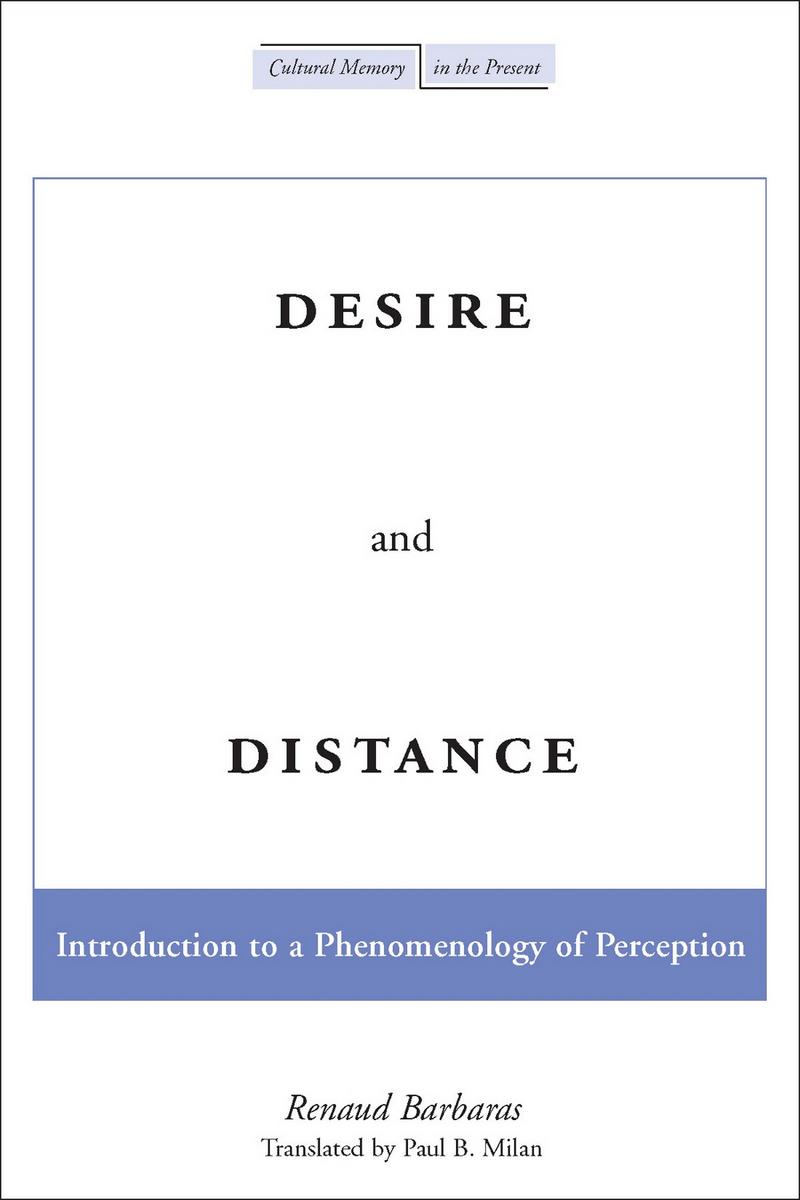
Desire and Distance constitutes an important new departure in contemporary phenomenological thought, a rethinking and critique of basic philosophical positions concerning the concept of perception presented by Husserl and Merleau-Ponty, though it departs in significant and original ways from their work. Barbaras's overall goal is to develop a philosophy of what "life" is—one that would do justice to the question of embodiment and its role in perception and the formation of the human subject. Barbaras posits that desire and distance inform the concept of "life." Levinas identified a similar structure in Descartes's notion of the infinite. For Barbaras, desire and distance are anchored not in meaning, but in a rethinking of the philosophy of biology and, in consequence, cosmology.
Barbaras elaborates and extends the formal structure of desire and distance by drawing on motifs as yet unexplored in the French phenomenological tradition, especially the notions of "life" and the "life-world," which are prominent in the later Husserl but also appear in non-phenomenological thinkers such as Bergson. Barbaras then filters these notions (especially "life") through Merleau-Ponty.
Płać wygodnie kartą, Klarną, Apple Pay lub Google Pay. Nie jesteś zadowolony? Zawsze masz 14-dniową gwarancję zwrotu pieniędzy. Więcej przeczytasz w naszych warunkach. Masz pytania? Napisz do nas na hello@memmo.org.
Memmo ułatwia naukę – gdziekolwiek jesteś na świecie. U nas znajdziesz podręczniki i sprytne narzędzia do nauki w jednym miejscu: streszczenia, quizy, podcasty i fiszki. A do tego Ted, Twój kumpel do nauki, który odpowie na wszystko, co Cię nurtuje. Ponad 50 000 studentów już tu się uczy – stworzone, byś uczył się szybciej i mniej stresował.