
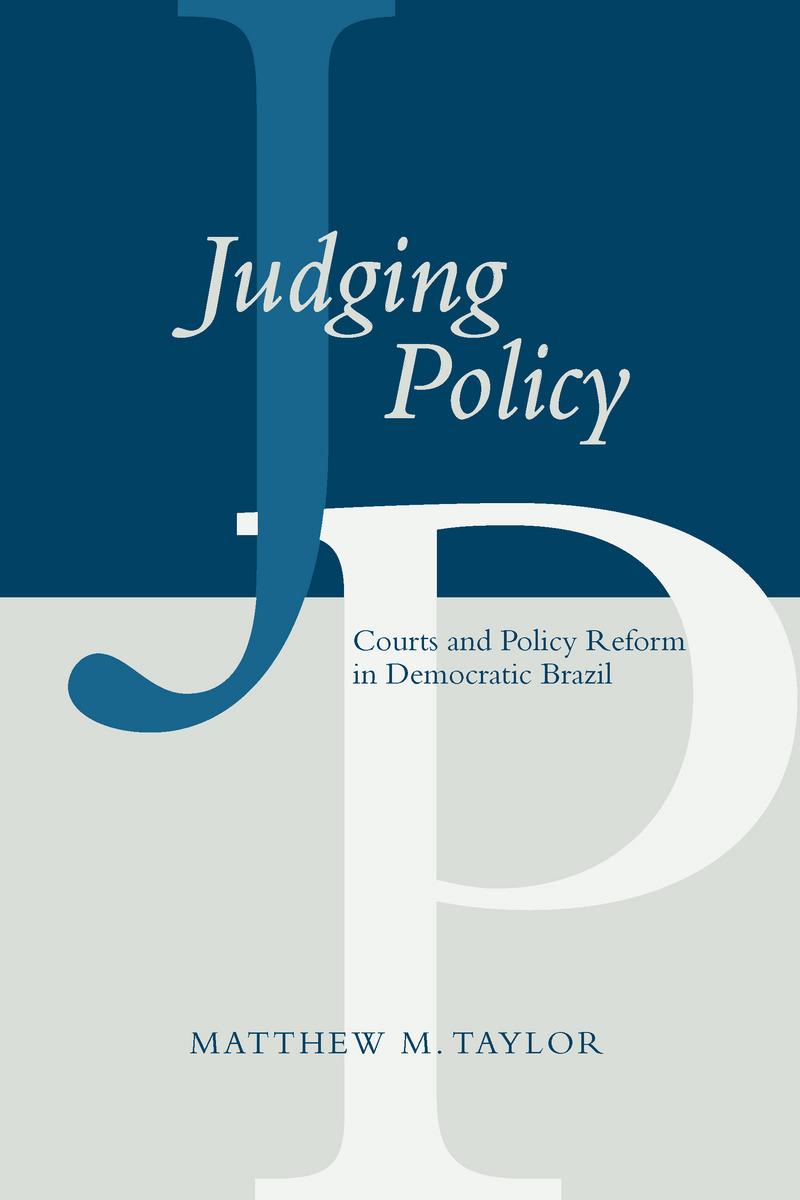
Courts, like other government institutions, shape public policy. But how are courts drawn into the policy process, and how are patterns of policy debate shaped by the institutional structure of the courts?
Drawing on the experience of the Brazilian federal courts since the transition to democracy, Judging Policy examines the judiciary's role in public policy debates. During a period of energetic policy reform, the high salience of many policies, combined with the conducive institutional structure of the judiciary, ensured that Brazilian courts would become an important institution at the heart of the policy process. The Brazilian case thus challenges the notion that Latin America's courts have been uniformly pliant or ineffectual, with little impact on politics and policy outcomes.
Judging Policy also inserts the judiciary into the scholarly debate regarding the extent of presidential control of the policy process in Latin America's largest nation. By analyzing the full Brazilian federal court system—including not only the high court, but also trial and appellate courts—the book develops a framework with cross-national implications for understanding how courts may influence policy actors' political strategies and the distribution of power within political systems.
Płać wygodnie kartą, Klarną, Apple Pay lub Google Pay. Nie jesteś zadowolony? Zawsze masz 14-dniową gwarancję zwrotu pieniędzy. Więcej przeczytasz w naszych warunkach. Masz pytania? Napisz do nas na hello@memmo.org.
Memmo ułatwia naukę – gdziekolwiek jesteś na świecie. U nas znajdziesz podręczniki i sprytne narzędzia do nauki w jednym miejscu: streszczenia, quizy, podcasty i fiszki. A do tego Ted, Twój kumpel do nauki, który odpowie na wszystko, co Cię nurtuje. Ponad 50 000 studentów już tu się uczy – stworzone, byś uczył się szybciej i mniej stresował.