
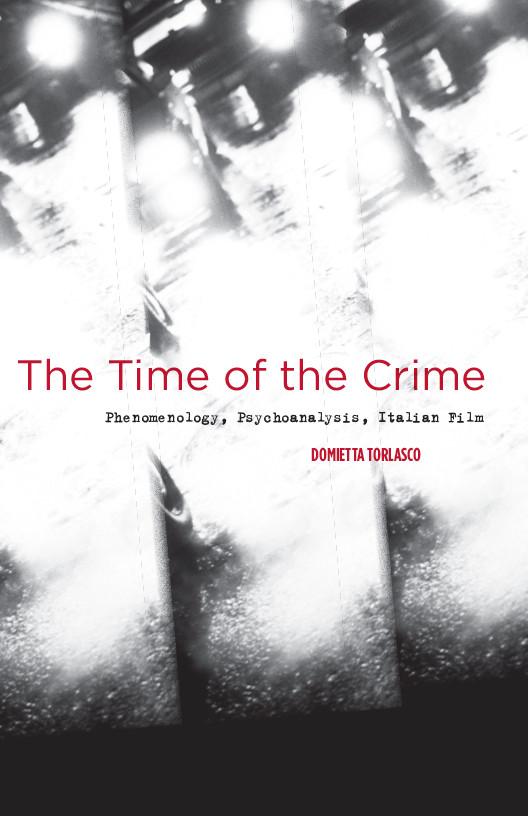
The Time of the Crime interrogates the relationship between time and vision as it emerges in five Italian films from the sixties and seventies: Antonioni's Blow-Up and The Passenger, Bertolucci's The Spider's Stratagem, Cavani's The Night Porter, and Pasolini's Oedipus Rex. The center around which these films revolve is the image of the crime scene—the spatial and temporal configuration in which a crime is committed, witnessed, and investigated. By pushing the detective story to its extreme limits, they articulate forms of time that defy any clear-cut distinction between past, present, and future—presenting an uncertain temporality that can be made visible but not calculated, and challenging notions of visual mastery and social control. If the detective story proper begins with a death that has already taken place, the death that seems to count the most in these films is the one that is yet to occur—the investigator's own death. In a time of relentless anticipation, what appears in front of the investigator's eyes is not the past as it was, but the past as it will have been in relation to the time of his or her search.
Płać wygodnie kartą, Klarną, Apple Pay lub Google Pay. Nie jesteś zadowolony? Zawsze masz 14-dniową gwarancję zwrotu pieniędzy. Więcej przeczytasz w naszych warunkach. Masz pytania? Napisz do nas na hello@memmo.org.
Memmo ułatwia naukę – gdziekolwiek jesteś na świecie. U nas znajdziesz podręczniki i sprytne narzędzia do nauki w jednym miejscu: streszczenia, quizy, podcasty i fiszki. A do tego Ted, Twój kumpel do nauki, który odpowie na wszystko, co Cię nurtuje. Ponad 50 000 studentów już tu się uczy – stworzone, byś uczył się szybciej i mniej stresował.