
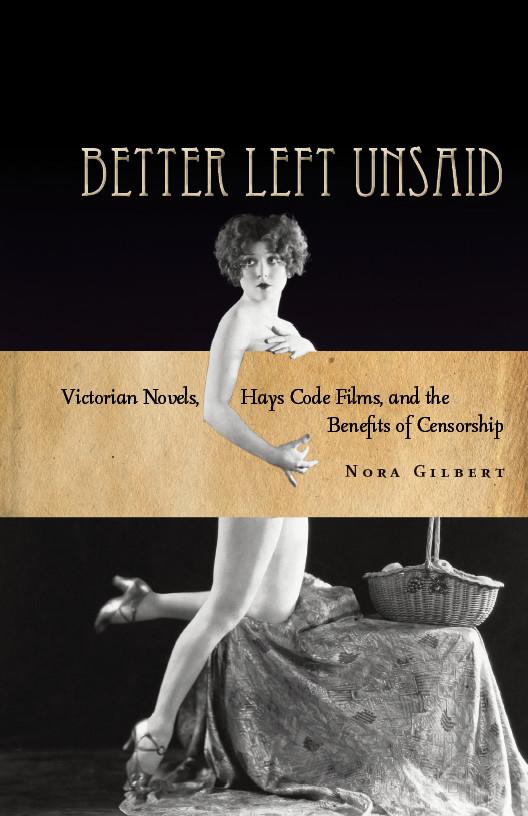
Better Left Unsaid is in the unseemly position of defending censorship from the central allegations that are traditionally leveled against it. Taking two genres generally presumed to have been stymied by the censor's knife—the Victorian novel and classical Hollywood film—this book reveals the varied ways in which censorship, for all its blustery self-righteousness, can actually be good for sex, politics, feminism, and art.
As much as Victorianism is equated with such cultural impulses as repression and prudery, few scholars have explored the Victorian novel as a "censored" commodity—thanks, in large part, to the indirectness and intangibility of England's literary censorship process. This indirection stands in sharp contrast to the explicit, detailed formality of Hollywood's infamous Production Code of 1930. In comparing these two versions of censorship, Nora Gilbert explores the paradoxical effects of prohibitive practices. Rather than being ruined by censorship, Victorian novels and Hays Code films were stirred and stimulated by the very forces meant to restrain them.
Płać wygodnie kartą, Klarną, Apple Pay lub Google Pay. Nie jesteś zadowolony? Zawsze masz 14-dniową gwarancję zwrotu pieniędzy. Więcej przeczytasz w naszych warunkach. Masz pytania? Napisz do nas na hello@memmo.org.
Memmo ułatwia naukę – gdziekolwiek jesteś na świecie. U nas znajdziesz podręczniki i sprytne narzędzia do nauki w jednym miejscu: streszczenia, quizy, podcasty i fiszki. A do tego Ted, Twój kumpel do nauki, który odpowie na wszystko, co Cię nurtuje. Ponad 50 000 studentów już tu się uczy – stworzone, byś uczył się szybciej i mniej stresował.