
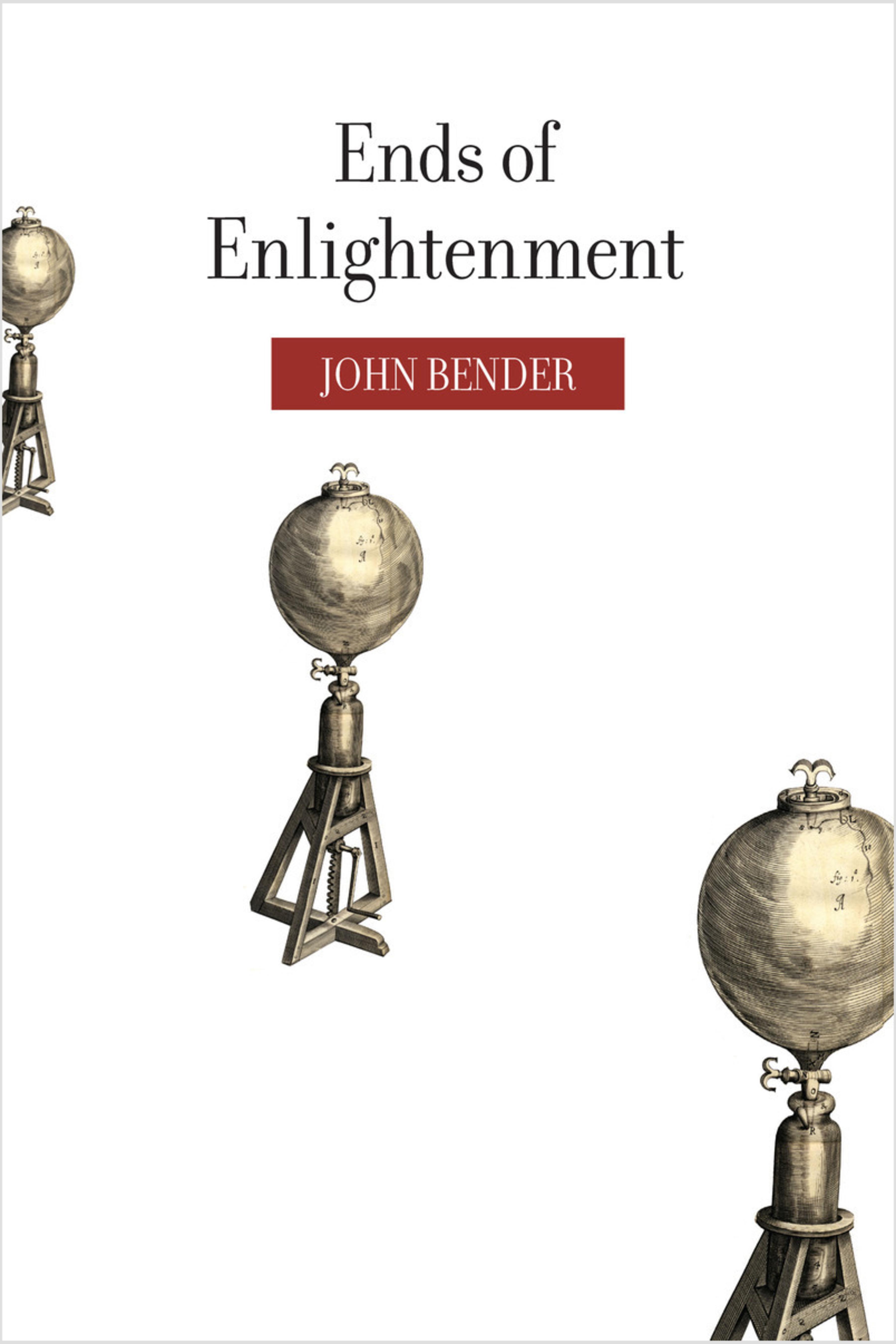
Ends of Enlightenment explores three realms of eighteenth-century European innovation that remain active in the twenty-first century: the realist novel, philosophical thought, and the physical sciences, especially human anatomy. The European Enlightenment was a state of being, a personal stance, and an orientation to the world. Ways of probing experience and knowledge in the novel and in the visual arts were interleaved with methods of experimentation in science and philosophy. This book's fresh perspective considers the novel as an art but also as a force in thinking. The critical distance afforded by a view back across the centuries allows Bender to redefine such novelists as Defoe, Fielding, Goldsmith, Godwin, and Laclos by placing them along philosophers and scientists like Newton, Locke, and Hume but also alongside engravings by Hogarth and by anatomist William Hunter. His book probes the kinship among realism, hypothesis, and scientific fact, defining in the process the rhetorical basis of public communication during the Enlightenment.
Płać wygodnie kartą, Klarną, Apple Pay lub Google Pay. Nie jesteś zadowolony? Zawsze masz 14-dniową gwarancję zwrotu pieniędzy. Więcej przeczytasz w naszych warunkach. Masz pytania? Napisz do nas na hello@memmo.org.
Memmo ułatwia naukę – gdziekolwiek jesteś na świecie. U nas znajdziesz podręczniki i sprytne narzędzia do nauki w jednym miejscu: streszczenia, quizy, podcasty i fiszki. A do tego Ted, Twój kumpel do nauki, który odpowie na wszystko, co Cię nurtuje. Ponad 50 000 studentów już tu się uczy – stworzone, byś uczył się szybciej i mniej stresował.