
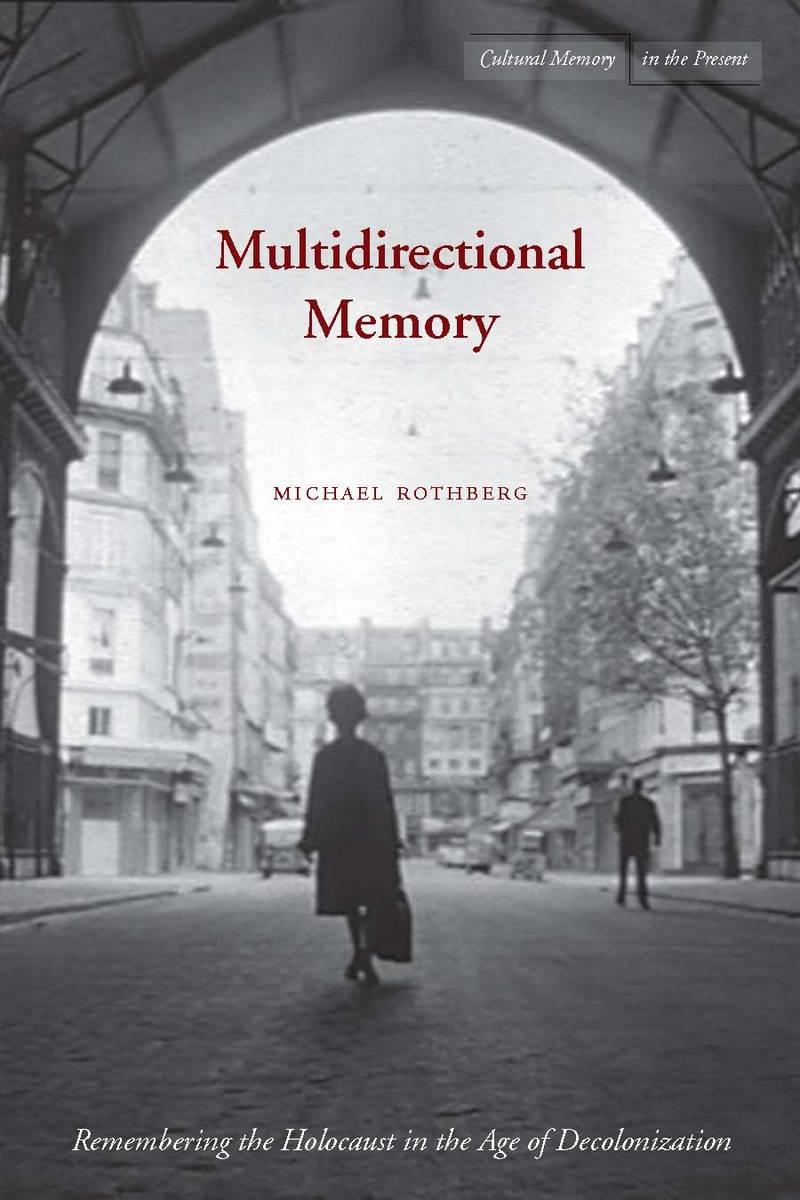
Multidirectional Memory brings together Holocaust studies and postcolonial studies for the first time. Employing a comparative and interdisciplinary approach, the book makes a twofold argument about Holocaust memory in a global age by situating it in the unexpected context of decolonization. On the one hand, it demonstrates how the Holocaust has enabled the articulation of other histories of victimization at the same time that it has been declared "unique" among human-perpetrated horrors. On the other, it uncovers the more surprising and seldom acknowledged fact that public memory of the Holocaust emerged in part thanks to postwar events that seem at first to have little to do with it. In particular, Multidirectional Memory highlights how ongoing processes of decolonization and movements for civil rights in the Caribbean, Africa, Europe, the United States, and elsewhere unexpectedly galvanized memory of the Holocaust.
Rothberg engages with both well-known and non-canonical intellectuals, writers, and filmmakers, including Hannah Arendt, Aimé Césaire, Charlotte Delbo, W.E.B. Du Bois, Marguerite Duras, Michael Haneke, Jean Rouch, and William Gardner Smith.
Płać wygodnie kartą, Klarną, Apple Pay lub Google Pay. Nie jesteś zadowolony? Zawsze masz 14-dniową gwarancję zwrotu pieniędzy. Więcej przeczytasz w naszych warunkach. Masz pytania? Napisz do nas na hello@memmo.org.
Memmo ułatwia naukę – gdziekolwiek jesteś na świecie. U nas znajdziesz podręczniki i sprytne narzędzia do nauki w jednym miejscu: streszczenia, quizy, podcasty i fiszki. A do tego Ted, Twój kumpel do nauki, który odpowie na wszystko, co Cię nurtuje. Ponad 50 000 studentów już tu się uczy – stworzone, byś uczył się szybciej i mniej stresował.