
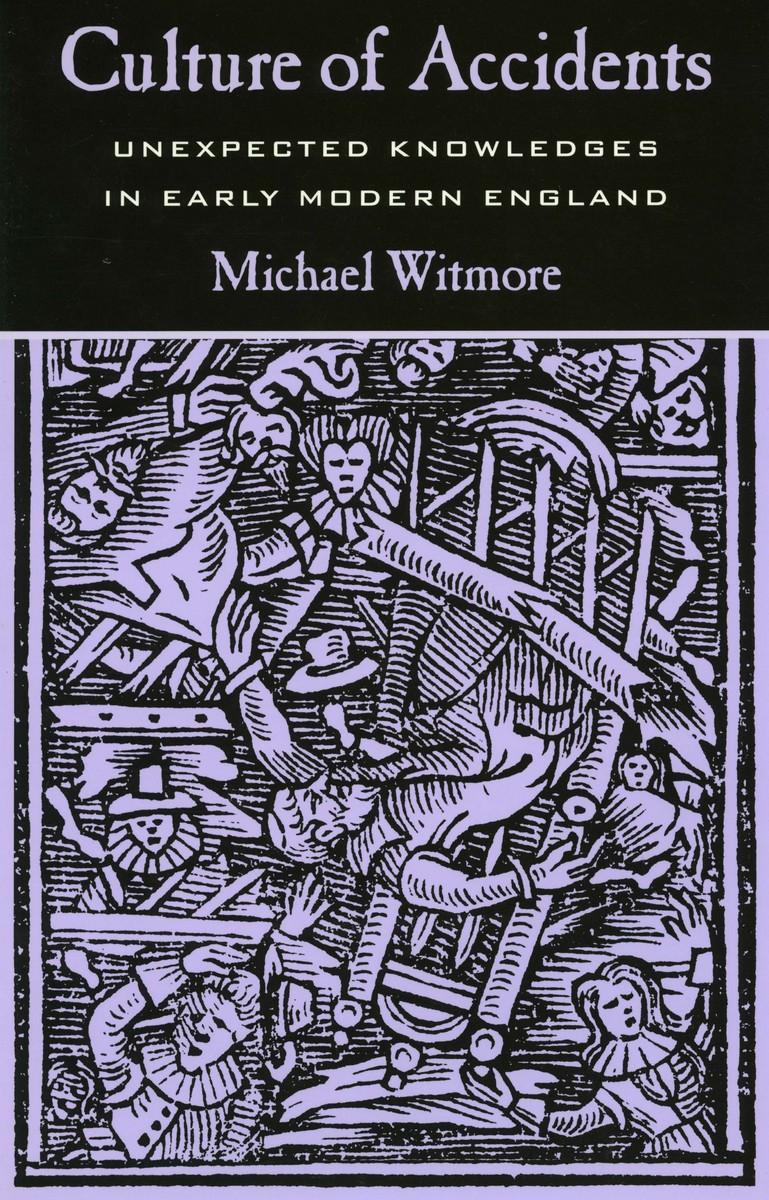
Collapsing buildings, unexpected meetings in the marketplace, monstrous births, encounters with pirates at sea—these and other unforeseen “accidents” at the turn of the seventeenth century in England acquired unprecedented significance in the early modern philosophical and cultural imagination. Drawing on intellectual history, cultural criticism, and rhetorical theory, this book chronicles the narrative transformation of “accident” from a philosophical dead end to an astonishing occasion for revelation and wonder in early modern religious life, dramatic practice, and experimental philosophy.
Embracing the notion that accident was a concept with both learned and popular appeal, the book traces its evolution through Aristotelian, Scholastic, and Calvinist thought into a range of early modern texts. It suggests that for many English writers, accidental events raised fundamental questions about the nature of order in the world and the way that order should be apprehended.
Alongside texts by such canonical figures as Shakespeare and Bacon, this study draws on several lesser-known authors of sensational news accounts about accidents that occurred around the turn of the seventeenth century. The result is a cultural anatomy of accidents as philosophical problem, theatrical conceit, spiritual landmark, and even a prototype for Baconian “experiment,” one that provides a fresh interpretation of the early modern engagement with contingency in intellectual and cultural terms.
Płać wygodnie kartą, Klarną, Apple Pay lub Google Pay. Nie jesteś zadowolony? Zawsze masz 14-dniową gwarancję zwrotu pieniędzy. Więcej przeczytasz w naszych warunkach. Masz pytania? Napisz do nas na hello@memmo.org.
Memmo ułatwia naukę – gdziekolwiek jesteś na świecie. U nas znajdziesz podręczniki i sprytne narzędzia do nauki w jednym miejscu: streszczenia, quizy, podcasty i fiszki. A do tego Ted, Twój kumpel do nauki, który odpowie na wszystko, co Cię nurtuje. Ponad 50 000 studentów już tu się uczy – stworzone, byś uczył się szybciej i mniej stresował.