
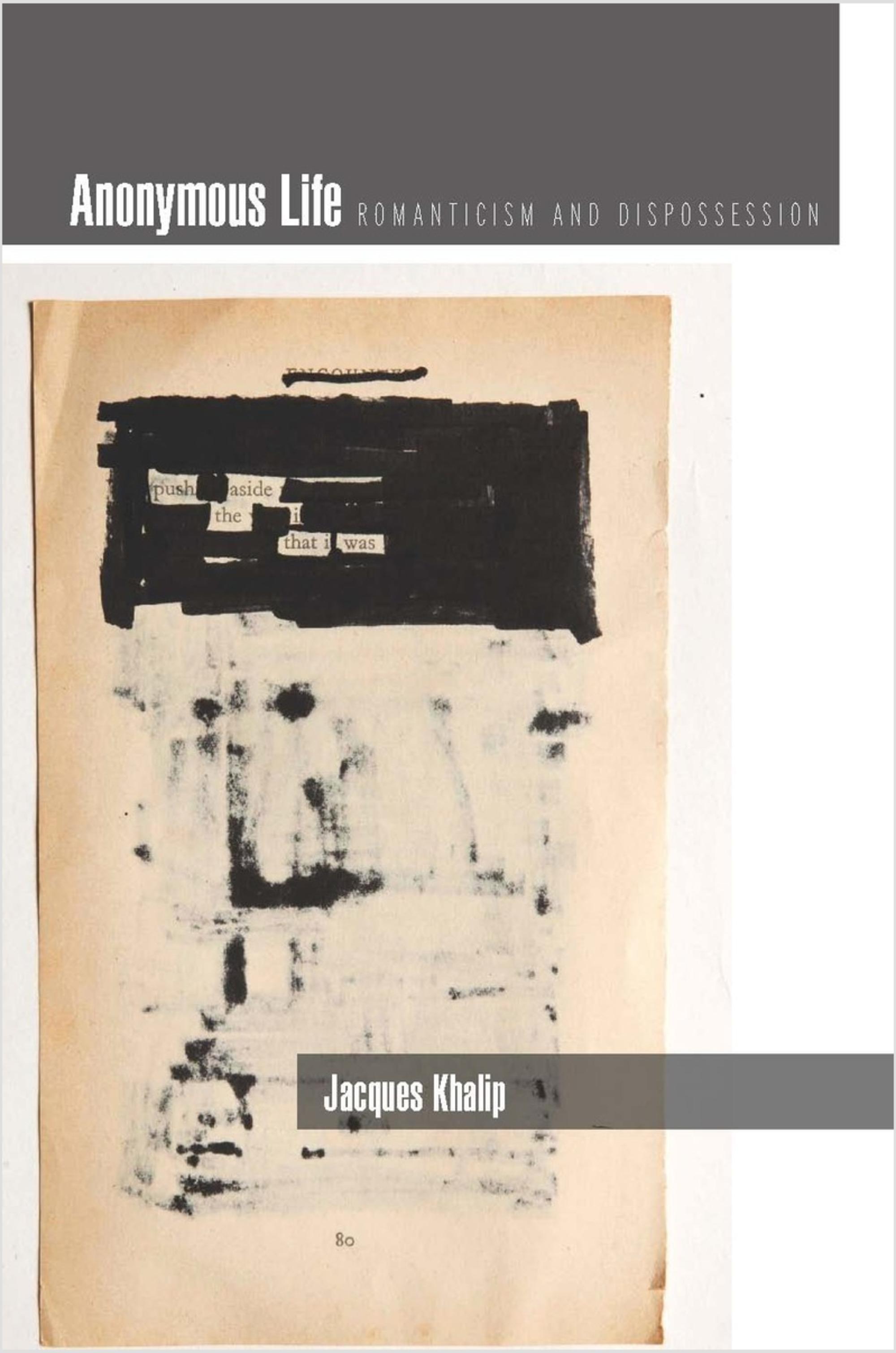
Romanticism is often synonymous with models of identity and action that privilege individual empowerment and emotional autonomy. In the last two decades, these models have been the focus of critiques of Romanticism's purported self-absorption and alienation from politics. While such critiques have proven useful, they often draw attention to the conceptual or material tensions of romantic subjectivity while accepting a conspicuous, autonomous subject as a given, thus failing to appreciate the possibility that Romanticism sustains an alternative model of being, one anonymous and dispossessed, one whose authority is irreducible to that of an easily recognizable, psychologized persona. In Anonymous Life, Khalip goes against the grain of these dominant critical stances by examining anonymity as a model of being that is provocative for writers of the era because it resists the Enlightenment emphasis on transparency and self-disclosure. He explores how romantic subjectivity, even as it negotiates with others in the social sphere, frequently rejects the demands of self-assertion and fails to prove its authenticity and coherence.
Płać wygodnie kartą, Klarną, Apple Pay lub Google Pay. Nie jesteś zadowolony? Zawsze masz 14-dniową gwarancję zwrotu pieniędzy. Więcej przeczytasz w naszych warunkach. Masz pytania? Napisz do nas na hello@memmo.org.
Memmo ułatwia naukę – gdziekolwiek jesteś na świecie. U nas znajdziesz podręczniki i sprytne narzędzia do nauki w jednym miejscu: streszczenia, quizy, podcasty i fiszki. A do tego Ted, Twój kumpel do nauki, który odpowie na wszystko, co Cię nurtuje. Ponad 50 000 studentów już tu się uczy – stworzone, byś uczył się szybciej i mniej stresował.