
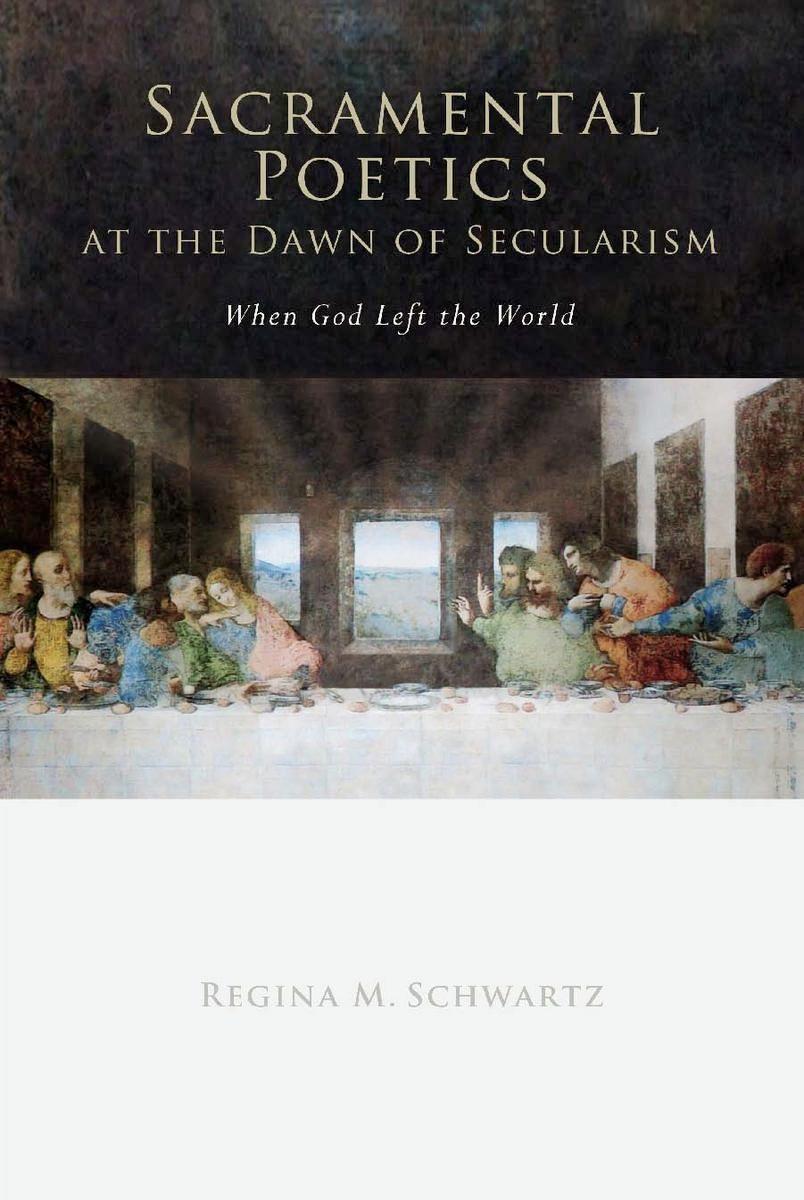
Sacramental Poetics at the Dawn of Secularism asks what happened when the world was shaken by challenges to the sacred order as people had known it, an order that regulated both their actions and beliefs. When Reformers gave up the doctrine of transubstantiation (even as they held onto revised forms of the Eucharist), they lost a doctrine that infuses all materiality, spirituality, and signification with the presence of God. That presence guaranteed the cleansing of human fault, the establishment of justice, the success of communication, the possibility of union with God and another, and love. These longings were not lost but displaced, Schwartz argues, onto other cultural forms in a movement from ritual to the arts, from the sacrament to the sacramental. Investigating the relationship of the arts to the sacred, Schwartz returns to the primary meaning of "sacramental" as "sign making," noting that because the sign always points beyond itself, it participates in transcendence, and this evocation of transcendence, of mystery, is the work of a sacramental poetics.
Płać wygodnie kartą, Klarną, Apple Pay lub Google Pay. Nie jesteś zadowolony? Zawsze masz 14-dniową gwarancję zwrotu pieniędzy. Więcej przeczytasz w naszych warunkach. Masz pytania? Napisz do nas na hello@memmo.org.
Memmo ułatwia naukę – gdziekolwiek jesteś na świecie. U nas znajdziesz podręczniki i sprytne narzędzia do nauki w jednym miejscu: streszczenia, quizy, podcasty i fiszki. A do tego Ted, Twój kumpel do nauki, który odpowie na wszystko, co Cię nurtuje. Ponad 50 000 studentów już tu się uczy – stworzone, byś uczył się szybciej i mniej stresował.