
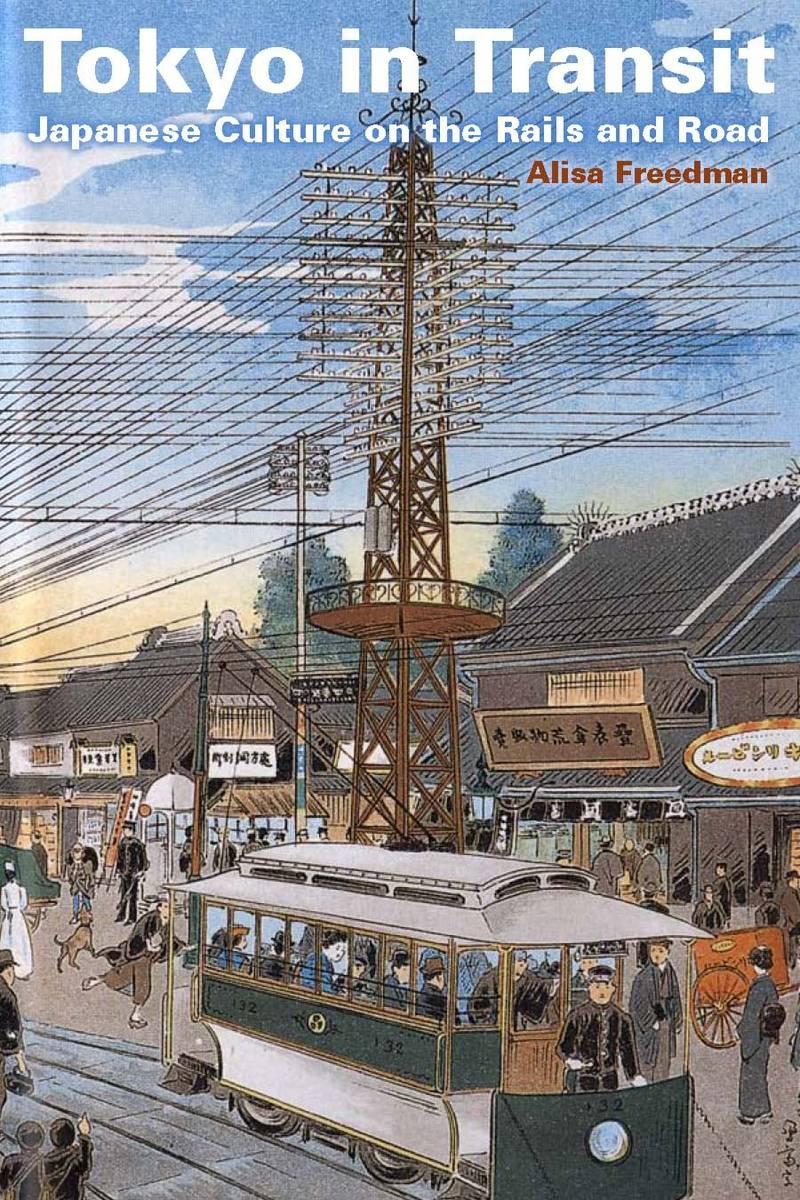
Increased use of mass transportation in the early twentieth century enabled men and women of different social classes to interact in ways they had not before. Using a cultural studies approach that combines historical research and literary analysis, author Alisa Freedman investigates fictional, journalistic, and popular culture depictions of how mass transportation changed prewar Tokyo's social fabric and artistic movements, giving rise to gender roles that have come to characterize modern Japan.
Freedman persuasively argues that, through descriptions of trains and buses, stations, transport workers, and passengers, Japanese authors responded to contradictions in Tokyo's urban modernity and exposed the effects of rapid change on the individual. She shines a light on how prewar transport culture anticipates what is fascinating and frustrating about Tokyo today, providing insight into how people make themselves at home in the city. An approachable and enjoyable book, Tokyo in Transit offers an exciting ride through modern Japanese literature and culture, and includes the first English translation of Kawabata Yasunari's The Corpse Introducer, a 1929 crime novella that presents an important new side of its Nobel Prizewinning author.
Płać wygodnie kartą, Klarną, Apple Pay lub Google Pay. Nie jesteś zadowolony? Zawsze masz 14-dniową gwarancję zwrotu pieniędzy. Więcej przeczytasz w naszych warunkach. Masz pytania? Napisz do nas na hello@memmo.org.
Memmo ułatwia naukę – gdziekolwiek jesteś na świecie. U nas znajdziesz podręczniki i sprytne narzędzia do nauki w jednym miejscu: streszczenia, quizy, podcasty i fiszki. A do tego Ted, Twój kumpel do nauki, który odpowie na wszystko, co Cię nurtuje. Ponad 50 000 studentów już tu się uczy – stworzone, byś uczył się szybciej i mniej stresował.