
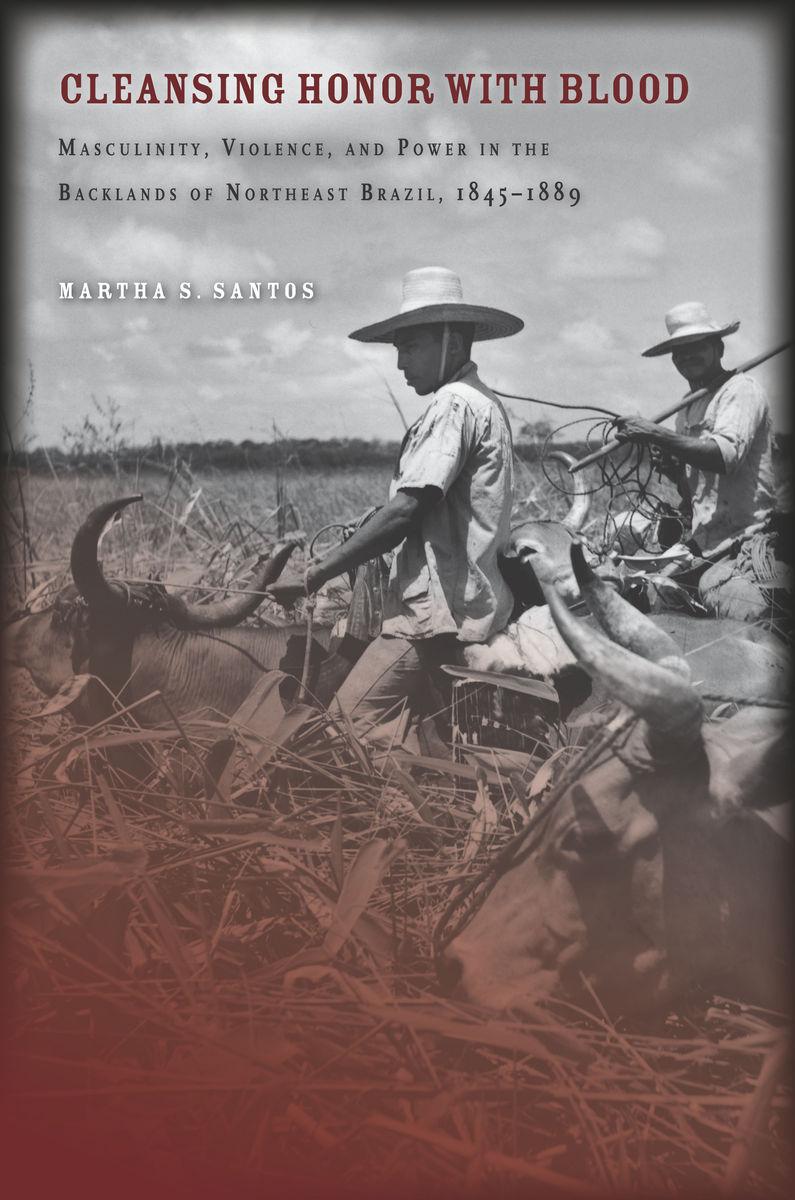
This book offers a critical reinterpretation of male violence, patriarchy, and machismo in rural Latin America. It focuses on the lives of lower-class men and women, known as sertanejo/as, in the hinterlands of the northeastern Brazilian province of Ceará between 1845 and 1889. Challenging the widely accepted depiction of sertanejos as conditioned to violence by nature, culture, and climate, Santos argues that their concern with maintaining an honorable manly reputation and the use of violence were historically contingent strategies employed to resolve conflicts over scant resources and to establish power over women and other men. She also traces a shift in the functioning of patriarchy that coincided with changes in the material fortunes of sertanejo families. As economic dislocation, environmental calamity, and family separation led to greater female autonomy and an erosion of patriarchal authority in the home, public—and often violent—enforcement of male power maintained patriarchal order in these communities.
Płać wygodnie kartą, Klarną, Apple Pay lub Google Pay. Nie jesteś zadowolony? Zawsze masz 14-dniową gwarancję zwrotu pieniędzy. Więcej przeczytasz w naszych warunkach. Masz pytania? Napisz do nas na hello@memmo.org.
Memmo ułatwia naukę – gdziekolwiek jesteś na świecie. U nas znajdziesz podręczniki i sprytne narzędzia do nauki w jednym miejscu: streszczenia, quizy, podcasty i fiszki. A do tego Ted, Twój kumpel do nauki, który odpowie na wszystko, co Cię nurtuje. Ponad 50 000 studentów już tu się uczy – stworzone, byś uczył się szybciej i mniej stresował.