
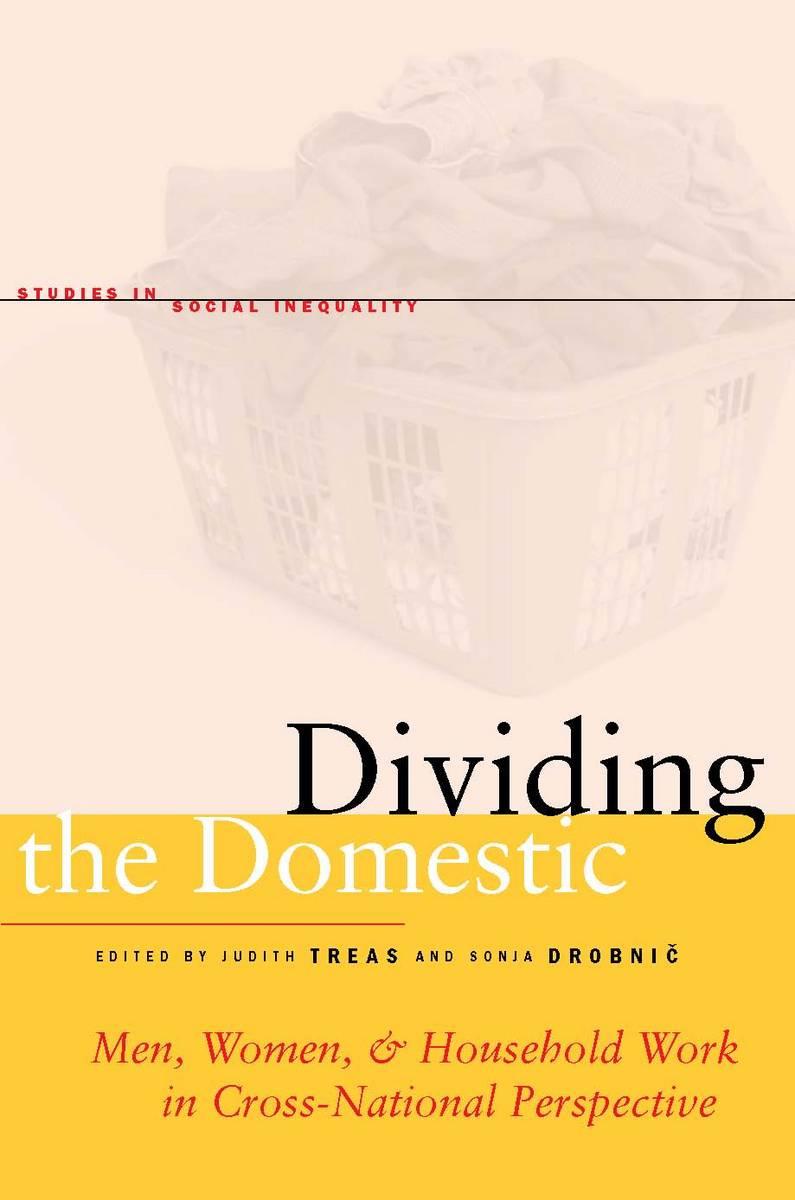
In Dividing the Domestic, leading international scholars roll up their sleeves to investigate how culture and country characteristics permeate our households and our private lives. The book introduces novel frameworks for understanding why the household remains a bastion of traditional gender relations—even when employed full-time, women everywhere still do most of the work around the house, and poor women spend more time on housework than affluent women. Education systems, tax codes, labor laws, public polices, and cultural beliefs about motherhood and marriage all make a difference. Any accounting of "who does what" needs to consider the complicity of trade unions, state arrangements for children's schooling, and new cultural prescriptions for a happy marriage. With its cross-national perspective, this pioneering volume speaks not only to sociologists concerned with gender and family, but also to those interested in scholarship on states, public policy, culture, and social inequality.
Płać wygodnie kartą, Klarną, Apple Pay lub Google Pay. Nie jesteś zadowolony? Zawsze masz 14-dniową gwarancję zwrotu pieniędzy. Więcej przeczytasz w naszych warunkach. Masz pytania? Napisz do nas na hello@memmo.org.
Memmo ułatwia naukę – gdziekolwiek jesteś na świecie. U nas znajdziesz podręczniki i sprytne narzędzia do nauki w jednym miejscu: streszczenia, quizy, podcasty i fiszki. A do tego Ted, Twój kumpel do nauki, który odpowie na wszystko, co Cię nurtuje. Ponad 50 000 studentów już tu się uczy – stworzone, byś uczył się szybciej i mniej stresował.