
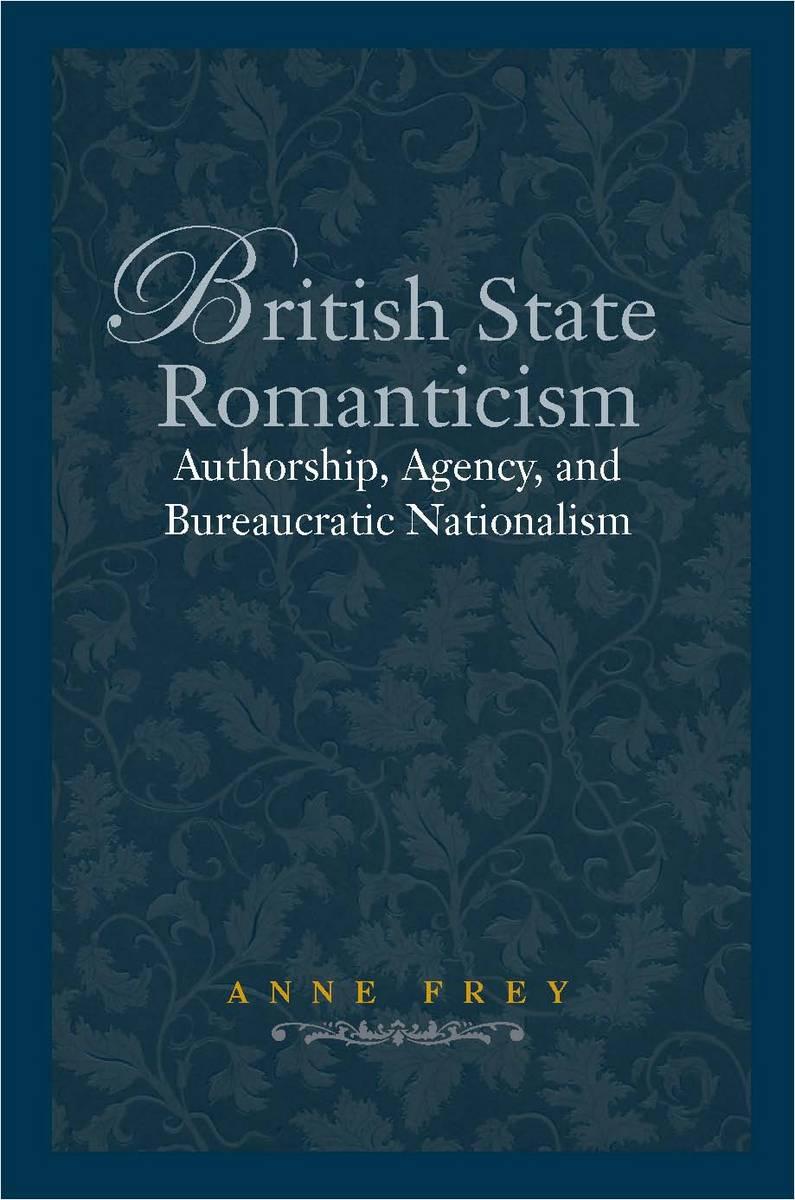
British State Romanticism contends that changing definitions of state power in the late Romantic period propelled authors to revisit the work of literature as well as the profession of authorship. Traditionally, critics have seen the Romantics as imaginative geniuses and viewed the supposedly less imaginative character of their late work as evidence of declining abilities. Frey argues, in contrast, that late Romanticism offers an alternative aesthetic model that adjusts authorship to work within an expanding and bureaucratizing state. She examines how Wordsworth, Coleridge, Austen, Scott, and De Quincey portray specific state and imperial agencies to debate what constituted government power, through what means government penetrated individual lives, and how non-governmental figures could assume government authority. Defining their work as part of an expanding state, these writers also reworked Romantic structures such as the imagination, organic form, and the literary sublime to operate through state agencies and to convey membership in a nation.
Płać wygodnie kartą, Klarną, Apple Pay lub Google Pay. Nie jesteś zadowolony? Zawsze masz 14-dniową gwarancję zwrotu pieniędzy. Więcej przeczytasz w naszych warunkach. Masz pytania? Napisz do nas na hello@memmo.org.
Memmo ułatwia naukę – gdziekolwiek jesteś na świecie. U nas znajdziesz podręczniki i sprytne narzędzia do nauki w jednym miejscu: streszczenia, quizy, podcasty i fiszki. A do tego Ted, Twój kumpel do nauki, który odpowie na wszystko, co Cię nurtuje. Ponad 50 000 studentów już tu się uczy – stworzone, byś uczył się szybciej i mniej stresował.