
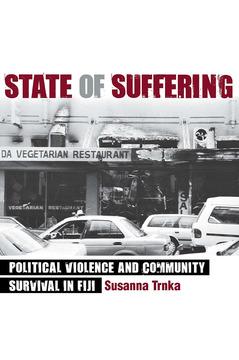
How do ordinary people respond when their lives are irrevocably altered by terror and violence? Susanna Trnka was residing in an Indo-Fijian village in the year 2000 during the Fijian nationalist coup. The overthrow of the elected multiethnic party led to six months of nationalist aggression, much of which was directed toward Indo-Fijians. In State of Suffering, Trnka shows how Indo-Fijians' lives were overturned as waves of turmoil and destruction swept across Fiji.
Describing the myriad social processes through which violence is articulated and ascribed meaning-including expressions of incredulity, circulation of rumors, narratives, and exchanges of laughter and jokes-Trnka reveals the ways in which the community engages in these practices as individuals experience, and try to understand, the consequences of the coup. She then considers different kinds of pain caused by political chaos and social turbulence, including pain resulting from bodily harm, shared terror, and the distress precipitated by economic crisis and social dislocation.
Throughout this book, Trnka focuses on the collective social process through which violence is embodied, articulated, and silenced by those it targets. Her sensitive ethnography is a valuable addition to the global conversation about the impact of political violence on community life.
Płać wygodnie kartą, Klarną, Apple Pay lub Google Pay. Nie jesteś zadowolony? Zawsze masz 14-dniową gwarancję zwrotu pieniędzy. Więcej przeczytasz w naszych warunkach. Masz pytania? Napisz do nas na hello@memmo.org.
Memmo ułatwia naukę – gdziekolwiek jesteś na świecie. U nas znajdziesz podręczniki i sprytne narzędzia do nauki w jednym miejscu: streszczenia, quizy, podcasty i fiszki. A do tego Ted, Twój kumpel do nauki, który odpowie na wszystko, co Cię nurtuje. Ponad 50 000 studentów już tu się uczy – stworzone, byś uczył się szybciej i mniej stresował.