
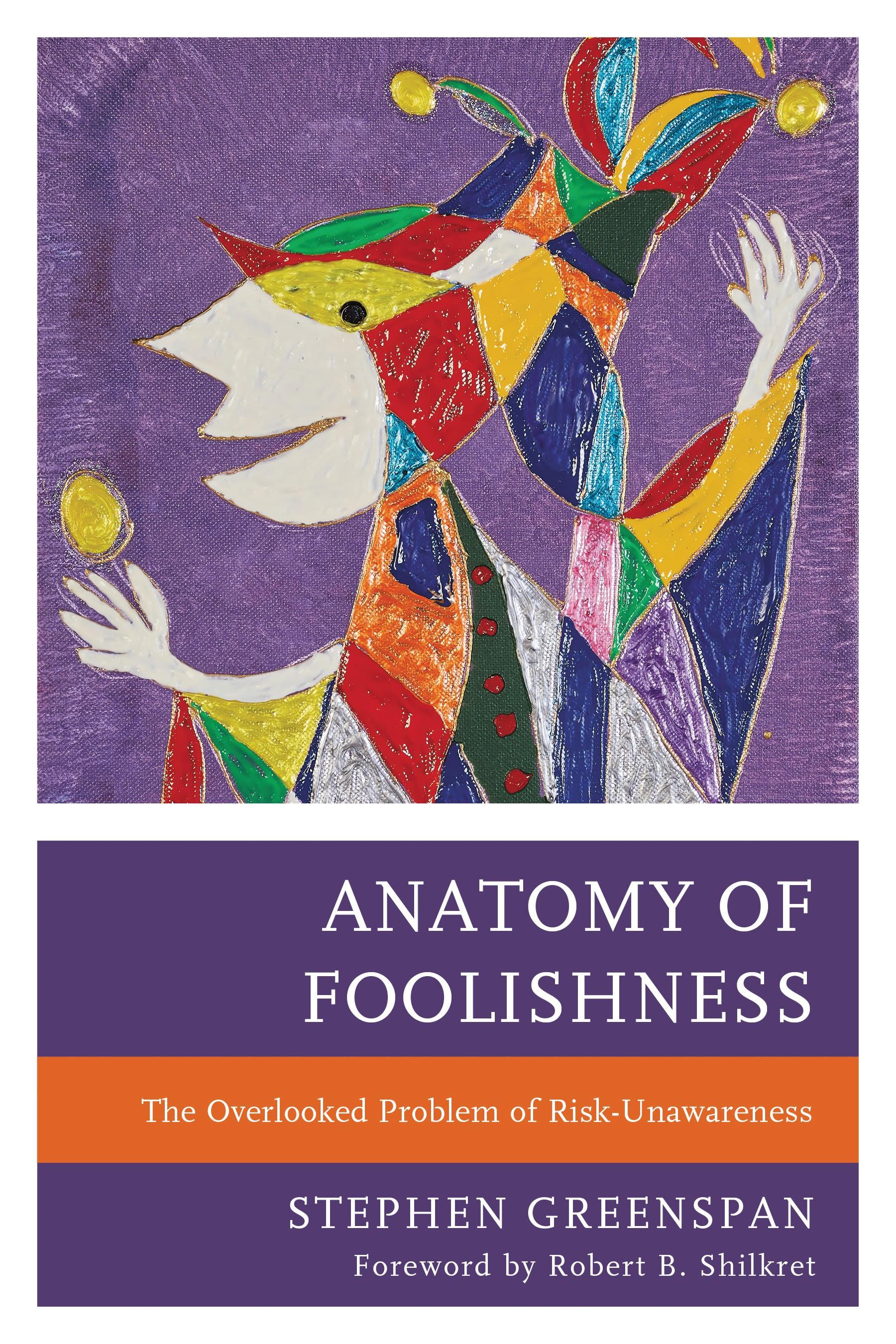
Just days after publishing his first book on the theory of foolishness, Stephen Greenspan learned that he had been hoodwinked by Bernard Madoff’s Ponzi scheme, or more accurately the Madoff “feeder” fund he invested in. Greenspan published a featured essay on the topic in the Wall Street Journal a few weeks later, and that essay was widely cited and attracted great interest for Greenspan’s ideas about gullibility and in the United States and many other countries. Greenspan’s new book, The Anatomy of Foolishness, explains why and how individuals (of all ages and levels of intelligence) and organizations act in ways that undermine their interests and even their continued existence. He examines three types of foolishness, using vivid examples to illustrate each, including the many foolish actions of US President Donald Trump. Greenspan presents a multidimensional theory of foolishness that contributes to the literature on human competence, and this book is likely to attract broad interest in the fields of psychology, sociology, economics, political science, and psychiatry as well as among those members of the general public (basically everyone) who have acted foolishly or know someone who has acted in a way that went against their own interests.
Płać wygodnie kartą, Klarną, Apple Pay lub Google Pay. Nie jesteś zadowolony? Zawsze masz 14-dniową gwarancję zwrotu pieniędzy. Więcej przeczytasz w naszych warunkach. Masz pytania? Napisz do nas na hello@memmo.org.
Memmo ułatwia naukę – gdziekolwiek jesteś na świecie. U nas znajdziesz podręczniki i sprytne narzędzia do nauki w jednym miejscu: streszczenia, quizy, podcasty i fiszki. A do tego Ted, Twój kumpel do nauki, który odpowie na wszystko, co Cię nurtuje. Ponad 50 000 studentów już tu się uczy – stworzone, byś uczył się szybciej i mniej stresował.