
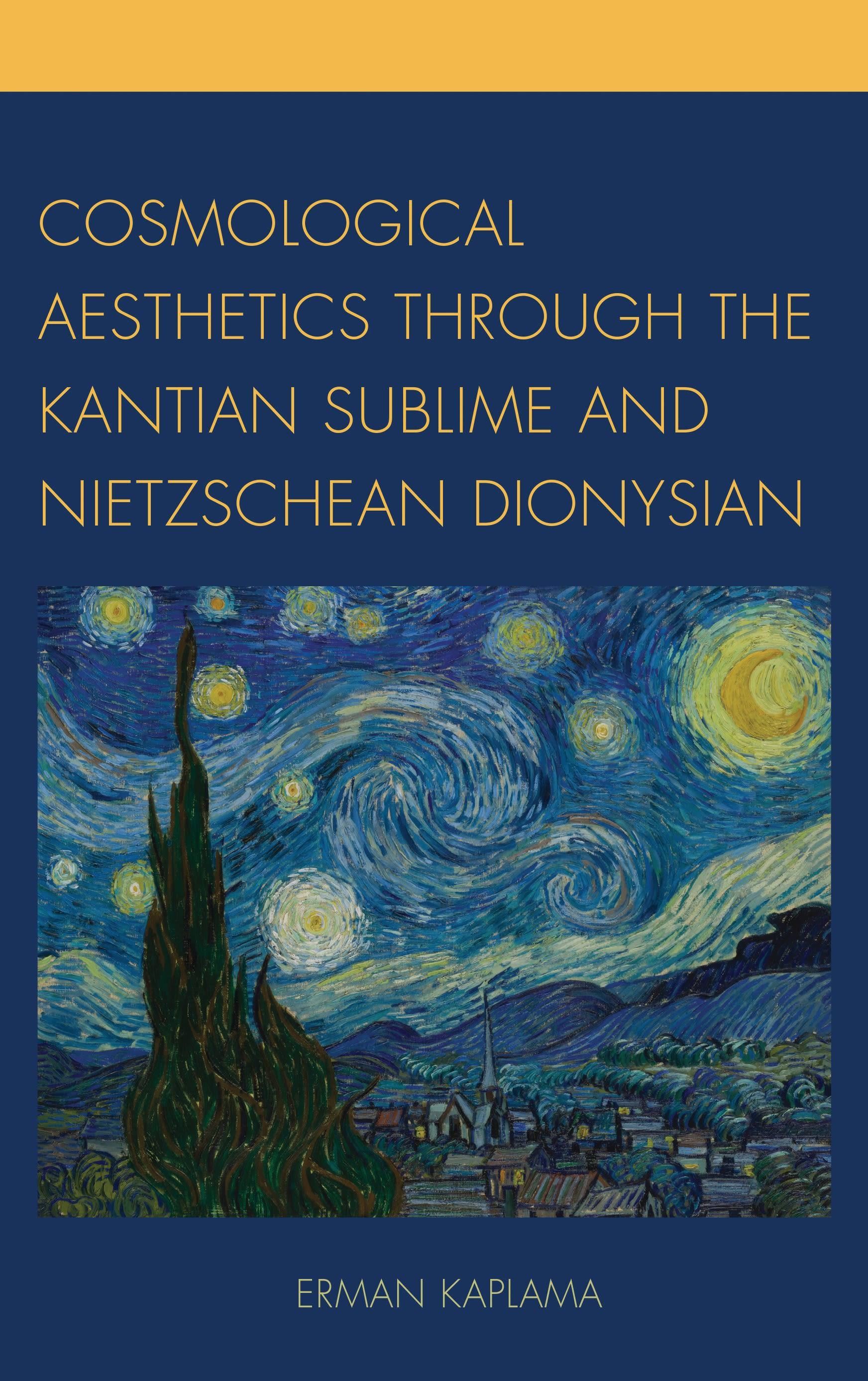
Erman Kaplama explores the principle of transition (Übergang) from metaphysics to physics developed by Kant in his unfinished magnum opus, Opus Postumum. Drawing on the Heraclitean logos and Kant’s notions of sense-intuition (Anschauung) and reflective judgment, Kaplama interprets transition as an aesthetic principle. He revises the idea of nature (phusis) as the principle of motion referring to Heraclitus’ cosmology as well as Heidegger’s and Nietzsche’s lectures on the pre-Socratics. Kaplama compares the Kantian sublime and Nietzschean Dionysian as aesthetic theories representing the transition from the sensible to supersensible and as cosmological theories that consider human nature (ethos) as an extension of nature. In light of such Nietzschean notions as the eternal recurrence and will to power, the Dionysian is shown to trigger the transition by which nature and art are redefined. Finally, Cosmological Aesthetics employs the principles of transition and motion to analyze Van Gogh’s Starry Night in an excursus.
Płać wygodnie kartą, Klarną, Apple Pay lub Google Pay. Nie jesteś zadowolony? Zawsze masz 14-dniową gwarancję zwrotu pieniędzy. Więcej przeczytasz w naszych warunkach. Masz pytania? Napisz do nas na hello@memmo.org.
Memmo ułatwia naukę – gdziekolwiek jesteś na świecie. U nas znajdziesz podręczniki i sprytne narzędzia do nauki w jednym miejscu: streszczenia, quizy, podcasty i fiszki. A do tego Ted, Twój kumpel do nauki, który odpowie na wszystko, co Cię nurtuje. Ponad 50 000 studentów już tu się uczy – stworzone, byś uczył się szybciej i mniej stresował.