
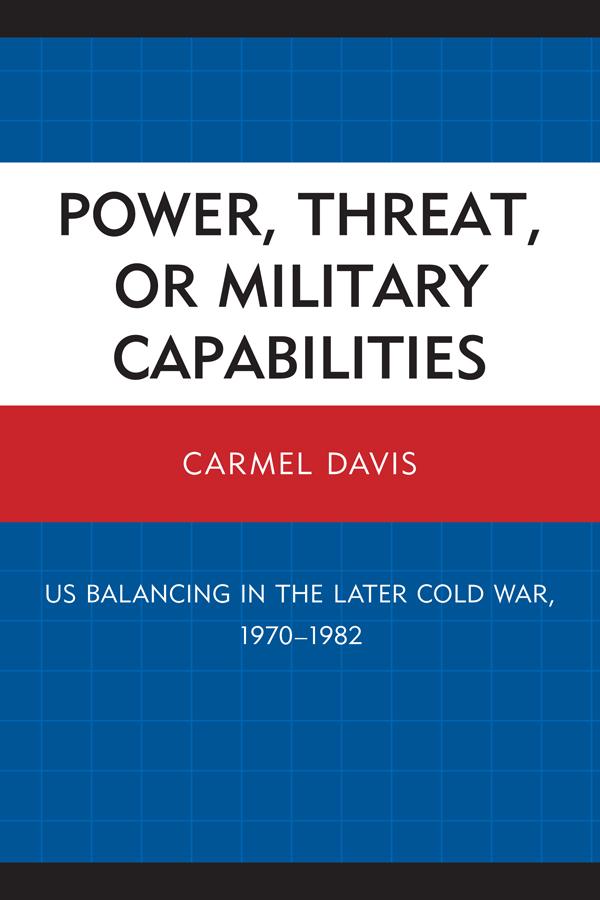
Power, Threat, or Military Capabilities assesses two mainstays of international relations, balance of power and balance of threat, using the case of US balancing against the Soviet Union in the later Cold War. It also proposes balance of military capabilities, which uses offense-defense theory to argue that countries balance against the ability of others to conquer or compel them.
Power, Threat, or Military Capabilities finds that the US was more powerful than the Soviet Union so US behavior is not explained by balance of power. The US did not perceive the Soviet Union as likely to initiate war or to run risks that might lead to war so US behavior is not explained by balance of threat. This book determines that the US was concerned about its ability to defend Europe and the Persian Gulf so US behavior is explained by balance of military capabilities.
Power, Threat, or Military Capabilities finds that the US was more powerful than the Soviet Union so US behavior is not explained by balance of power. The US did not perceive the Soviet Union as likely to initiate war or to run risks that might lead to war so US behavior is not explained by balance of threat. This book determines that the US was concerned about its ability to defend Europe and the Persian Gulf so US behavior is explained by balance of military capabilities.
Strony: 140
Kategoria: Statsvetenskap & Politik
e-ISBN: 9780761855521
Waga przesyłki: 1.2 kg
Wysyłka w ciągu: 1-2 dni
Płać wygodnie kartą, Klarną, Apple Pay lub Google Pay. Nie jesteś zadowolony? Zawsze masz 14-dniową gwarancję zwrotu pieniędzy. Więcej przeczytasz w naszych warunkach. Masz pytania? Napisz do nas na hello@memmo.org.
Memmo ułatwia naukę – gdziekolwiek jesteś na świecie. U nas znajdziesz podręczniki i sprytne narzędzia do nauki w jednym miejscu: streszczenia, quizy, podcasty i fiszki. A do tego Ted, Twój kumpel do nauki, który odpowie na wszystko, co Cię nurtuje. Ponad 50 000 studentów już tu się uczy – stworzone, byś uczył się szybciej i mniej stresował.