
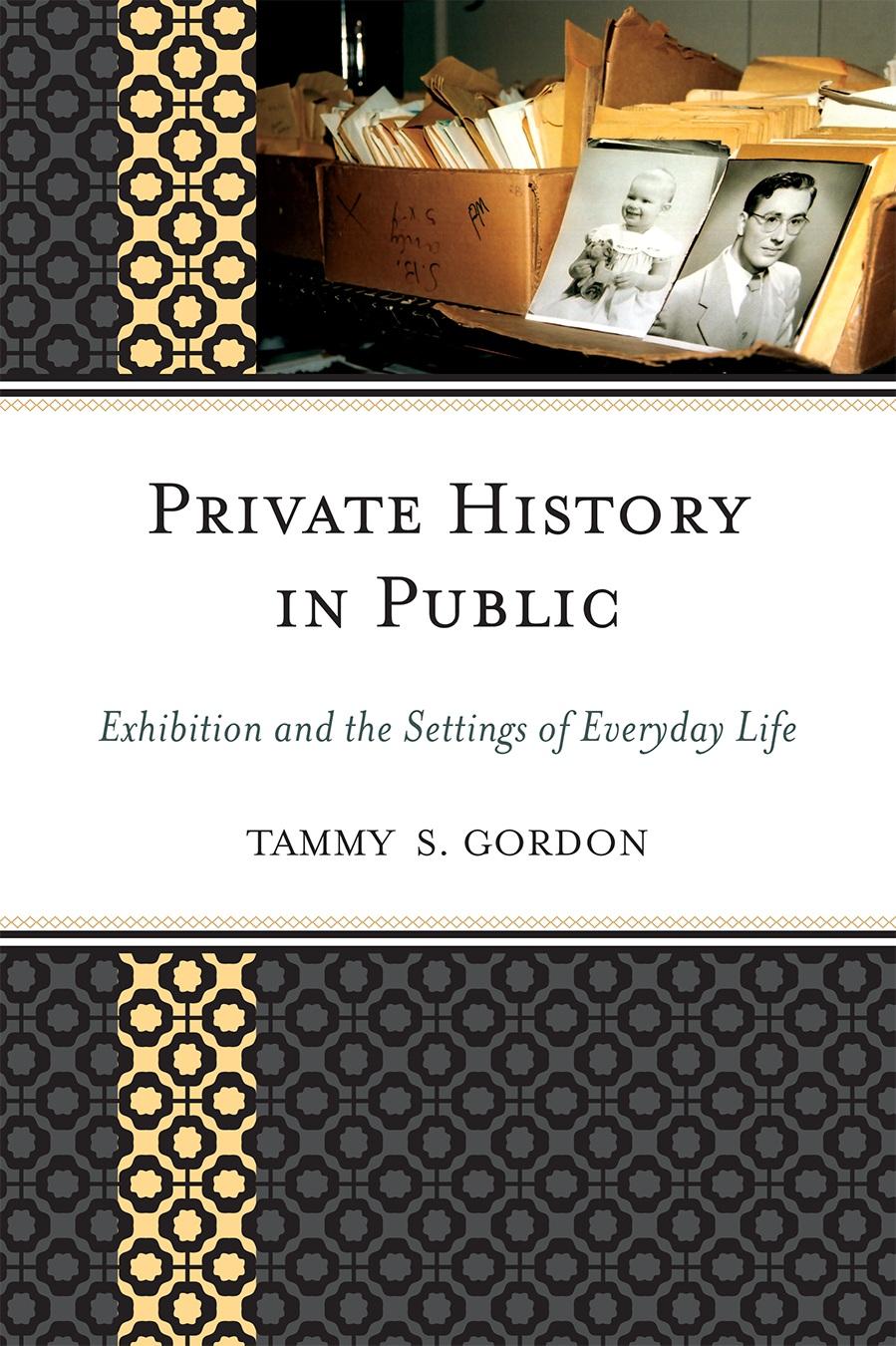
In small community museums, truck stops, restaurants, bars, barbershops, schools, and churches, people create displays to tell the histories that matter to them. Much of this history is personal: family history, community history, history of a trade, or the history of something considered less than genteel. It is often history based on the historical record, but also based on feelings, beliefs, and memory. It is neglected history.
Private History in Public is about those history exhibits that complicate the public/private dichotomy, exhibits that serve to explain communities, families, and individuals to outsiders and tie insiders together through a shared narrative of historical experience. Tammy S. Gordon looks beyond the large professionalized museum exhibits that have dominated scholarship in museum studies and public history and offers a new way of understanding the broad spectrum of exhibition types in the United States.
Private History in Public is about those history exhibits that complicate the public/private dichotomy, exhibits that serve to explain communities, families, and individuals to outsiders and tie insiders together through a shared narrative of historical experience. Tammy S. Gordon looks beyond the large professionalized museum exhibits that have dominated scholarship in museum studies and public history and offers a new way of understanding the broad spectrum of exhibition types in the United States.
Płać wygodnie kartą, Klarną, Apple Pay lub Google Pay. Nie jesteś zadowolony? Zawsze masz 14-dniową gwarancję zwrotu pieniędzy. Więcej przeczytasz w naszych warunkach. Masz pytania? Napisz do nas na hello@memmo.org.
Memmo ułatwia naukę – gdziekolwiek jesteś na świecie. U nas znajdziesz podręczniki i sprytne narzędzia do nauki w jednym miejscu: streszczenia, quizy, podcasty i fiszki. A do tego Ted, Twój kumpel do nauki, który odpowie na wszystko, co Cię nurtuje. Ponad 50 000 studentów już tu się uczy – stworzone, byś uczył się szybciej i mniej stresował.