
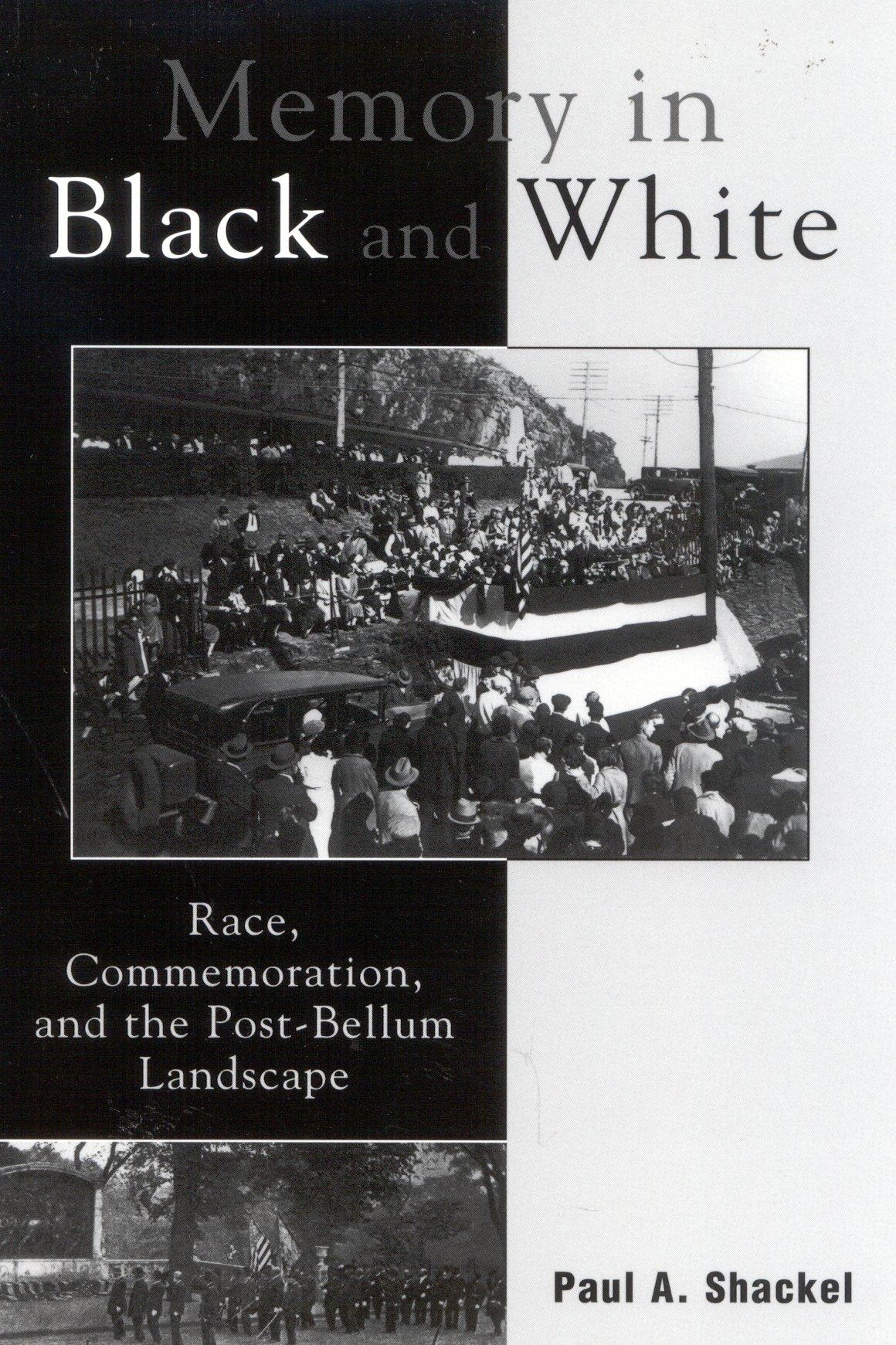
As a nation we bring many perspectives to our commemorative places and our ideas may change over time, especially on difficult topics like slavery and racism. Why a place is saved and how it is interpreted to visitors has much to do with our collective memory of the events that took place there. Using the skills of an archaeologist and a historian, Paul Shackel examines four well-known Civil War-era National Park sites and shows us how public memory shaped their creation and continues to shape their interpretation. Shackel shows us that 'public memory' is really 'public memories,' and interpretation may change dramatically from one generation to another as interpreters try to accommodate, or ignore, certain memories. Memory in Black and White is important reading for all who are interested in history and memory of landscapes, and will be especially useful to those involved in preserving and interpreting a controversial place. Visit the author's web page Visit the UMD Heritage Program web page
Płać wygodnie kartą, Klarną, Apple Pay lub Google Pay. Nie jesteś zadowolony? Zawsze masz 14-dniową gwarancję zwrotu pieniędzy. Więcej przeczytasz w naszych warunkach. Masz pytania? Napisz do nas na hello@memmo.org.
Memmo ułatwia naukę – gdziekolwiek jesteś na świecie. U nas znajdziesz podręczniki i sprytne narzędzia do nauki w jednym miejscu: streszczenia, quizy, podcasty i fiszki. A do tego Ted, Twój kumpel do nauki, który odpowie na wszystko, co Cię nurtuje. Ponad 50 000 studentów już tu się uczy – stworzone, byś uczył się szybciej i mniej stresował.