
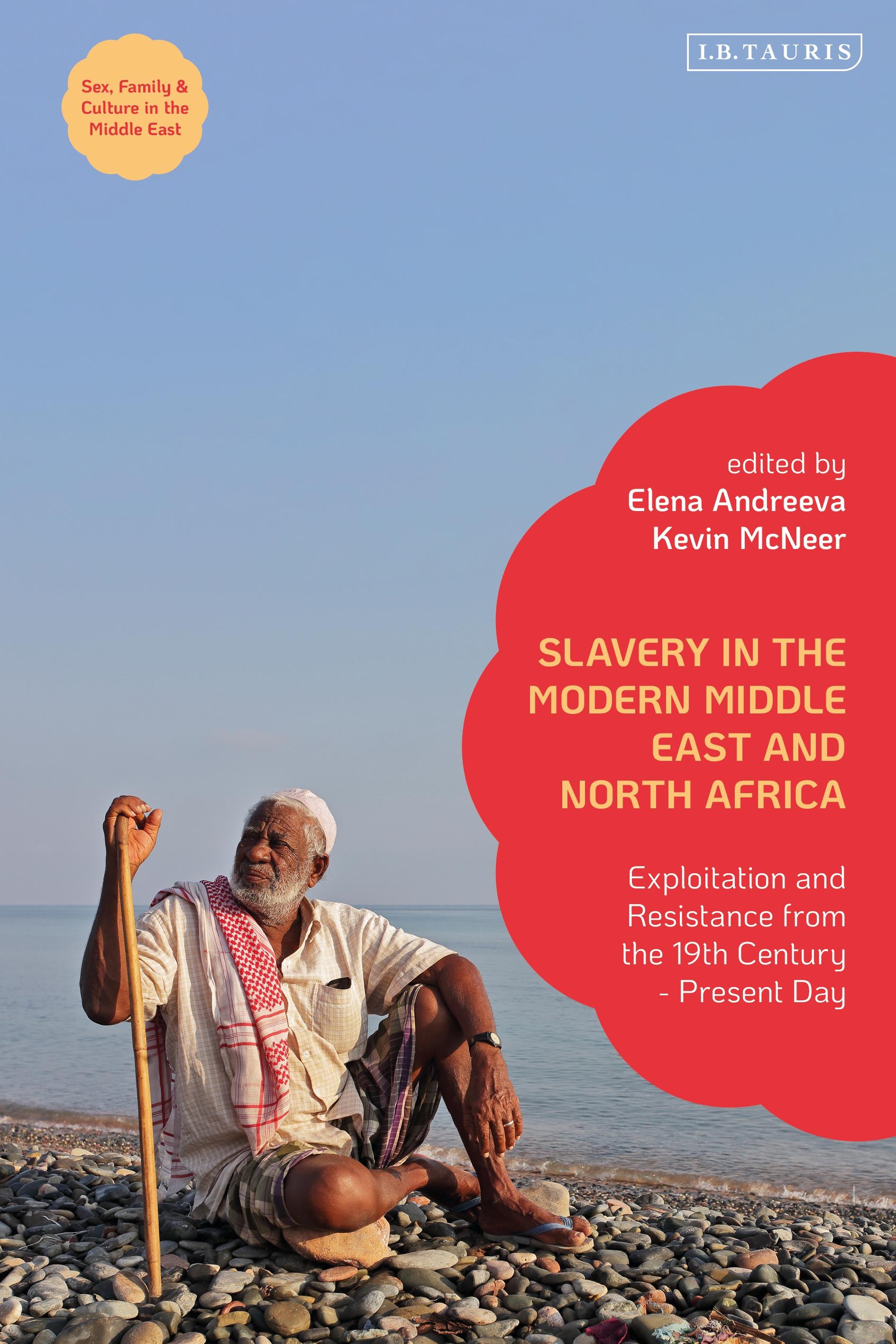
What is the nature of slavery as practiced and at times reintroduced over the past two centuries in the Middle East and North Africa? In spite of the rich regional diversity of the areas studied – from Morocco to the Indian Ocean to Iran – this anthology demonstrates clear commonalities across the super-region. These include the regulation of slavery by Islam and local traditions, the absence of a rigid racial hierarchy as in North American slavery, the management of the sexuality and reproductive capacity of female slaves, and views on identity and heritage among descendants of slaves. Authors also examine the economic and theological underpinnings of contemporary slavery and human trafficking.
The book is among the first to focus on slavery across the Islamic world from the 19th century to the present – a period constituting the endgame of institutionalized slavery in the region but also the persistence of forms of de facto enslavement. Each chapter scrutinizes from a different vantage point – institutions, economics, the abolitionist movement, literature, folklore, and the moving image – creating a multi-dimensional picture of the phenomenon.
The authors have mined government archives and statistics, memoirs, interviews, photographs, drawings, songs, cinema and television. Not only are Arabic, Persian and Turkish sources leveraged, but a variety of materials in minor and endangered languages, such as Soqotri, Balochi and Sorani Kurdish, in addition to European languages.
The book is among the first to focus on slavery across the Islamic world from the 19th century to the present – a period constituting the endgame of institutionalized slavery in the region but also the persistence of forms of de facto enslavement. Each chapter scrutinizes from a different vantage point – institutions, economics, the abolitionist movement, literature, folklore, and the moving image – creating a multi-dimensional picture of the phenomenon.
The authors have mined government archives and statistics, memoirs, interviews, photographs, drawings, songs, cinema and television. Not only are Arabic, Persian and Turkish sources leveraged, but a variety of materials in minor and endangered languages, such as Soqotri, Balochi and Sorani Kurdish, in addition to European languages.
Płać wygodnie kartą, Klarną, Apple Pay lub Google Pay. Nie jesteś zadowolony? Zawsze masz 14-dniową gwarancję zwrotu pieniędzy. Więcej przeczytasz w naszych warunkach. Masz pytania? Napisz do nas na hello@memmo.org.
Memmo ułatwia naukę – gdziekolwiek jesteś na świecie. U nas znajdziesz podręczniki i sprytne narzędzia do nauki w jednym miejscu: streszczenia, quizy, podcasty i fiszki. A do tego Ted, Twój kumpel do nauki, który odpowie na wszystko, co Cię nurtuje. Ponad 50 000 studentów już tu się uczy – stworzone, byś uczył się szybciej i mniej stresował.