
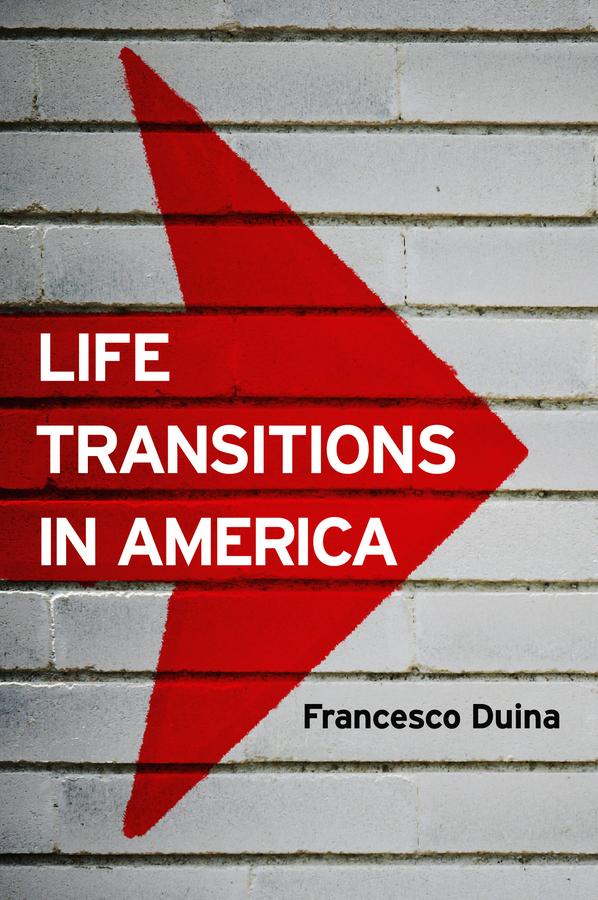
We celebrate, talk about, and worry a great deal about transitions in life. Going to college, having a first child, losing a job, and retiring constitute just a few of the pivotal moments in the lives of many. Sociologists and psychologists have devoted considerable attention to life transitions. Yet we know very little about whether there exists a common thread to our understandings of life transitions in general. How do journalists, leading politicians, sport icons, bestselling authors, government agencies, Hallmark cards, popular TV shows, and other “voices” of popular culture talk about transitions in life? Do these voices provide a coherent picture of how we make sense of life transitions?
In this book, Francesco Duina shows how the dominant American discourse articulates two basic approaches to transitions in life. The first approach depicts transitions as exciting, individualistic opportunities for new beginnings: the past is cast aside, the future is wide open, and the self has the opportunity to recreate itself anew. The second paints transitions as having to do with continuity, our connections to others, and the life-cycle, with an emphasis on acceptance and adaptation. Though contrasting, the two approaches ultimately complement each other. Their analysis reveals a great deal about American culture and society, and will be of great interest to students of the life course and the sociology of culture.
In this book, Francesco Duina shows how the dominant American discourse articulates two basic approaches to transitions in life. The first approach depicts transitions as exciting, individualistic opportunities for new beginnings: the past is cast aside, the future is wide open, and the self has the opportunity to recreate itself anew. The second paints transitions as having to do with continuity, our connections to others, and the life-cycle, with an emphasis on acceptance and adaptation. Though contrasting, the two approaches ultimately complement each other. Their analysis reveals a great deal about American culture and society, and will be of great interest to students of the life course and the sociology of culture.
Płać wygodnie kartą, Klarną, Apple Pay lub Google Pay. Nie jesteś zadowolony? Zawsze masz 14-dniową gwarancję zwrotu pieniędzy. Więcej przeczytasz w naszych warunkach. Masz pytania? Napisz do nas na hello@memmo.org.
Memmo ułatwia naukę – gdziekolwiek jesteś na świecie. U nas znajdziesz podręczniki i sprytne narzędzia do nauki w jednym miejscu: streszczenia, quizy, podcasty i fiszki. A do tego Ted, Twój kumpel do nauki, który odpowie na wszystko, co Cię nurtuje. Ponad 50 000 studentów już tu się uczy – stworzone, byś uczył się szybciej i mniej stresował.
Może Ci się spodobać
Kup książkę0