
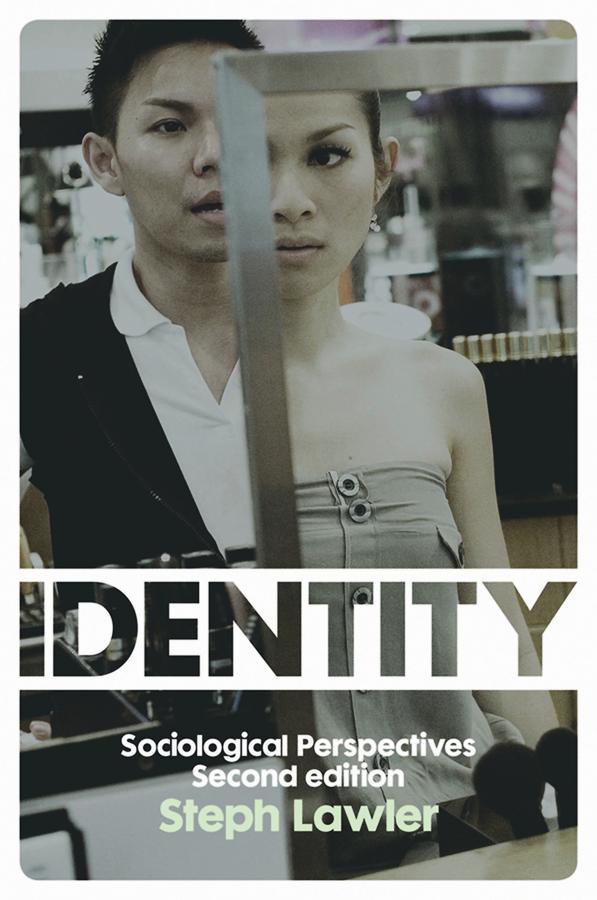
Questions about who we are, who we can be, and who is like and unlike us underpin a vast range of contemporary social issues. What makes our families so important to us? What do the often stark differences between how we self-identify and the way others see and define us reveal about our social world? Why do we attach such significance to 'being ourselves'?
In this new edition of her popular and inviting introduction, Steph Lawler examines a range of important debates about identity. Taking a sociological perspective, she shows how identity is produced and embedded in social relationships, and worked out in the practice of people's everyday lives. She challenges the perception of identity as belonging within the person, arguing instead that it is produced and negotiated between persons. Chapter-by-chapter her book explores topics such as the relationships between lives and life-stories, the continuing significance of kinship in the face of social change, and how taste works to define identity. In particular, the updated edition has a new chapter on identity politics, as well as carefully compiled guides for further reading that reflect the broad importance and impact of these ideas, and the fact that, without understanding identity, we can't adequately begin to understand the social world.
This book is essential reading for upper-level courses across the social sciences that focus on the compelling issues surrounding identity.
In this new edition of her popular and inviting introduction, Steph Lawler examines a range of important debates about identity. Taking a sociological perspective, she shows how identity is produced and embedded in social relationships, and worked out in the practice of people's everyday lives. She challenges the perception of identity as belonging within the person, arguing instead that it is produced and negotiated between persons. Chapter-by-chapter her book explores topics such as the relationships between lives and life-stories, the continuing significance of kinship in the face of social change, and how taste works to define identity. In particular, the updated edition has a new chapter on identity politics, as well as carefully compiled guides for further reading that reflect the broad importance and impact of these ideas, and the fact that, without understanding identity, we can't adequately begin to understand the social world.
This book is essential reading for upper-level courses across the social sciences that focus on the compelling issues surrounding identity.
Płać wygodnie kartą, Klarną, Apple Pay lub Google Pay. Nie jesteś zadowolony? Zawsze masz 14-dniową gwarancję zwrotu pieniędzy. Więcej przeczytasz w naszych warunkach. Masz pytania? Napisz do nas na hello@memmo.org.
Memmo ułatwia naukę – gdziekolwiek jesteś na świecie. U nas znajdziesz podręczniki i sprytne narzędzia do nauki w jednym miejscu: streszczenia, quizy, podcasty i fiszki. A do tego Ted, Twój kumpel do nauki, który odpowie na wszystko, co Cię nurtuje. Ponad 50 000 studentów już tu się uczy – stworzone, byś uczył się szybciej i mniej stresował.
Może Ci się spodobać
Kup książkę0