
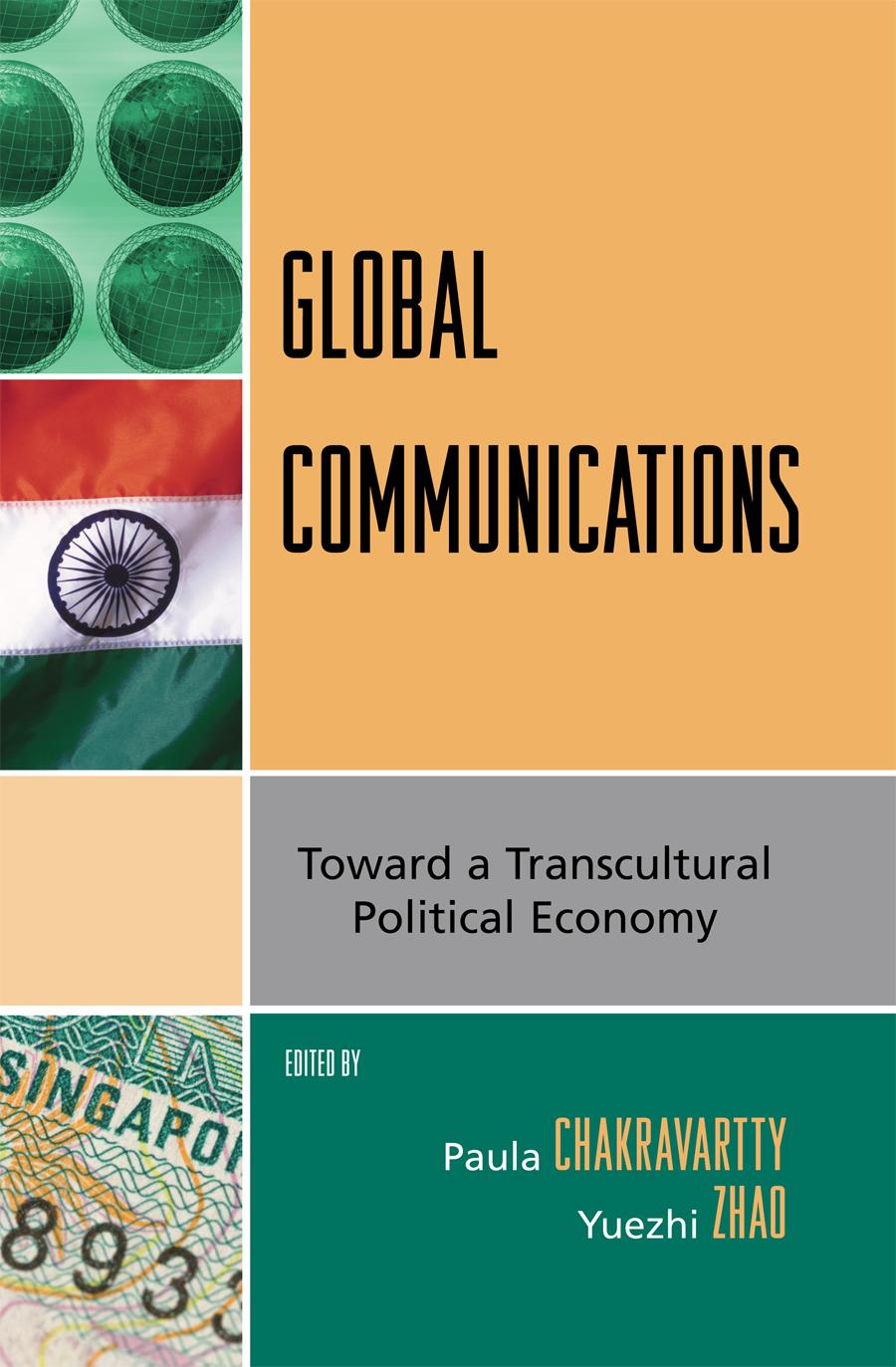
This provocative book takes a new approach toward understanding the uneven flows of global communications. Rather than guiding its discussion by geography, types of media, or traditional separations of power and resistance, Global Communications examines political economic power and communication in relation to historically specific encounters with modernity. It underscores lived experiences in its approach to globalization showing that the state and the market can both be sites of empowerment, just as civil society might also be a site of repression. Taking a political-economic analysis of communication and culture, this dynamic group of international authors looks beyond developments in the North American information and culture industries to map new forms of citizenship and exclusion. The chapters spotlight China, Ghana, India, Japan, Palestine, Russia, Singapore, and Venezuela, and foreground the transnational formations of the European Union, the pan-Arab and Spanish-speaking markets, and civil society actors in sub-Saharan African, the Middle East, and North America. Theoretically driven and empirically grounded, Global Communications defines communication broadly to include production, circulation, and consumption and addresses urgent questions about the inequalities of globalization and the possibilities of hybrid cultural forms and practices.
Płać wygodnie kartą, Klarną, Apple Pay lub Google Pay. Nie jesteś zadowolony? Zawsze masz 14-dniową gwarancję zwrotu pieniędzy. Więcej przeczytasz w naszych warunkach. Masz pytania? Napisz do nas na hello@memmo.org.
Memmo ułatwia naukę – gdziekolwiek jesteś na świecie. U nas znajdziesz podręczniki i sprytne narzędzia do nauki w jednym miejscu: streszczenia, quizy, podcasty i fiszki. A do tego Ted, Twój kumpel do nauki, który odpowie na wszystko, co Cię nurtuje. Ponad 50 000 studentów już tu się uczy – stworzone, byś uczył się szybciej i mniej stresował.