
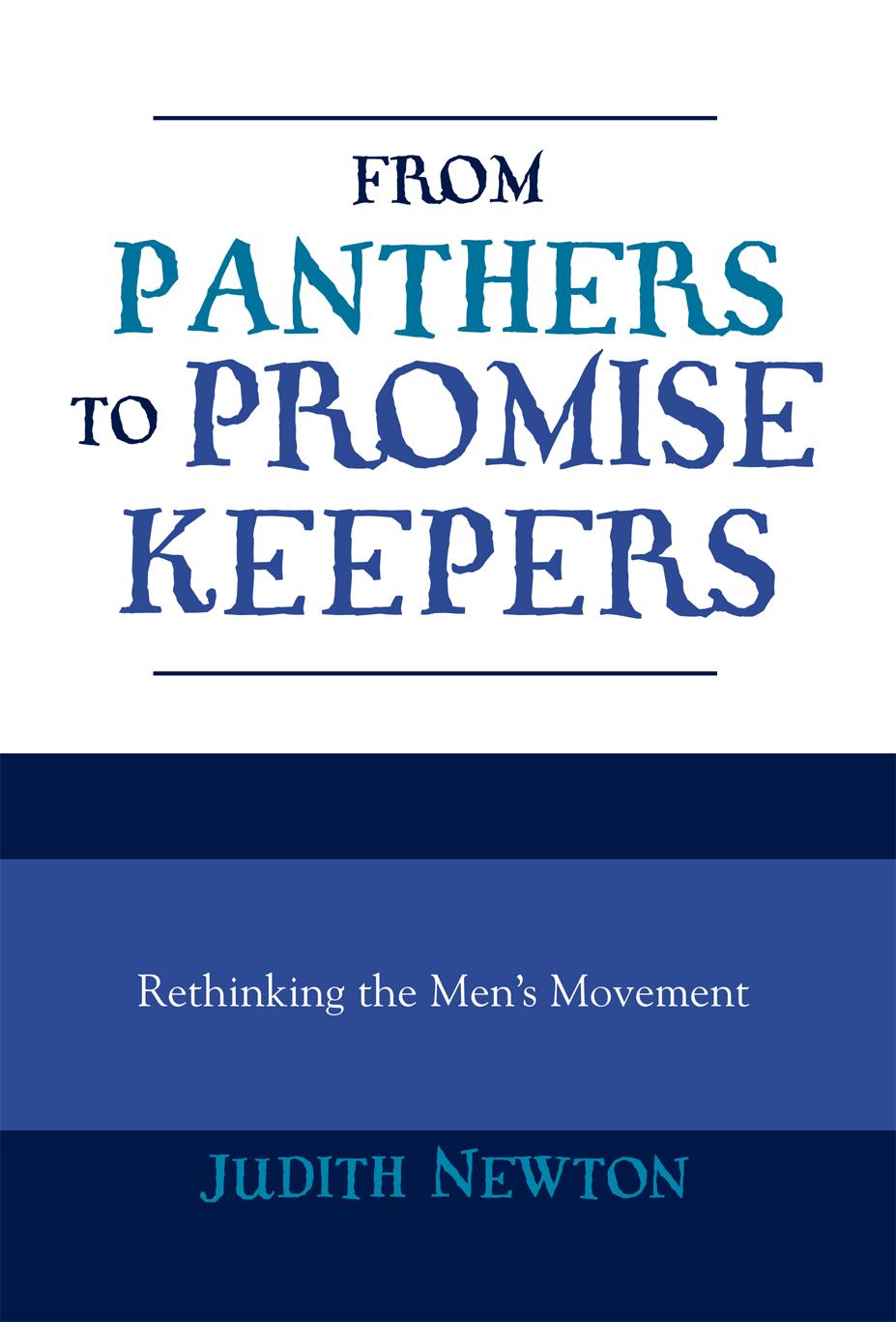
Written for a general audience, From Panthers to Promise Keepers draws on years of readings about, interviews with, and intimate observations of the men and networks who were involved in what some have called "the men's movement." Focusing on the decades between 1950 and 2000 in the U.S., From Panthers to Promise Keepers places networks of gay men and of black men (and women) at the center of its investigations, exploring some of the unexpected ways in which these seemingly marginal networks were precursors to, rather than mere followers of, the white and heterosexual men's groups that followed and that became the objects of media attention. This study also demonstrates that networks with radically different positions on important social issues nonetheless shared two related activities-criticizing individualist, self-making values and attempting, through surprisingly similar ritual practices, to construct ideals of masculinity that were more expressive of vulnerability, tenderness, and care.
Men's politically varied efforts to refashion masculine ideals during the last 50 years have contributed to a different global climate with respect to masculinities. Near the end of the 1990s, agencies such as UNESCO helped the reform of masculine ideals become more widely seen as a necessary component of movements for social justice and a "culture of peace." Current efforts to revive a more aggressive and force-based masculine ideal, a "masculinity for a culture of war," are one of many testaments to the cultural resonance of what has been called "the men's movement."
Men's politically varied efforts to refashion masculine ideals during the last 50 years have contributed to a different global climate with respect to masculinities. Near the end of the 1990s, agencies such as UNESCO helped the reform of masculine ideals become more widely seen as a necessary component of movements for social justice and a "culture of peace." Current efforts to revive a more aggressive and force-based masculine ideal, a "masculinity for a culture of war," are one of many testaments to the cultural resonance of what has been called "the men's movement."
Płać wygodnie kartą, Klarną, Apple Pay lub Google Pay. Nie jesteś zadowolony? Zawsze masz 14-dniową gwarancję zwrotu pieniędzy. Więcej przeczytasz w naszych warunkach. Masz pytania? Napisz do nas na hello@memmo.org.
Memmo ułatwia naukę – gdziekolwiek jesteś na świecie. U nas znajdziesz podręczniki i sprytne narzędzia do nauki w jednym miejscu: streszczenia, quizy, podcasty i fiszki. A do tego Ted, Twój kumpel do nauki, który odpowie na wszystko, co Cię nurtuje. Ponad 50 000 studentów już tu się uczy – stworzone, byś uczył się szybciej i mniej stresował.