
Why do Blacks underperform in school? Researchers continue to pursue this question with vigor not only because Blacks currently lag behind Whites on a wide variety of educational indices but because the closing of the Black-White achievement gap has slowed and by some measures reversed during the last quarter of the 20th century. The social implications of the persistent educational "gap" between Blacks and Whites are substantial. Black people's experience with poor school achievement and equally poor access to postsecondary education reduces their probability for achieving competitive economic and social rewards and are inconsistent with repeated evidence that Black people articulate high aspirations for their own educational and social mobility. Despite the social needs that press us towards making better sense of "the gap," we are, nevertheless, limited in our understanding of how race operates to affect Black students' educational experiences and outcomes.
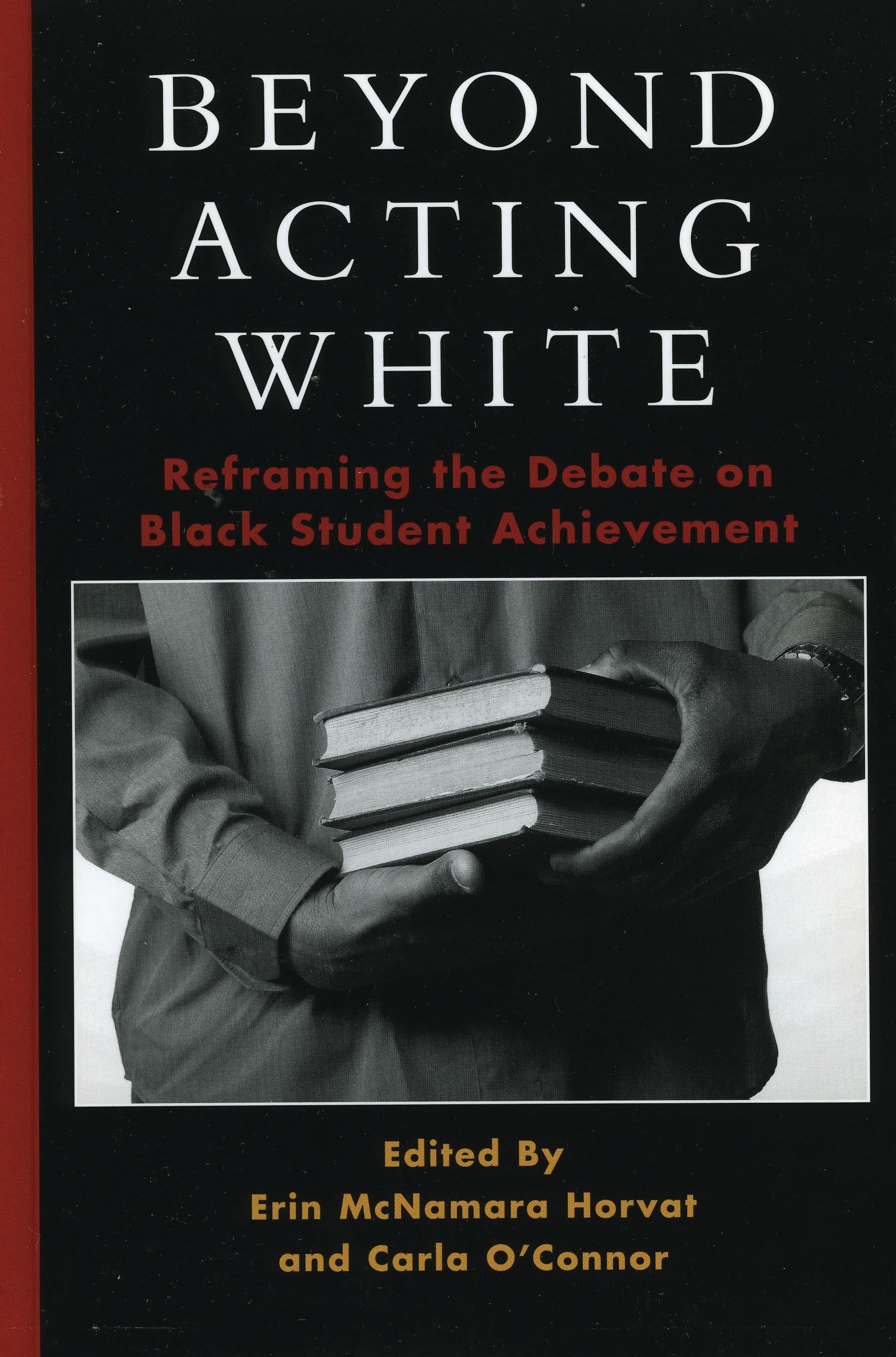
In Beyond Acting White we contend with one of the most oft cited explanations for Black underachievement; the notion that Blacks are culturally opposed to "acting White" and, therefore, culturally opposed to succeeding in school. Our book uses the "acting White" hypothesis as the point of departure in order to explore and evaluate how and under what conditions Black culture and identity are implicated in our understanding of why Black students continue to lag behind their White peers in educational achievement and attainment. Beyond Acting White provides a response to the growing call that we more precisely situate how race, its representations, intersectionalities, and context specific contingencies help us make better sense of the Black-White achievement gap.
In Beyond Acting White we contend with one of the most oft cited explanations for Black underachievement; the notion that Blacks are culturally opposed to "acting White" and, therefore, culturally opposed to succeeding in school. Our book uses the "acting White" hypothesis as the point of departure in order to explore and evaluate how and under what conditions Black culture and identity are implicated in our understanding of why Black students continue to lag behind their White peers in educational achievement and attainment. Beyond Acting White provides a response to the growing call that we more precisely situate how race, its representations, intersectionalities, and context specific contingencies help us make better sense of the Black-White achievement gap.
Płać wygodnie kartą, Klarną, Apple Pay lub Google Pay. Nie jesteś zadowolony? Zawsze masz 14-dniową gwarancję zwrotu pieniędzy. Więcej przeczytasz w naszych warunkach. Masz pytania? Napisz do nas na hello@memmo.org.
Memmo ułatwia naukę – gdziekolwiek jesteś na świecie. U nas znajdziesz podręczniki i sprytne narzędzia do nauki w jednym miejscu: streszczenia, quizy, podcasty i fiszki. A do tego Ted, Twój kumpel do nauki, który odpowie na wszystko, co Cię nurtuje. Ponad 50 000 studentów już tu się uczy – stworzone, byś uczył się szybciej i mniej stresował.