
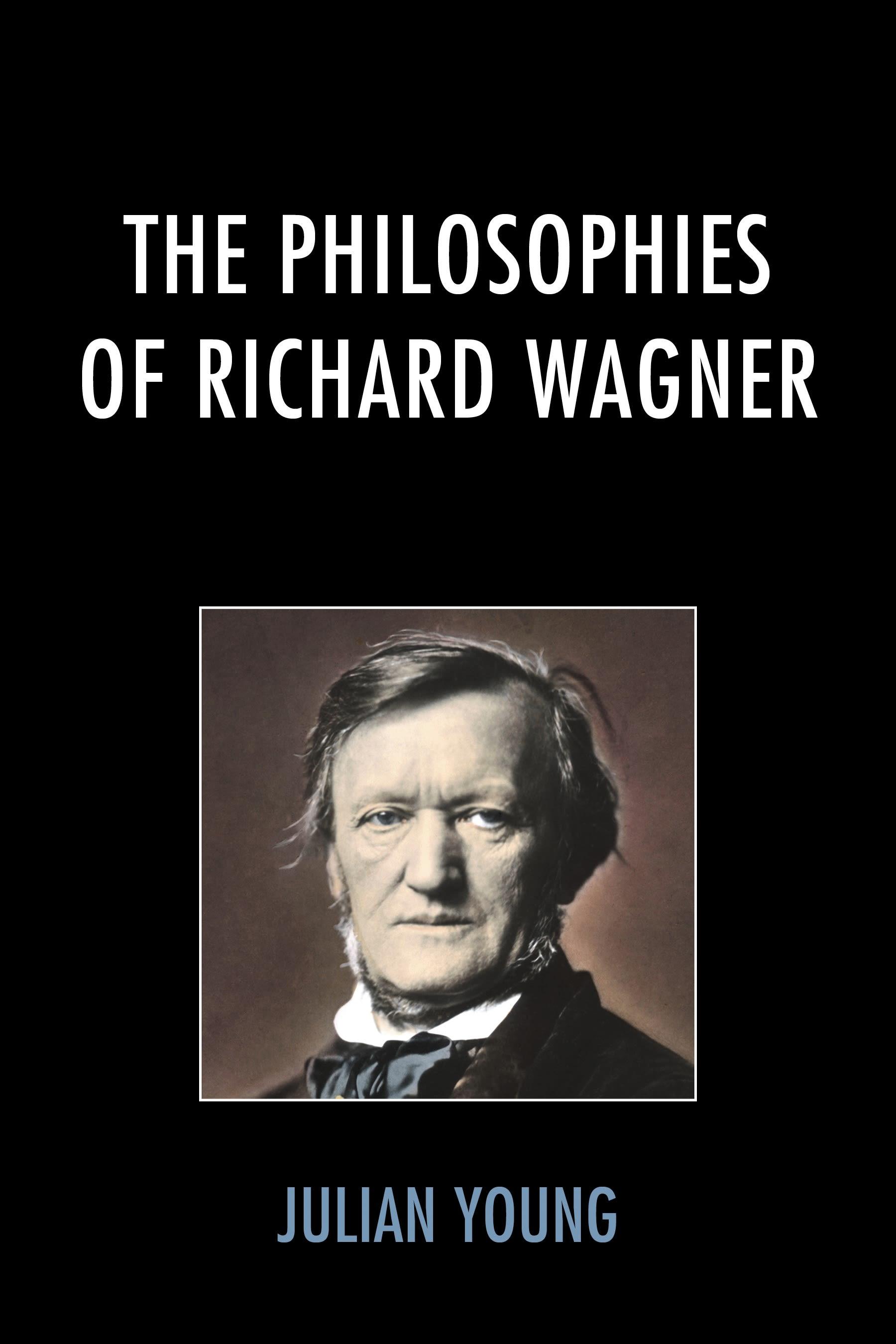
In addition to being a great composer, Richard Wagner was also an important philosopher. Julian Young begins by examining the philosophy of art and society Wagner constructs during his time as a revolutionary anarchist-communist. Modernity, Wagner argued, is to be rescued from its current anomie through the rebirth of Greek tragedy (the original Gesamtkunstwerk) in the form of the “artwork of the future," an artwork of which his own operas are the prototype.
Young then examines the entirely different philosophy Wagner constructs after his 1854 conversion from Hegelian optimism to Schopenhauerian pessimism. “Redemption” now becomes, not a future utopia in this world, but rather “transfigured” existence in another world, attainable only through death. Viewing Wagner’s operas through the lens of his philosophy, the book offers often novel interpretations of Lohengrin, The Ring cycle, Tristan und Isolde, Die Meistersinger, and Parsifal.
Finally, Young dresses the cause of Friedrich Nietzsche’s transformation from Wagner’s intimate friend and disciple into his most savage critic. Nietzsche’s fundamental accusation, it is argued, is one of betrayal: that Wagner betrayed his early, “life affirming” philosophy of art and life in favor of “life-denial." Nietzsche’s assertion and the final conclusion of the book is that our task, now, is to “become better Wagnerians than Wagner.”
Young then examines the entirely different philosophy Wagner constructs after his 1854 conversion from Hegelian optimism to Schopenhauerian pessimism. “Redemption” now becomes, not a future utopia in this world, but rather “transfigured” existence in another world, attainable only through death. Viewing Wagner’s operas through the lens of his philosophy, the book offers often novel interpretations of Lohengrin, The Ring cycle, Tristan und Isolde, Die Meistersinger, and Parsifal.
Finally, Young dresses the cause of Friedrich Nietzsche’s transformation from Wagner’s intimate friend and disciple into his most savage critic. Nietzsche’s fundamental accusation, it is argued, is one of betrayal: that Wagner betrayed his early, “life affirming” philosophy of art and life in favor of “life-denial." Nietzsche’s assertion and the final conclusion of the book is that our task, now, is to “become better Wagnerians than Wagner.”
Płać wygodnie kartą, Klarną, Apple Pay lub Google Pay. Nie jesteś zadowolony? Zawsze masz 14-dniową gwarancję zwrotu pieniędzy. Więcej przeczytasz w naszych warunkach. Masz pytania? Napisz do nas na hello@memmo.org.
Memmo ułatwia naukę – gdziekolwiek jesteś na świecie. U nas znajdziesz podręczniki i sprytne narzędzia do nauki w jednym miejscu: streszczenia, quizy, podcasty i fiszki. A do tego Ted, Twój kumpel do nauki, który odpowie na wszystko, co Cię nurtuje. Ponad 50 000 studentów już tu się uczy – stworzone, byś uczył się szybciej i mniej stresował.