
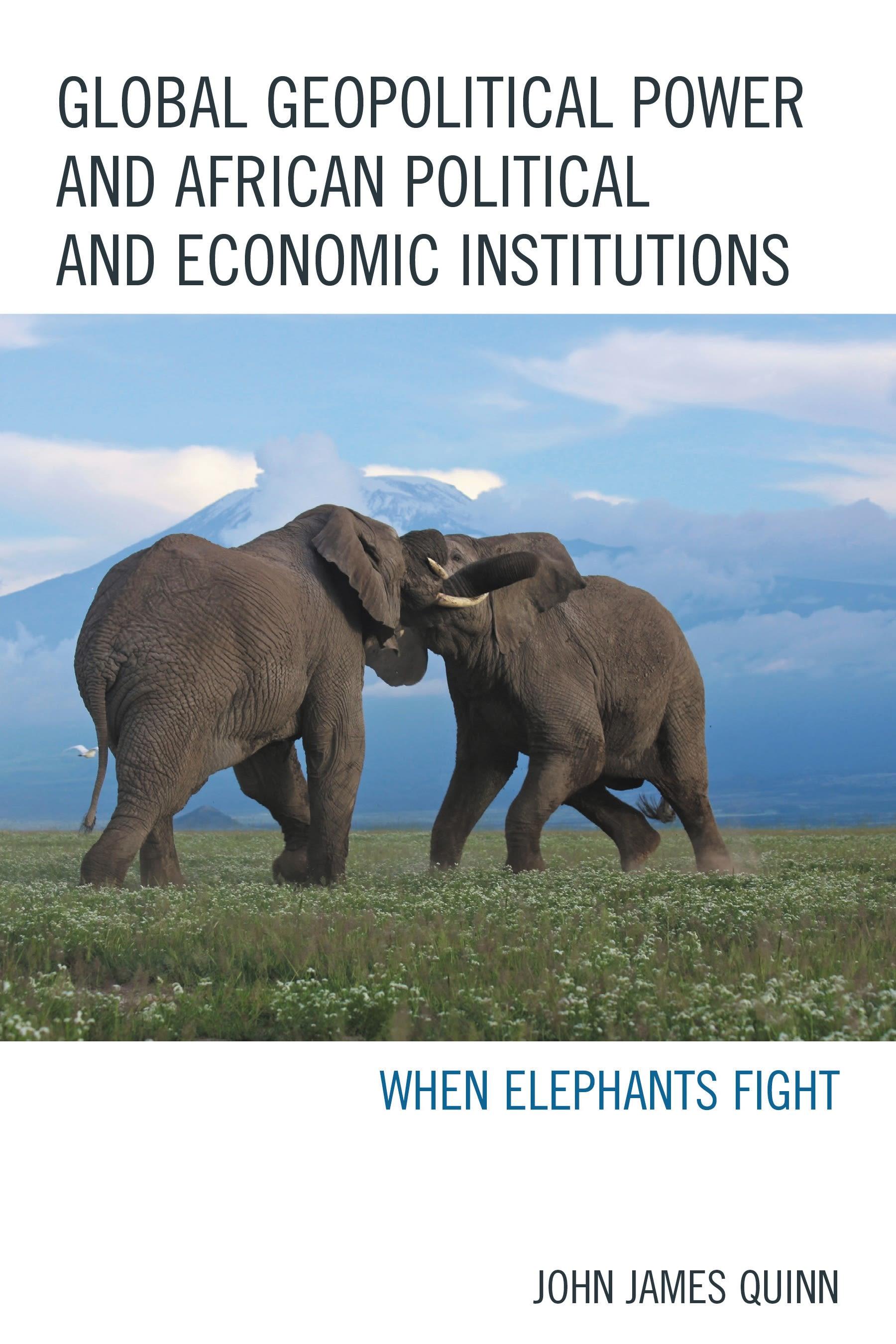
Global Geopolitical Power and African Political and Economic Institutions: When Elephants Fight describes the emergence and nature of the prevailing African political and economic institutions in two periods. In the first, most countries adopted political and economic institutions that funneled significant levels of political and economic power to the political elites, usually through one- or no-party (military) political systems, inward-oriented development policies, and/ or state-led—and often state-owned—industrialization. In the second period, most countries adopted institutions that diluted the overarching political and economic power of ruling elites through the adoption of de jure multiparty electoral systems, more outward-oriented trade policies, and the privatization of many state owned or controlled sectors, though significant political and economic power remains in their hands. The choices made in each period were consistent with prevailing ideas on governance and development, the self-interests of political elites, and the perceived availability of support or autonomy vis-à-vis domestic, regional, and international sources of power at the time.
This book illustrates how these two region-wide shifts in prevailing political and economic institutions and practices of Africa can be linked to two prior global geopolitical realignments: the end of WWII with the ensuing American and Soviet led bipolar system, and the end of the Cold War with American primacy. Each period featured changed or newly empowered international and regional leaders with competing national priorities within new intellectual and geopolitical climates, altering the opportunities and constraints for African leaders in instituting or maintaining particular political and economic institutions or practices. The economic and political institutions of Africa that emerged did so as a result of a complex mix of contending domestic, regional, and international forces (material and intellectual)—all which were themselves greatly transformed in the wake of these two global geopolitical realignments.
This book illustrates how these two region-wide shifts in prevailing political and economic institutions and practices of Africa can be linked to two prior global geopolitical realignments: the end of WWII with the ensuing American and Soviet led bipolar system, and the end of the Cold War with American primacy. Each period featured changed or newly empowered international and regional leaders with competing national priorities within new intellectual and geopolitical climates, altering the opportunities and constraints for African leaders in instituting or maintaining particular political and economic institutions or practices. The economic and political institutions of Africa that emerged did so as a result of a complex mix of contending domestic, regional, and international forces (material and intellectual)—all which were themselves greatly transformed in the wake of these two global geopolitical realignments.
Strony: 410
Kategoria: Statsvetenskap & Politik
e-ISBN: 9780739196458
Waga przesyłki: 1.2 kg
Wysyłka w ciągu: 1-2 dni
Płać wygodnie kartą, Klarną, Apple Pay lub Google Pay. Nie jesteś zadowolony? Zawsze masz 14-dniową gwarancję zwrotu pieniędzy. Więcej przeczytasz w naszych warunkach. Masz pytania? Napisz do nas na hello@memmo.org.
Memmo ułatwia naukę – gdziekolwiek jesteś na świecie. U nas znajdziesz podręczniki i sprytne narzędzia do nauki w jednym miejscu: streszczenia, quizy, podcasty i fiszki. A do tego Ted, Twój kumpel do nauki, który odpowie na wszystko, co Cię nurtuje. Ponad 50 000 studentów już tu się uczy – stworzone, byś uczył się szybciej i mniej stresował.