
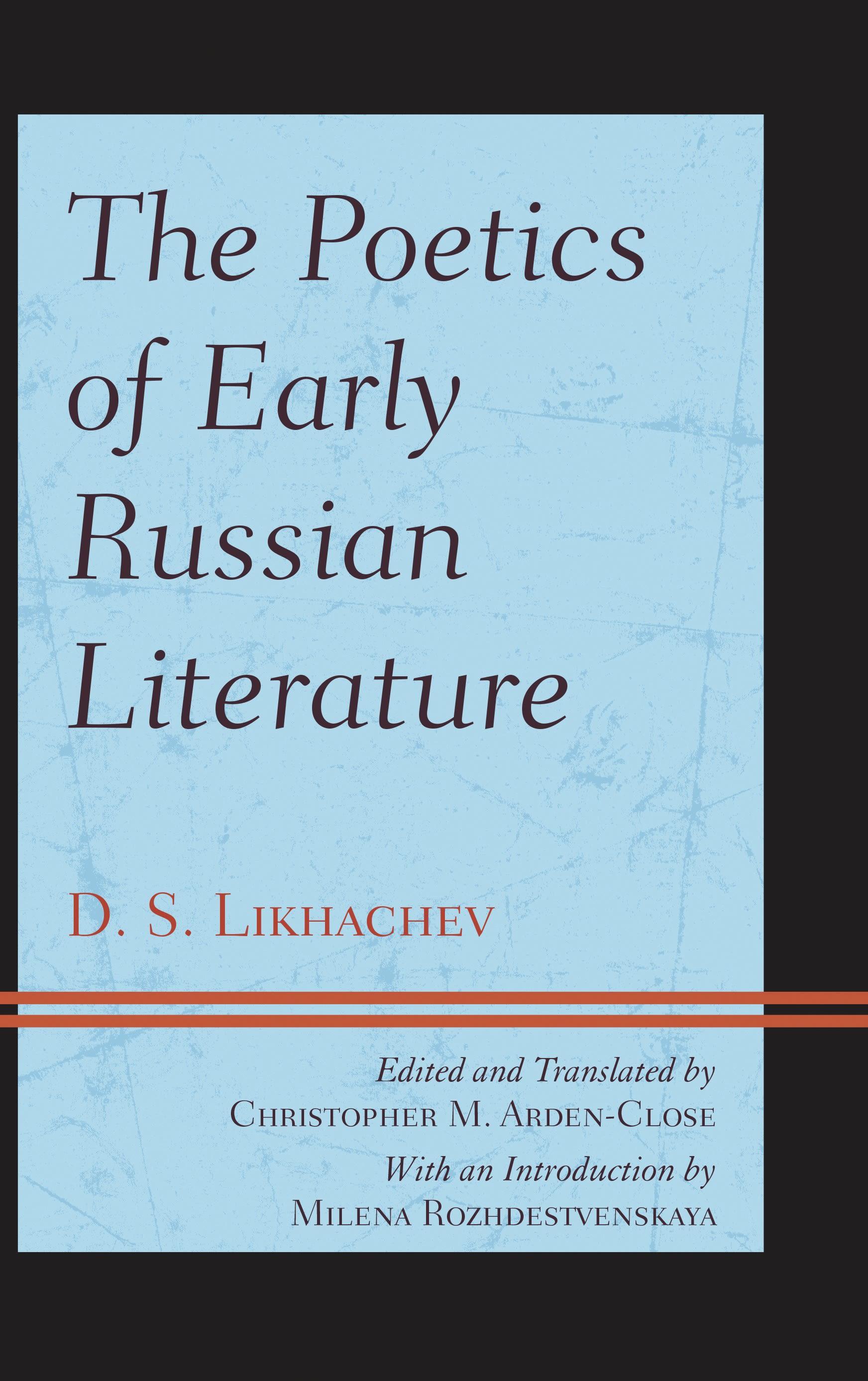
This translation of Likhachev’s Poetika Drevnerusskoy Literatury (The Poetics of Early Russian Literature), provides a description of the basic themes of early (tenth to seventeenth century) Russian literature. Likhachev compares literary narrative with narrative used in the representational arts. Furthermore, Likhachev stresses the genre-based character of medieval Russian literature and shows how choice of style in medieval times depended on a genre with its own specific etiquette and how innovation was discouraged.
The text contrasts medieval abstraction and modern realism, as Likhachev shows how realisticness gradually breaks through in specific situations—such as those of princely crimes. Likhachev draws contrasts in three different areas: the basic stock of symbols and comparisons used in early Russian literature with those used in modern literature, artistic time in folklore and early Russian literature, and artistic space in folklore and early Russian literature. Likhachev traces the gradual development into modern artistic time through a comparison of the chronicle, the first Russian play, the seventeenth century writer Avvakum, and three modern authors, Goncharov, Dostoevsky and Saltykov-Shchedrin. Finally, the text gives a justification for studying early literatures. This book will be invaluable for students of Russian, medieval and comparative literature.
The text contrasts medieval abstraction and modern realism, as Likhachev shows how realisticness gradually breaks through in specific situations—such as those of princely crimes. Likhachev draws contrasts in three different areas: the basic stock of symbols and comparisons used in early Russian literature with those used in modern literature, artistic time in folklore and early Russian literature, and artistic space in folklore and early Russian literature. Likhachev traces the gradual development into modern artistic time through a comparison of the chronicle, the first Russian play, the seventeenth century writer Avvakum, and three modern authors, Goncharov, Dostoevsky and Saltykov-Shchedrin. Finally, the text gives a justification for studying early literatures. This book will be invaluable for students of Russian, medieval and comparative literature.
Płać wygodnie kartą, Klarną, Apple Pay lub Google Pay. Nie jesteś zadowolony? Zawsze masz 14-dniową gwarancję zwrotu pieniędzy. Więcej przeczytasz w naszych warunkach. Masz pytania? Napisz do nas na hello@memmo.org.
Memmo ułatwia naukę – gdziekolwiek jesteś na świecie. U nas znajdziesz podręczniki i sprytne narzędzia do nauki w jednym miejscu: streszczenia, quizy, podcasty i fiszki. A do tego Ted, Twój kumpel do nauki, który odpowie na wszystko, co Cię nurtuje. Ponad 50 000 studentów już tu się uczy – stworzone, byś uczył się szybciej i mniej stresował.