
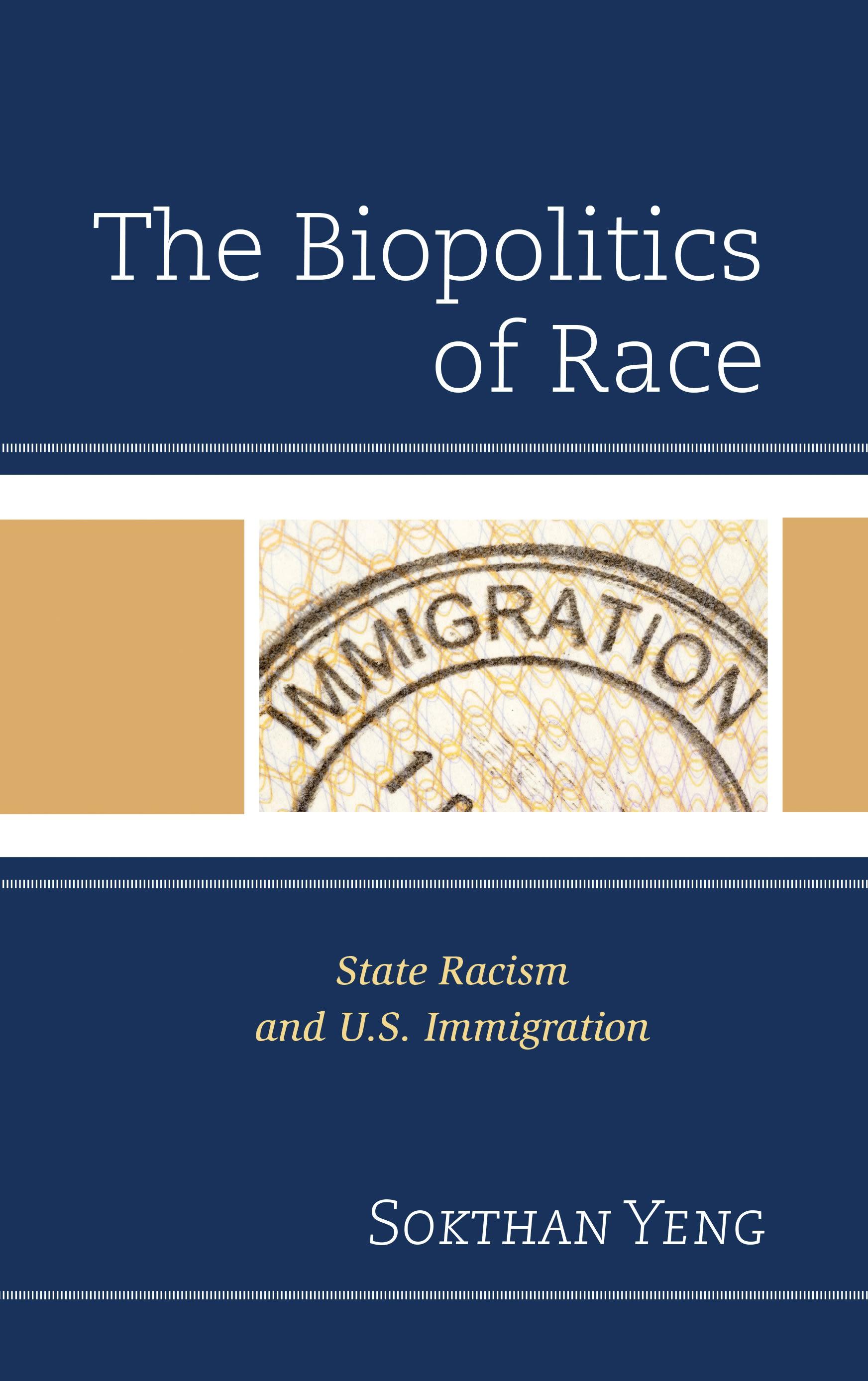
Many political figures insist that their anti-immigration sentiments have nothing to do with race and racism. Americans seem largely unconvinced, which is why politicians must protest so loudly and often. In order to deflect accusations of racism, public figures evoke the neo-liberal principle that calls for protection of state health and resources. Yet contemporary philosophers such as Hanna Arendt, Michel Foucault, and Giorgio Agamben argue that neo-liberal ideology is racist. Sokthan Yeng applies their analysis to the debate over immigration policies to show that neo-liberalism not only recodes traditional racist rhetoric but also expands systemic racism. Politicians can say that their anti-immigration policies are meant to protect the nation’s economy and strength. It is no coincidence, however, that the populations most affected by these regulations are ethnic and cultural minorities such as Mexican and Muslim immigrants.
The analysis presented in The Biopolitics of Race will be valuable to philosophers and other scholars or students interested in critical race theory, feminism, and queer theory. It also has implications for anyone working in public health, bioethics, or migration studies.
The analysis presented in The Biopolitics of Race will be valuable to philosophers and other scholars or students interested in critical race theory, feminism, and queer theory. It also has implications for anyone working in public health, bioethics, or migration studies.
Płać wygodnie kartą, Klarną, Apple Pay lub Google Pay. Nie jesteś zadowolony? Zawsze masz 14-dniową gwarancję zwrotu pieniędzy. Więcej przeczytasz w naszych warunkach. Masz pytania? Napisz do nas na hello@memmo.org.
Memmo ułatwia naukę – gdziekolwiek jesteś na świecie. U nas znajdziesz podręczniki i sprytne narzędzia do nauki w jednym miejscu: streszczenia, quizy, podcasty i fiszki. A do tego Ted, Twój kumpel do nauki, który odpowie na wszystko, co Cię nurtuje. Ponad 50 000 studentów już tu się uczy – stworzone, byś uczył się szybciej i mniej stresował.