
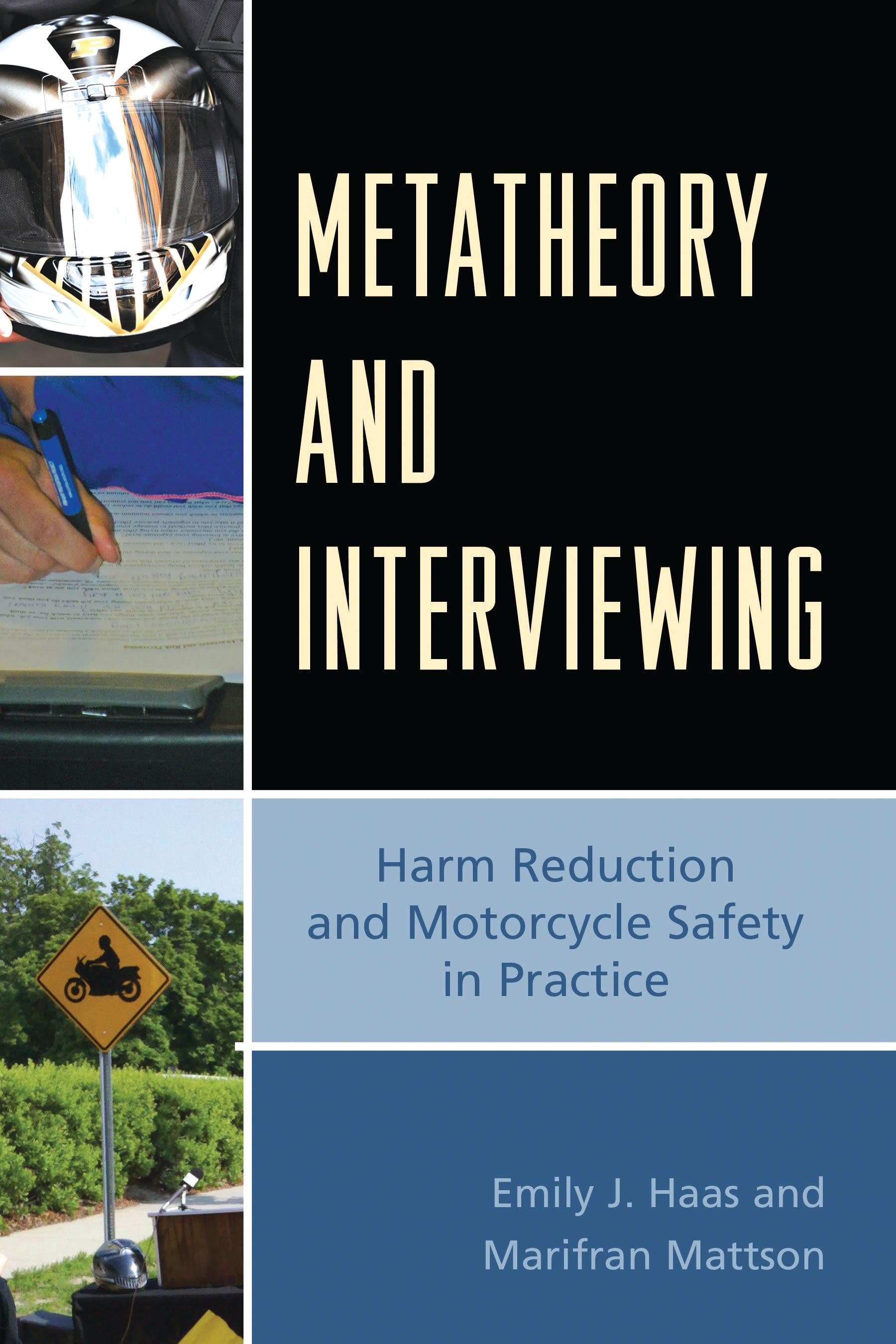
Metatheory and Interviewing: Harm Reduction and Motorcycle Safety in Practice
describes and applies a unique approach for advancing harm reduction theory. Emily J. Haas and Marifran Mattson argue that using harm reduction as a metatheory to guide qualitative interviews strengthens the use and acceptance of harm reduction and the application of constructs within health theories. Through analysis of in-depth interviews with respective participants—at-risk motorcyclists—which are informed by harm reduction metatheory, the authors examine how this unique approach to interviewing can be used to link metatheory, theory, methodology, and ultimately application and translation of research results. Metatheory and Interviewing culminates with a discussion of how the way we conduct and analyze interviews facilitates a deeper, more intimate conversation with research participants by encouraging them to incorporate the same, overarching harm reduction framework to provide feedback about changing specific health behaviors. Scholars of health communication and research will understand the critical role of a humanistic attitude and pragmatic communication with participants, as well as the importance of further extrapolating these strategies to their broader target audience.
describes and applies a unique approach for advancing harm reduction theory. Emily J. Haas and Marifran Mattson argue that using harm reduction as a metatheory to guide qualitative interviews strengthens the use and acceptance of harm reduction and the application of constructs within health theories. Through analysis of in-depth interviews with respective participants—at-risk motorcyclists—which are informed by harm reduction metatheory, the authors examine how this unique approach to interviewing can be used to link metatheory, theory, methodology, and ultimately application and translation of research results. Metatheory and Interviewing culminates with a discussion of how the way we conduct and analyze interviews facilitates a deeper, more intimate conversation with research participants by encouraging them to incorporate the same, overarching harm reduction framework to provide feedback about changing specific health behaviors. Scholars of health communication and research will understand the critical role of a humanistic attitude and pragmatic communication with participants, as well as the importance of further extrapolating these strategies to their broader target audience.
Płać wygodnie kartą, Klarną, Apple Pay lub Google Pay. Nie jesteś zadowolony? Zawsze masz 14-dniową gwarancję zwrotu pieniędzy. Więcej przeczytasz w naszych warunkach. Masz pytania? Napisz do nas na hello@memmo.org.
Memmo ułatwia naukę – gdziekolwiek jesteś na świecie. U nas znajdziesz podręczniki i sprytne narzędzia do nauki w jednym miejscu: streszczenia, quizy, podcasty i fiszki. A do tego Ted, Twój kumpel do nauki, który odpowie na wszystko, co Cię nurtuje. Ponad 50 000 studentów już tu się uczy – stworzone, byś uczył się szybciej i mniej stresował.