
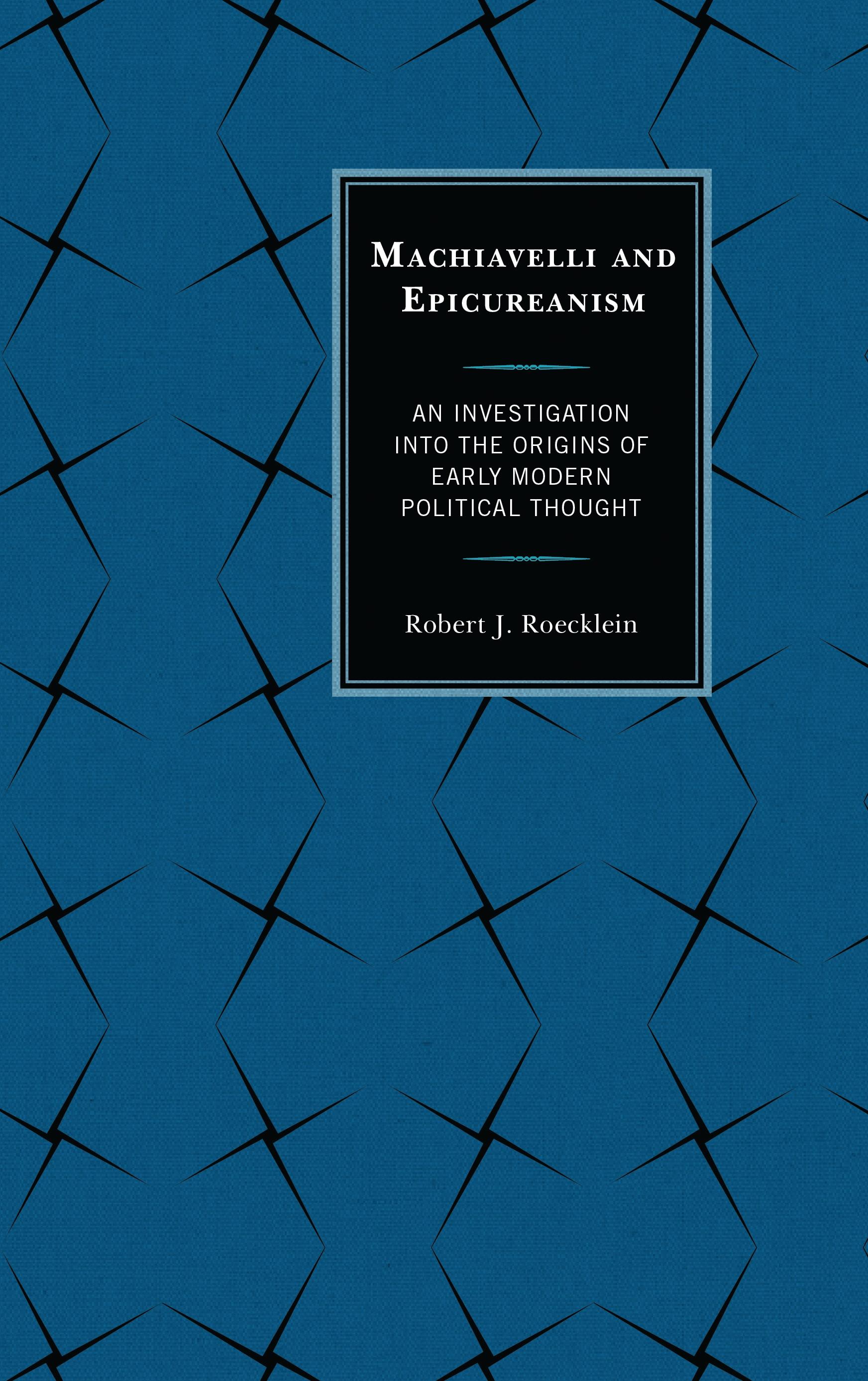
This book investigates the influence of Epicurean physics on the argument developed in Machiavelli’s Discourses on Livy. Towards this end, the full philosophical history and origins of atomist philosophy are investigated during the first three chapters. Plato’s critique of the atomist philosophy, from his dialogue the Parmenides, is a part of that investigation. In fact, Plato provides a refutation of the atomist philosophy in the Parmenides. A significant amount of scholarship has been accomplished that demonstrates the currents of Lucretian atomism in Machiavelli’s Florence. Evidence is supplied as to Machiavelli’s exposure to the Lucretian text, and the book then proceeds to investigate the transformational arguments of the Discourses On Livy itself. Machiavelli’s Discourses are saturated with terminology that is borrowed from physics: ‘materia’ (Matter), ‘corpo’ (body), ‘forma’ (form), ‘accidente’ (accident). English translators have usually employed some theory as to which tradition of physics Machiavelli is relying upon, in order to conduct their translations. By borrowing the terminology of Lucretian physics, Machiavelli becomes able to conceive of the people in a political society as something less than human: as ‘matter’ or materia without form. In my analysis of Machiavelli’s deployment of the concepts from Lucretian physics, it is attempted to unveil the brutality that is inherent in Machiavelli’s new definitions of the elements of politics, and the general hostility of his political science to the Aristotelian concept of the human being as political animal. The classical physics of Aristotle, which Machiavelli has rejected for a model, indicates the forward looking momentum of natural beings. For Aristotle, nature intends human political society as the arena for human fulfillment. In Aristotelian physics, nature aims at an end in generation, i.e. at a culmination of the natural being in its proper condition of excellence. For human beings, this is justice, the quality of relationships that makes happiness possible. In Machiavelli, a new politicized physics is revealed. In Machiavelli’s model, the human beings of formed matter are repeatedly sent, through new institutions and methods of government, ‘back to their beginnings’, i.e. to a condition of isolation, destitution, injury, and pain. The last chapter of the book concludes with an examination of the particular institutions and methods that Machiavelli holds out to us for employment, if his new vision of a republic is to be realized.
Płać wygodnie kartą, Klarną, Apple Pay lub Google Pay. Nie jesteś zadowolony? Zawsze masz 14-dniową gwarancję zwrotu pieniędzy. Więcej przeczytasz w naszych warunkach. Masz pytania? Napisz do nas na hello@memmo.org.
Memmo ułatwia naukę – gdziekolwiek jesteś na świecie. U nas znajdziesz podręczniki i sprytne narzędzia do nauki w jednym miejscu: streszczenia, quizy, podcasty i fiszki. A do tego Ted, Twój kumpel do nauki, który odpowie na wszystko, co Cię nurtuje. Ponad 50 000 studentów już tu się uczy – stworzone, byś uczył się szybciej i mniej stresował.