
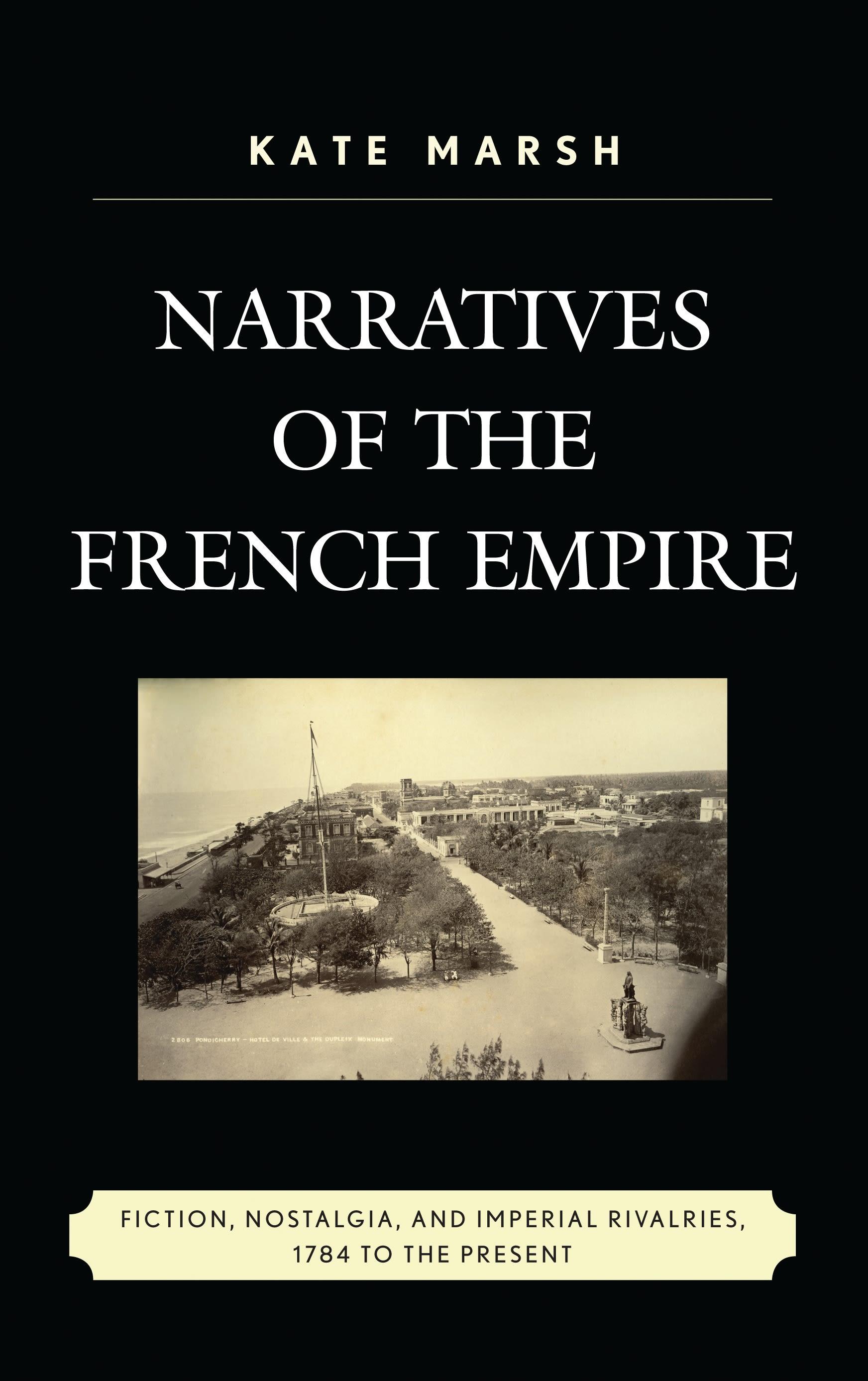
This study interrogates how the French empire was imagined in three literary representations of French colonialism: the conquest of Tahiti, and the established colonial systems in Martinique and in India. The study is the first in either English or French to demonstrate that representations of power relations, as well as the broader discourses with which they were linked, were as closely concerned with probing the similarities and differences of rival European colonial systems as they were with reinforcing their imagined superiority over the colonized, and that such power relations should not be conceptualized as a dualistic categorization of ‘colonizer’ versus ‘colonized’. In doing so, it aims to go beyond examining the interaction between colonized and colonizer, or between colonial centre and periphery, and to interrogate instead the circulation of ideas and practices across different sites of European colonialism, drawing attention to a historical complexity which has been neglected in the necessary race to recover voices previously occluded from academic analysis. In exploring how the notion of the French empire overseas was construed and how it was infused with meaning at three different historical moments, 1784, 1835 and 1938, it demonstrates how precarious the French empire was perceived to be, in terms of both European rivalry and resistance from the colonized, and how the rhetoric of a French colonisation douce was pitted against the inscribed excesses of the more powerful British empire. Rather than employing the sorts of recuperative agenda which focus on how the colonized were elided (viz., Subaltern Studies) or on the writings of the formerly colonized (viz., Francophone Studies), the study concerns itself specifically with how French colonialism and imperialism were perceived, and thus offers a further corrective to any generalizations about European colonialism and imperialism. More particularly, by examining how the representational strategy of nostalgia is used in these texts, the study demonstrates how perceived loss, and nostalgia for an imperial past, played a role in dynamically shaping the French colonial enterprise across its various manifestations.
Płać wygodnie kartą, Klarną, Apple Pay lub Google Pay. Nie jesteś zadowolony? Zawsze masz 14-dniową gwarancję zwrotu pieniędzy. Więcej przeczytasz w naszych warunkach. Masz pytania? Napisz do nas na hello@memmo.org.
Memmo ułatwia naukę – gdziekolwiek jesteś na świecie. U nas znajdziesz podręczniki i sprytne narzędzia do nauki w jednym miejscu: streszczenia, quizy, podcasty i fiszki. A do tego Ted, Twój kumpel do nauki, który odpowie na wszystko, co Cię nurtuje. Ponad 50 000 studentów już tu się uczy – stworzone, byś uczył się szybciej i mniej stresował.