
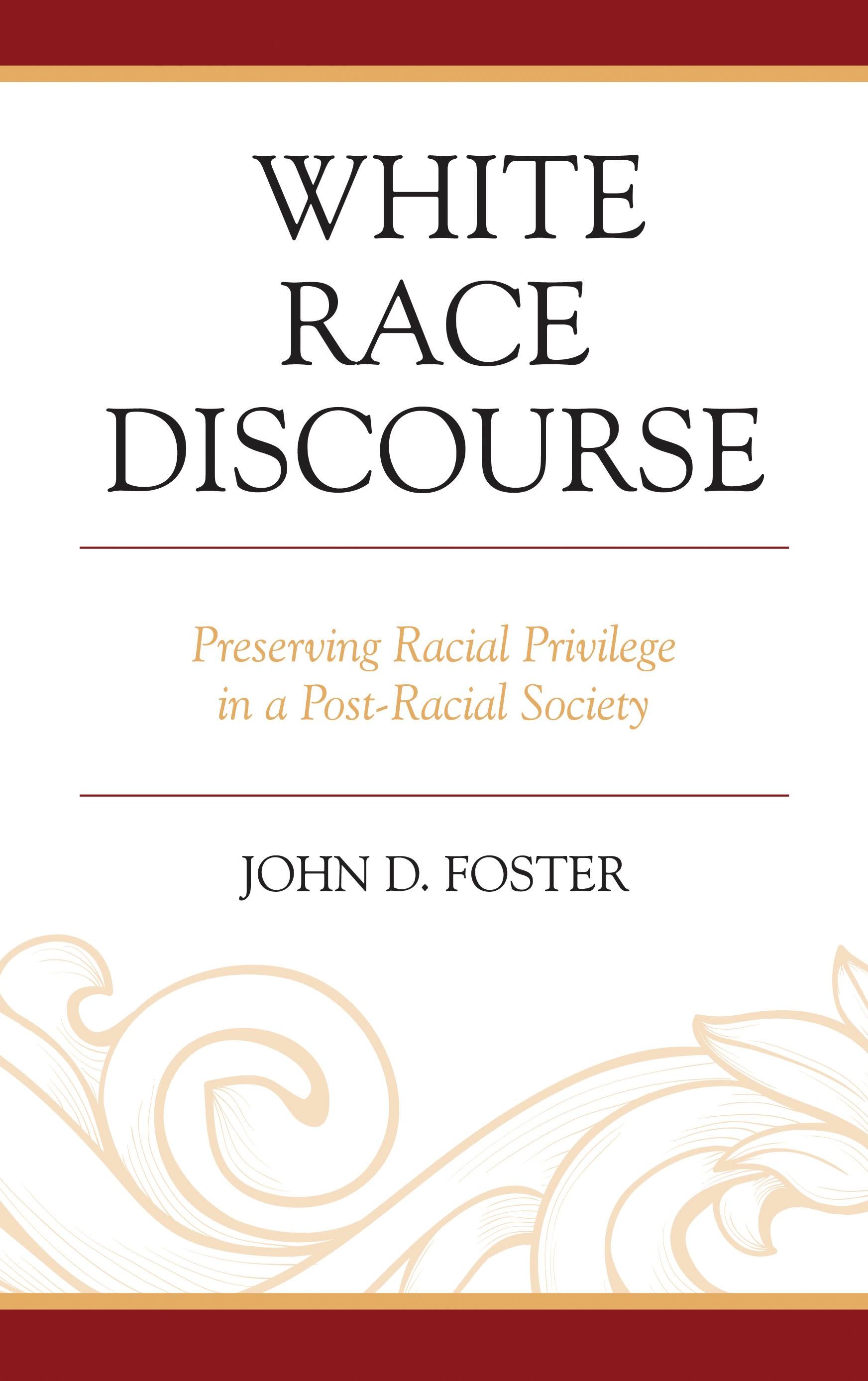
The election of Barack Obama as president led some to suggest that not only has US society made significant strides toward racial equality, but it has moved beyond race or become “post-racial.” In fact, studies have exposed numerous contradictions between the ways white Americans answer questions on surveys and how they respond to similar questions during in-depth interviews. How do we make sense of these contradictions? In White Race Discourse: Preserving Racial Privilege in a Post-Racial Society, John D. Foster examines the numerous contradictions sixty-one white college students exhibit as they discuss a variety of race matters. Foster demonstrates that the whites interviewed possess a sophisticated method of communication to come across as ambivalent, tolerant, and innocent, while simultaneously expressing their intolerance, fear, and suspicion of nonwhite Americans. Whether intended or not, this ambivalence assists in efforts to preserve social inequities while failing to address racial injustices.
While many scholars have written about the “racetalk” of whites, few have succeeded in bridging both the theoretical and methodological gaps between whiteness scholars and discourse analysts. White Race Discourse presents evidence that these white Americans are “bureaucrats of whiteness” in that they defend the racial status quo through their discourse. It will be a valuable addition to the library of students and scholars of race studies and linguistics who research US race relations and discourse analysis.
While many scholars have written about the “racetalk” of whites, few have succeeded in bridging both the theoretical and methodological gaps between whiteness scholars and discourse analysts. White Race Discourse presents evidence that these white Americans are “bureaucrats of whiteness” in that they defend the racial status quo through their discourse. It will be a valuable addition to the library of students and scholars of race studies and linguistics who research US race relations and discourse analysis.
Płać wygodnie kartą, Klarną, Apple Pay lub Google Pay. Nie jesteś zadowolony? Zawsze masz 14-dniową gwarancję zwrotu pieniędzy. Więcej przeczytasz w naszych warunkach. Masz pytania? Napisz do nas na hello@memmo.org.
Memmo ułatwia naukę – gdziekolwiek jesteś na świecie. U nas znajdziesz podręczniki i sprytne narzędzia do nauki w jednym miejscu: streszczenia, quizy, podcasty i fiszki. A do tego Ted, Twój kumpel do nauki, który odpowie na wszystko, co Cię nurtuje. Ponad 50 000 studentów już tu się uczy – stworzone, byś uczył się szybciej i mniej stresował.