
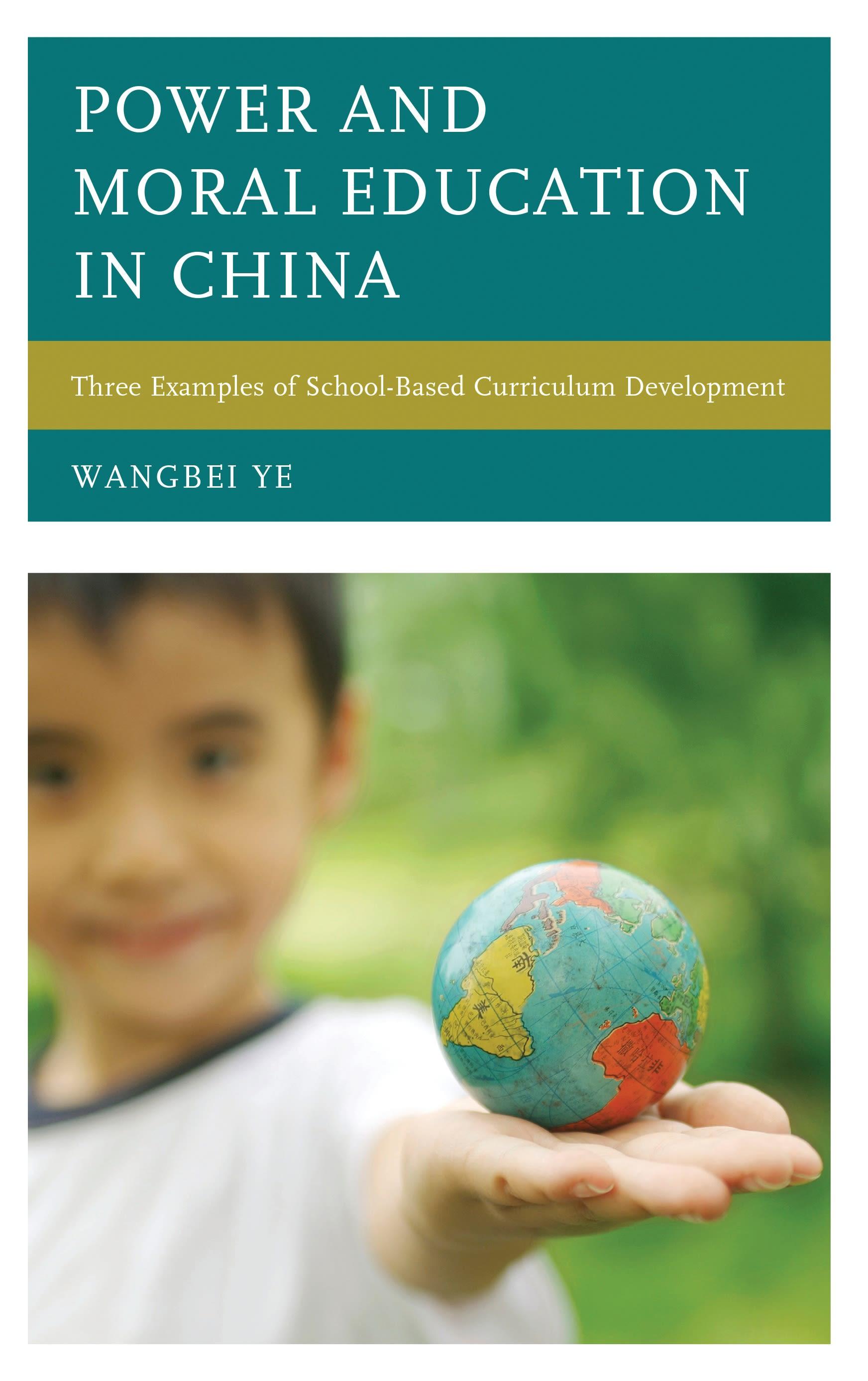
Chinese moral education reform in the last three decades represents the most significant decentralization of decision-making power since the foundation of People’s Republic of China in 1949. On one hand, it shows how de-politicized China’s moral education curriculum has become following the introduction of China’s “Open-door” policy and economic reforms and the resultant social transformations. On the other hand, it reveals persistent problems in moral education caused by political stresses and tight state control.
To explain these tensions, Power and Moral Education in China analyzes the characteristics of power relationships in school moral education curriculum goal-setting, content and pedagogy selection, and implementation. The ultimate purpose is to identify not only what factors impact Chinese moral education curriculum decision-making at the school level, but also how and why.
Through a multiple case study conducted during 2008 in three schools in Shenzhen City, and based on four major data collection instruments (observation, interview, questionnaire, and document review), Wangbei Ye analyzes how power relationships have evolved in school moral education, and how and why school power affects school moral education.
Contrary to the common belief that Chinese schools are passively impacted by external forces in moral education curriculum development, this book suggests that school power is a “semi-emancipatory relationship” that acts as a major force shaping moral education. This means that although both the Chinese Communist Party and the state are positioned to control schools and moral education, schools nonetheless have the power to either negotiate for more influence, or partly emancipate themselves by collaborating with other external forces, responding to grass-root needs, empowering school teachers and adjusting internal school management style. This helps to explain the influence of Chinese schools in moral education and suggests a broader theory of power relationships in curriculum.
To explain these tensions, Power and Moral Education in China analyzes the characteristics of power relationships in school moral education curriculum goal-setting, content and pedagogy selection, and implementation. The ultimate purpose is to identify not only what factors impact Chinese moral education curriculum decision-making at the school level, but also how and why.
Through a multiple case study conducted during 2008 in three schools in Shenzhen City, and based on four major data collection instruments (observation, interview, questionnaire, and document review), Wangbei Ye analyzes how power relationships have evolved in school moral education, and how and why school power affects school moral education.
Contrary to the common belief that Chinese schools are passively impacted by external forces in moral education curriculum development, this book suggests that school power is a “semi-emancipatory relationship” that acts as a major force shaping moral education. This means that although both the Chinese Communist Party and the state are positioned to control schools and moral education, schools nonetheless have the power to either negotiate for more influence, or partly emancipate themselves by collaborating with other external forces, responding to grass-root needs, empowering school teachers and adjusting internal school management style. This helps to explain the influence of Chinese schools in moral education and suggests a broader theory of power relationships in curriculum.
Strony: 220
Kategoria: Utbildning & lärande
e-ISBN: 9780739175484
Waga przesyłki: 1.2 kg
Wysyłka w ciągu: 1-2 dni
Płać wygodnie kartą, Klarną, Apple Pay lub Google Pay. Nie jesteś zadowolony? Zawsze masz 14-dniową gwarancję zwrotu pieniędzy. Więcej przeczytasz w naszych warunkach. Masz pytania? Napisz do nas na hello@memmo.org.
Memmo ułatwia naukę – gdziekolwiek jesteś na świecie. U nas znajdziesz podręczniki i sprytne narzędzia do nauki w jednym miejscu: streszczenia, quizy, podcasty i fiszki. A do tego Ted, Twój kumpel do nauki, który odpowie na wszystko, co Cię nurtuje. Ponad 50 000 studentów już tu się uczy – stworzone, byś uczył się szybciej i mniej stresował.