
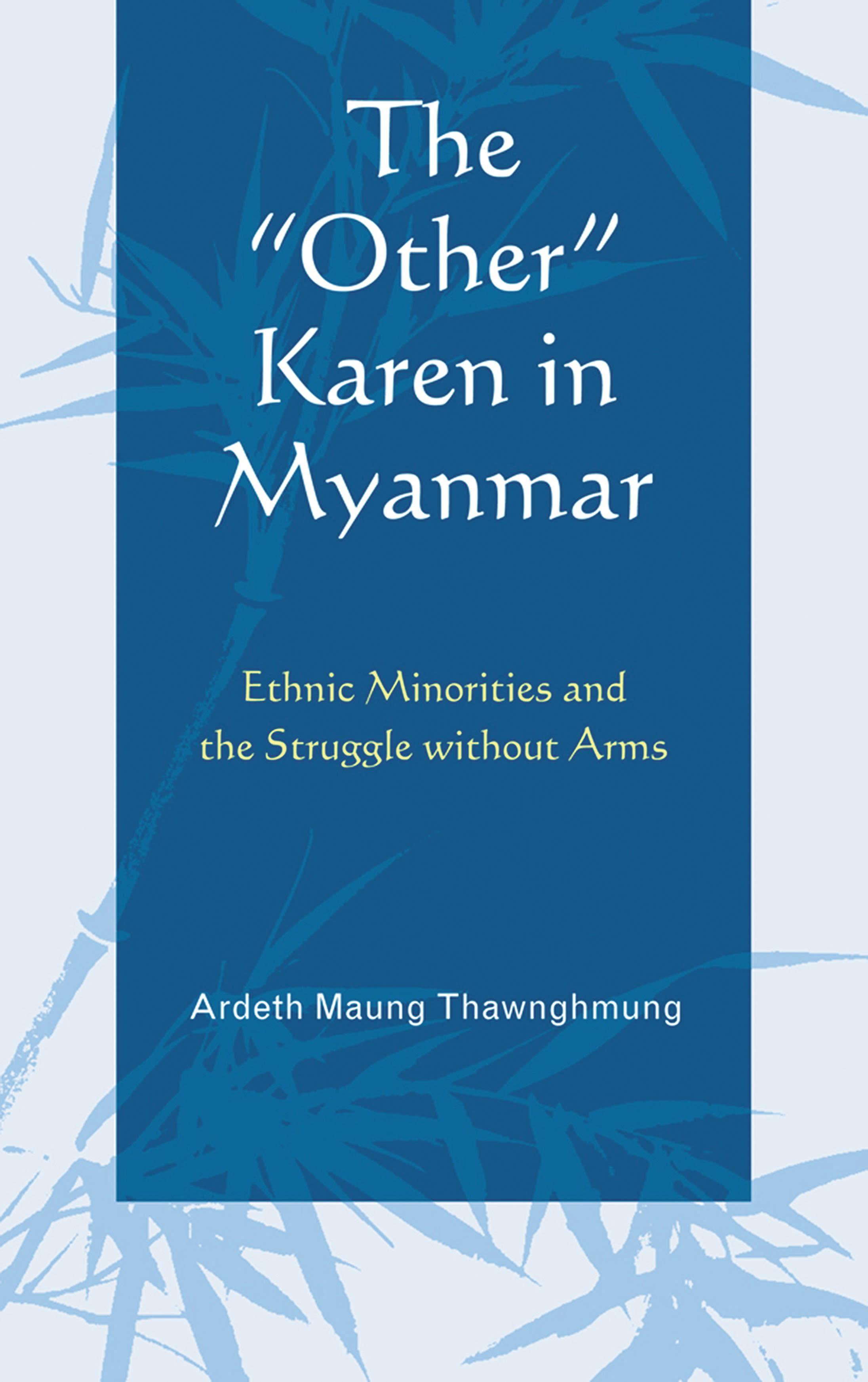
The “Other” Karen in Myanmar looks at the “other” or “quiet” minorities, who are members of ethnic groups associated with well-known armed resistance organizations, but who pursued non-violent approaches to promote their individual and collective interests. This is the first in-depth study to uncover the existence and activities of the “other” Karen and analyze the nature of relationships with their “rebel” counterparts and the state authorities. It also discusses other ethnic armed organizations that have experienced similar situations and assesses their implications for inter-ethnic relations, negotiations with state authorities and political reform.
Most previous studies have focused on violent aspects of ethnic relations and on ethnic armed organizations, such as the Karen National Union (KNU) in Burma, the Moro Islamic Liberation Front (MNLF) in the Philippines, and the LTTE in Sri Lanka. However, even among these minorities which are locked in armed conflicts, the majority of people have shunned armed resistance and sought to remain ‘quietly’ beyond the struggle and pursued non-violent approaches to promote their individual and collective interests in the face of authoritarian, governments.
This study, which sheds light on the lives and growing political significance of non-armed, non-insurgent members of ethnic minorities in Burma, draws heavily on opinion surveys and open-ended interviews among Karen diaspora (among individuals who lived a minimum of 20 years in Burma), “quiet Karens” who live inside Burma, KNU officials, personnel, and soldiers, and Karen refugees and IDPs who are currently living in Thai-Burma border areas. These interviews, which covered approximately two hundred respondents, have been conducted since 2002.
It is mainly directed toward social scientists, historians, humanitarian workers, policy makers, and practitioners, and non-specialist ordinary audience who are interested in Southeast Asian/Burmese politics and society, comparative politics, identity politics, ethnic conflict, social movements, conflict resolution, and political reform.
Most previous studies have focused on violent aspects of ethnic relations and on ethnic armed organizations, such as the Karen National Union (KNU) in Burma, the Moro Islamic Liberation Front (MNLF) in the Philippines, and the LTTE in Sri Lanka. However, even among these minorities which are locked in armed conflicts, the majority of people have shunned armed resistance and sought to remain ‘quietly’ beyond the struggle and pursued non-violent approaches to promote their individual and collective interests in the face of authoritarian, governments.
This study, which sheds light on the lives and growing political significance of non-armed, non-insurgent members of ethnic minorities in Burma, draws heavily on opinion surveys and open-ended interviews among Karen diaspora (among individuals who lived a minimum of 20 years in Burma), “quiet Karens” who live inside Burma, KNU officials, personnel, and soldiers, and Karen refugees and IDPs who are currently living in Thai-Burma border areas. These interviews, which covered approximately two hundred respondents, have been conducted since 2002.
It is mainly directed toward social scientists, historians, humanitarian workers, policy makers, and practitioners, and non-specialist ordinary audience who are interested in Southeast Asian/Burmese politics and society, comparative politics, identity politics, ethnic conflict, social movements, conflict resolution, and political reform.
Płać wygodnie kartą, Klarną, Apple Pay lub Google Pay. Nie jesteś zadowolony? Zawsze masz 14-dniową gwarancję zwrotu pieniędzy. Więcej przeczytasz w naszych warunkach. Masz pytania? Napisz do nas na hello@memmo.org.
Memmo ułatwia naukę – gdziekolwiek jesteś na świecie. U nas znajdziesz podręczniki i sprytne narzędzia do nauki w jednym miejscu: streszczenia, quizy, podcasty i fiszki. A do tego Ted, Twój kumpel do nauki, który odpowie na wszystko, co Cię nurtuje. Ponad 50 000 studentów już tu się uczy – stworzone, byś uczył się szybciej i mniej stresował.