
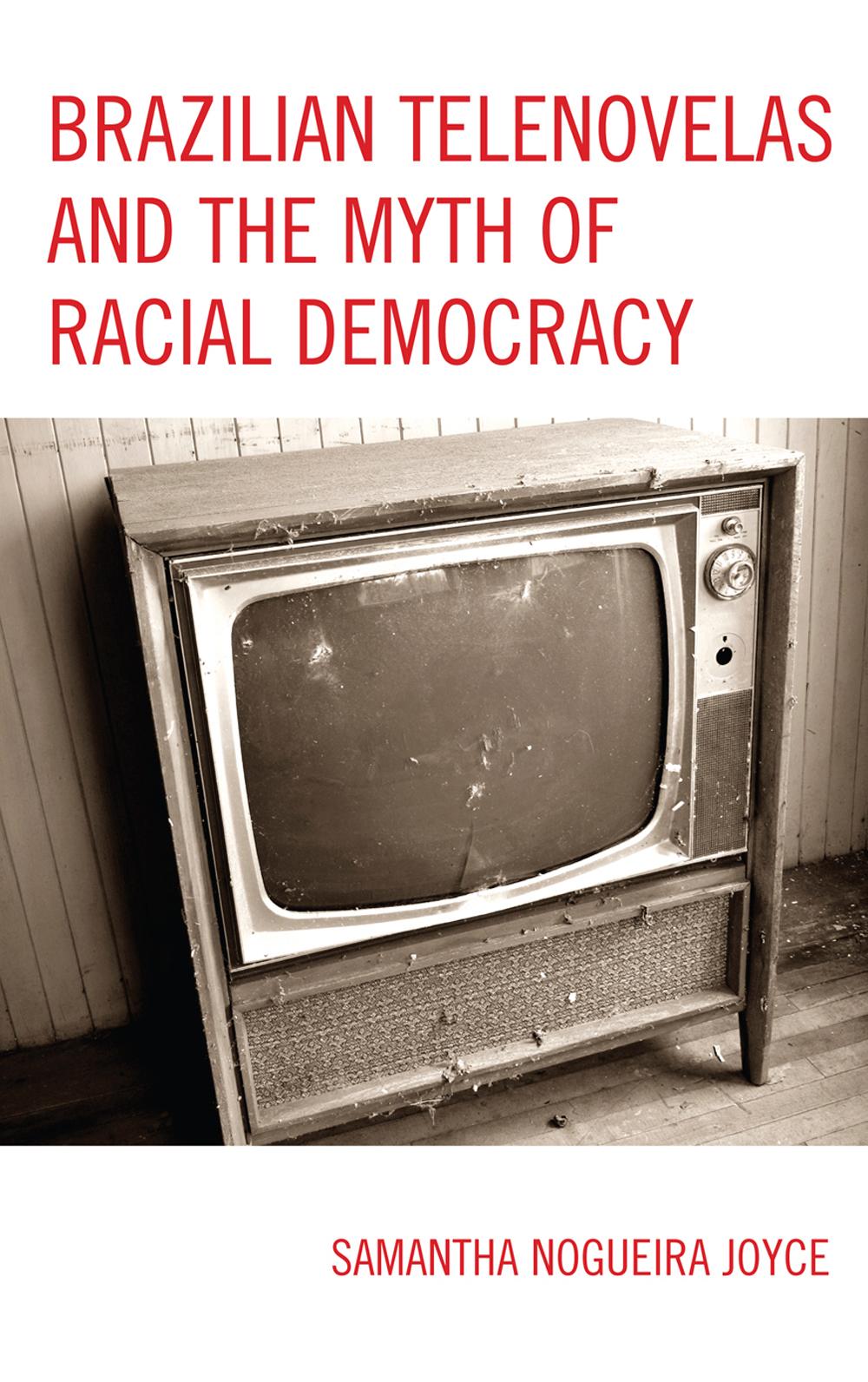
Brazilian Telenovelas and the Myth of Racial Democracy, by Samantha Nogueira Joyce, examines what happens when a telenovela directly addresses matters of race and racism in contemporary Brazil. This investigation provides a traditional textual analysis of Duas Caras (2007-2008), a watershed telenovela for two main reasons: It was the first of its kind to present audiences with an Afro-Brazilian as the main hero, openly addressing race matters through plot and dialogue. Additionally, for the first time in the history of Brazilian television, the author of Duas Caras kept a web blog where he discussed the public's reactions to the storylines, media discussions pertaining to the characters and plot, and directly engaged with fans and critics of the program.
Joyce combines her investigation of Duas Caras with a study of related media in order to demonstrate how the program introduced novel ideas about race and also offered a forum where varying perspectives on race, class, and racial relations in Brazil could be discussed. Brazilian Telenovelas is not a reception study in the traditional sense, it is not a story of entertainment-education in the strict sense, and it is not solely a textual analysis. Instead, Joyce's text is a study of the social milieu that the telenovela (and especially Duas Caras) navigates, one that is a component of a contemporary progressive social movement in Brazil, and one that views the text as being located in social interactions. As such, this book reveals how telenovelas contribute to social change in a way that has not been fully explored in previous scholarship.
Joyce combines her investigation of Duas Caras with a study of related media in order to demonstrate how the program introduced novel ideas about race and also offered a forum where varying perspectives on race, class, and racial relations in Brazil could be discussed. Brazilian Telenovelas is not a reception study in the traditional sense, it is not a story of entertainment-education in the strict sense, and it is not solely a textual analysis. Instead, Joyce's text is a study of the social milieu that the telenovela (and especially Duas Caras) navigates, one that is a component of a contemporary progressive social movement in Brazil, and one that views the text as being located in social interactions. As such, this book reveals how telenovelas contribute to social change in a way that has not been fully explored in previous scholarship.
Strony: 150
Kategoria: Film- & Medievetenskap
e-ISBN: 9780739169650
Waga przesyłki: 1.2 kg
Wysyłka w ciągu: 1-2 dni
Płać wygodnie kartą, Klarną, Apple Pay lub Google Pay. Nie jesteś zadowolony? Zawsze masz 14-dniową gwarancję zwrotu pieniędzy. Więcej przeczytasz w naszych warunkach. Masz pytania? Napisz do nas na hello@memmo.org.
Memmo ułatwia naukę – gdziekolwiek jesteś na świecie. U nas znajdziesz podręczniki i sprytne narzędzia do nauki w jednym miejscu: streszczenia, quizy, podcasty i fiszki. A do tego Ted, Twój kumpel do nauki, który odpowie na wszystko, co Cię nurtuje. Ponad 50 000 studentów już tu się uczy – stworzone, byś uczył się szybciej i mniej stresował.