
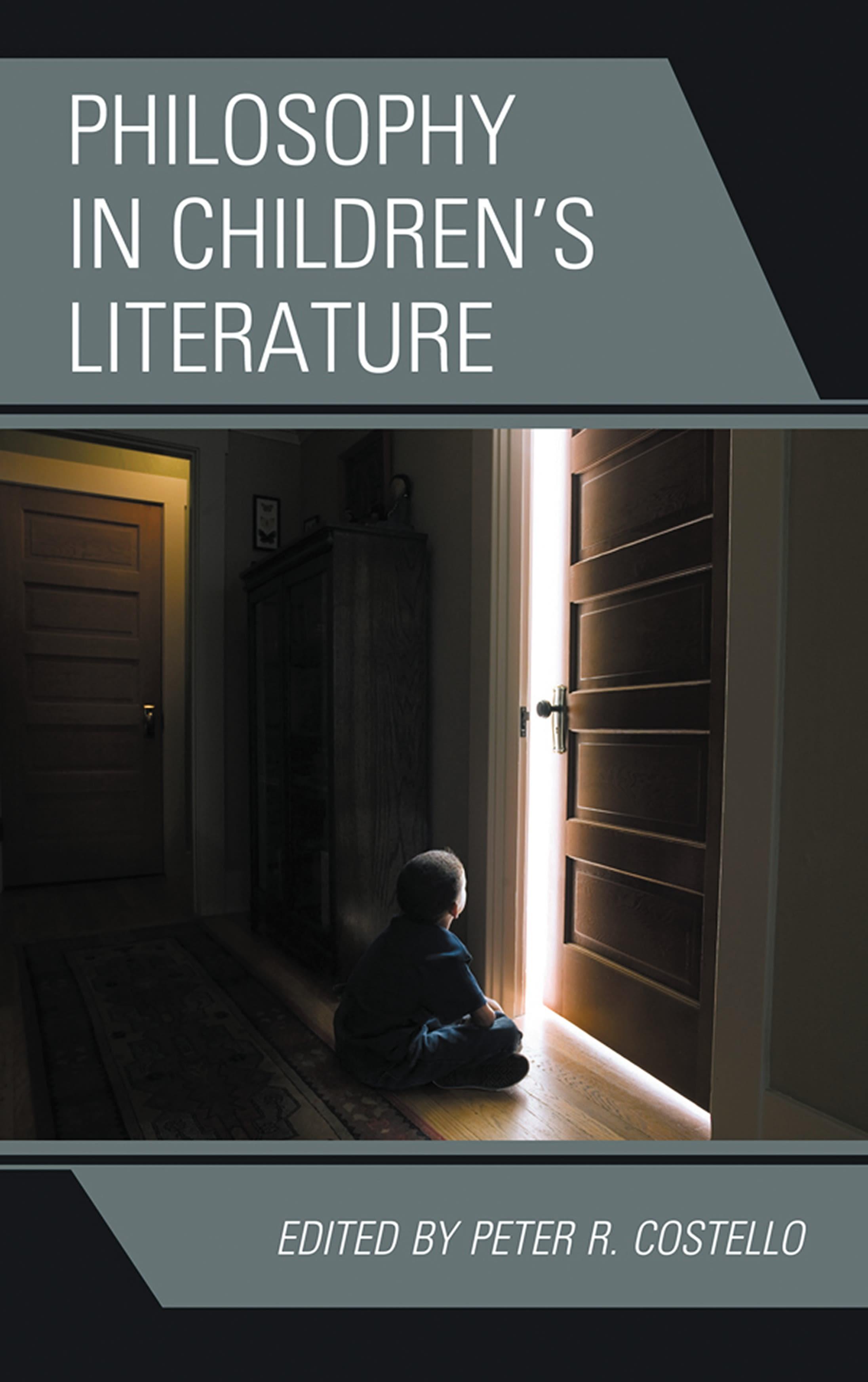
This book allows philosophers, literary theorists, and education specialists to come together to offer a series of readings on works of children’s literature. Each of their readings is focused on pairing a particular, popular picture book or a chapter book with philosophical texts or themes.
The book has three sections—the first, on picturebooks; the second, on chapter books; and the third, on two sets of paired readings of two very popular picturebooks. By means of its three sections, the book sets forth as its goal to show how philosophy can be helpful in reappraising books aimed at children from early childhood on. Particularly in the third section, the book emphasizes how philosophy can help to multiply the type of interpretative stances that are possible when readers listen again to what they thought they knew so well.
The kinds of questions this book raises are the following: How are children’s books already anticipating or articulating philosophical problems and discussions? How does children’s literature work by means of philosophical puzzles or language games? What do children’s books reveal about the existential situation the child reader faces?
In posing and answering these kinds of questions, the readings within the book thus intersect with recent, developing scholarship in children’s literature studies as well as in the psychology and philosophy of childhood.
The book has three sections—the first, on picturebooks; the second, on chapter books; and the third, on two sets of paired readings of two very popular picturebooks. By means of its three sections, the book sets forth as its goal to show how philosophy can be helpful in reappraising books aimed at children from early childhood on. Particularly in the third section, the book emphasizes how philosophy can help to multiply the type of interpretative stances that are possible when readers listen again to what they thought they knew so well.
The kinds of questions this book raises are the following: How are children’s books already anticipating or articulating philosophical problems and discussions? How does children’s literature work by means of philosophical puzzles or language games? What do children’s books reveal about the existential situation the child reader faces?
In posing and answering these kinds of questions, the readings within the book thus intersect with recent, developing scholarship in children’s literature studies as well as in the psychology and philosophy of childhood.
Strony: 354
Kategoria: Litteraturvetenskap & Teori
e-ISBN: 9780739168240
Waga przesyłki: 1.2 kg
Wysyłka w ciągu: 1-2 dni
Płać wygodnie kartą, Klarną, Apple Pay lub Google Pay. Nie jesteś zadowolony? Zawsze masz 14-dniową gwarancję zwrotu pieniędzy. Więcej przeczytasz w naszych warunkach. Masz pytania? Napisz do nas na hello@memmo.org.
Memmo ułatwia naukę – gdziekolwiek jesteś na świecie. U nas znajdziesz podręczniki i sprytne narzędzia do nauki w jednym miejscu: streszczenia, quizy, podcasty i fiszki. A do tego Ted, Twój kumpel do nauki, który odpowie na wszystko, co Cię nurtuje. Ponad 50 000 studentów już tu się uczy – stworzone, byś uczył się szybciej i mniej stresował.