
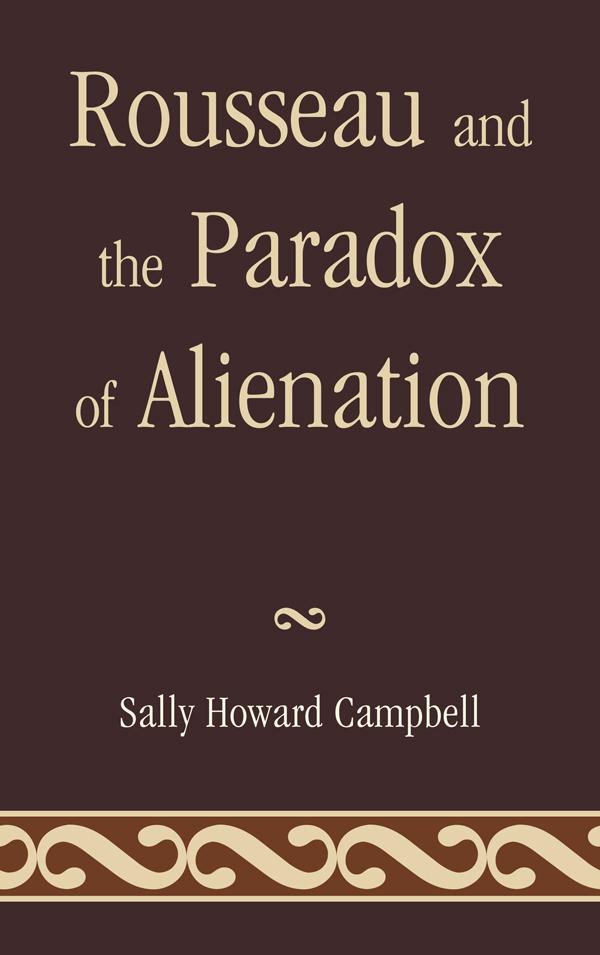
In the writings of Jean-Jacques Rousseau, Sally Howard Campbell finds the bridge between the now-dominant psycho-social conception of alienation and the legal-political conception that prevailed prior to Rousseau. She discusses Rousseau’s transformation of the concept of alienation and how it laid much of the groundwork for Marx’s later, more explicit discussions of man’s alienation. Using Discourse on the Origin and Foundations of Inequality, Campbell shows how Rousseau depicts the development of man’s awareness of himself as a conscious and moral being, illustrating man’s journey from a natural state of self-sufficiency to one of dependence and alienation. Paradoxically, she describes Rousseau’s belief that a state of wholeness can only be achieved through a man’s total alienation of himself to the community, free from the alienating effects of civil society. She concludes that, like Marx, Rousseau believed that alienation can only be transcended through the merging of the individual and the community.
Płać wygodnie kartą, Klarną, Apple Pay lub Google Pay. Nie jesteś zadowolony? Zawsze masz 14-dniową gwarancję zwrotu pieniędzy. Więcej przeczytasz w naszych warunkach. Masz pytania? Napisz do nas na hello@memmo.org.
Memmo ułatwia naukę – gdziekolwiek jesteś na świecie. U nas znajdziesz podręczniki i sprytne narzędzia do nauki w jednym miejscu: streszczenia, quizy, podcasty i fiszki. A do tego Ted, Twój kumpel do nauki, który odpowie na wszystko, co Cię nurtuje. Ponad 50 000 studentów już tu się uczy – stworzone, byś uczył się szybciej i mniej stresował.