
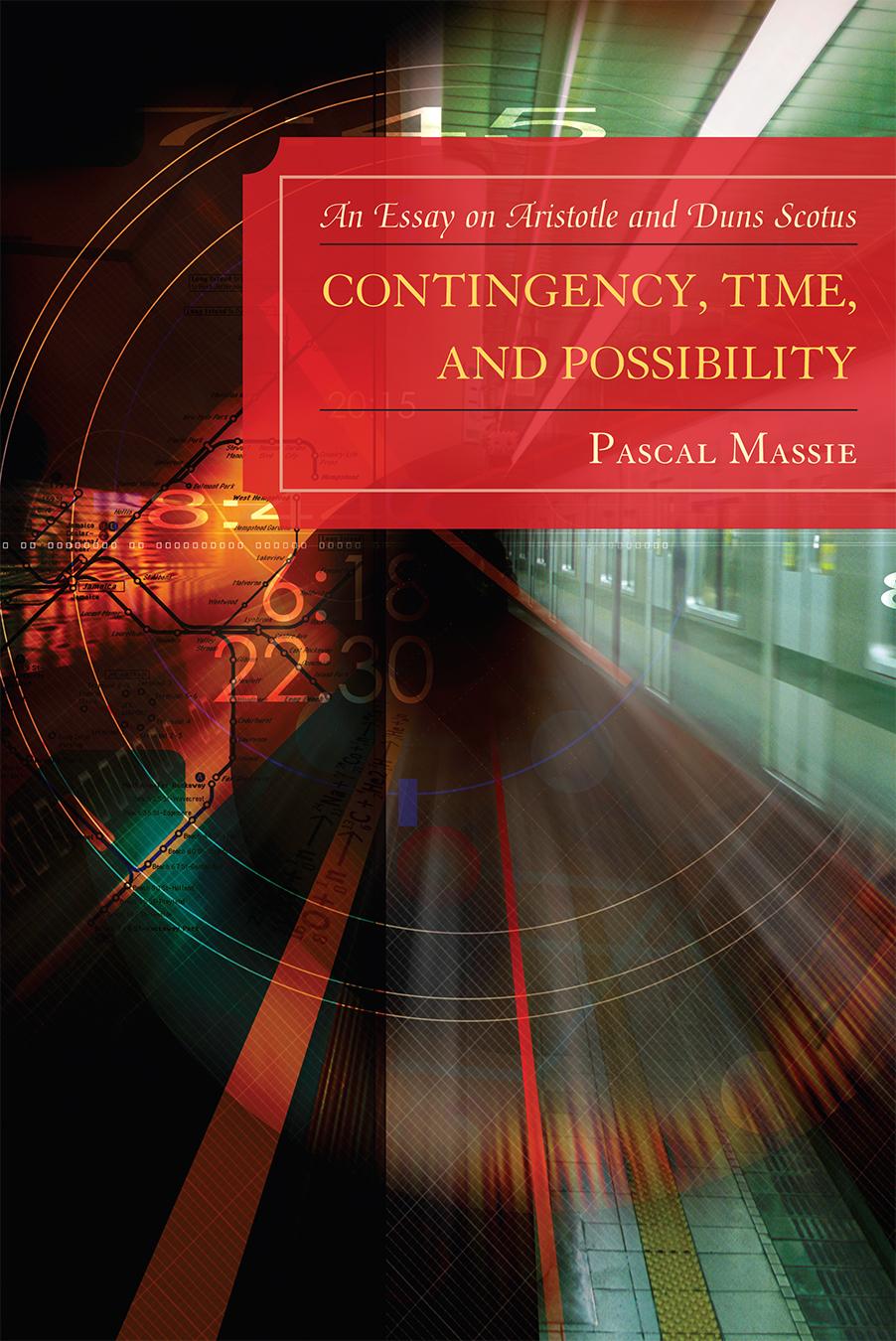
If we are to distinguish mere non-being from that which is not, yet may be, from that which was not, yet could have been, or from that which will not be, yet could become, we are committed in some way to grant being to possibilities. The possible is not actual; yet it is not nothing. What then could it be? What ontological status could it possess?
In Contingency, Time, and Possibility: An Essay on Aristotle and Duns Scotus, Pascal Massie opens these questions by combining two approaches: First, an original inquiry that analyses the notions of chance, fate, event, contradiction, and so forth, and suggests that the distinction between potency and act arises from a confrontation with the impossible. Second, a historical inquiry that focuses on Aristotle and Duns Scotus, two key figures contributing to a fundamental transformation in the history of Western ontology; namely, the transition from a metaphysics of nature (Aristotle) to a metaphysics of the will (Scotus). In doing so, this book departs from the prevailing interpretation of the history of modal logic according to which Scotus rejected the principle of plenitude attributed to Aristotle and replaced the ancient diachronic theory of possibilities with a synchronic one, thereby contributing to a “possible world's semantics.” Rather, Massie argues that in its proper ontological import, the question of possibility concerns the limit between being and non-being and that this limit must be thought in terms of temporality.
With Scotus, however, a radical shift occurs. Possibilities are understood in terms of will, creation, omnipotence, and transcending freedom. As such, they belong to the realm of what is supremely actual (i.e., superabundant activity). What used to be understood as a lesser degree of being (the quasi non-being of uninformed matter and mere possibilities) becomes the mark of omnipotence.
In Contingency, Time, and Possibility: An Essay on Aristotle and Duns Scotus, Pascal Massie opens these questions by combining two approaches: First, an original inquiry that analyses the notions of chance, fate, event, contradiction, and so forth, and suggests that the distinction between potency and act arises from a confrontation with the impossible. Second, a historical inquiry that focuses on Aristotle and Duns Scotus, two key figures contributing to a fundamental transformation in the history of Western ontology; namely, the transition from a metaphysics of nature (Aristotle) to a metaphysics of the will (Scotus). In doing so, this book departs from the prevailing interpretation of the history of modal logic according to which Scotus rejected the principle of plenitude attributed to Aristotle and replaced the ancient diachronic theory of possibilities with a synchronic one, thereby contributing to a “possible world's semantics.” Rather, Massie argues that in its proper ontological import, the question of possibility concerns the limit between being and non-being and that this limit must be thought in terms of temporality.
With Scotus, however, a radical shift occurs. Possibilities are understood in terms of will, creation, omnipotence, and transcending freedom. As such, they belong to the realm of what is supremely actual (i.e., superabundant activity). What used to be understood as a lesser degree of being (the quasi non-being of uninformed matter and mere possibilities) becomes the mark of omnipotence.
Płać wygodnie kartą, Klarną, Apple Pay lub Google Pay. Nie jesteś zadowolony? Zawsze masz 14-dniową gwarancję zwrotu pieniędzy. Więcej przeczytasz w naszych warunkach. Masz pytania? Napisz do nas na hello@memmo.org.
Memmo ułatwia naukę – gdziekolwiek jesteś na świecie. U nas znajdziesz podręczniki i sprytne narzędzia do nauki w jednym miejscu: streszczenia, quizy, podcasty i fiszki. A do tego Ted, Twój kumpel do nauki, który odpowie na wszystko, co Cię nurtuje. Ponad 50 000 studentów już tu się uczy – stworzone, byś uczył się szybciej i mniej stresował.