
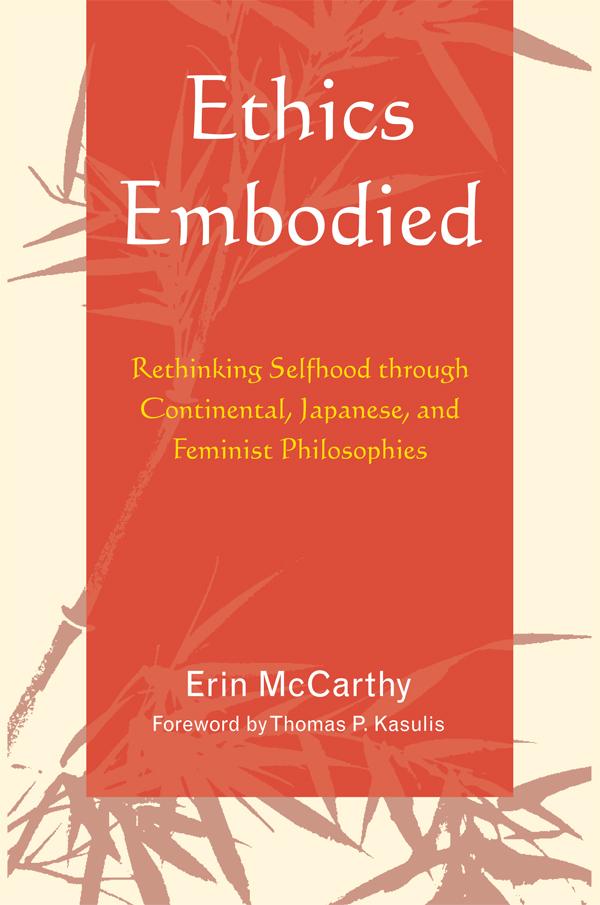
While the body has been largely neglected in much of traditional Western philosophy, there is a rich tradition of Japanese philosophy in which this is not the case. Ethics Embodied explains how Japanese philosophy includes the body as an integral part of selfhood and ethics and shows how it provides an alternative and challenge to the traditional Western philosophical view of self and ethics. Through a comparative feminist approach, the book articulates the striking similarities that exist between certain strands of Japanese philosophy and feminist philosophy concerning selfhood, ethics and the body. Despite the similarities, McCarthy argues that there are significant differences between these philosophies and that each reveals important limitations of the other. Thus, the book urges a view of ethical embodied selfhood that goes beyond where each of these views leaves us when considered in isolation.
With keen analysis and constructive comparison, this book will be accessible for students and scholars familiar with the Western philosophical tradition, while still adding a more global perspective.
With keen analysis and constructive comparison, this book will be accessible for students and scholars familiar with the Western philosophical tradition, while still adding a more global perspective.
Płać wygodnie kartą, Klarną, Apple Pay lub Google Pay. Nie jesteś zadowolony? Zawsze masz 14-dniową gwarancję zwrotu pieniędzy. Więcej przeczytasz w naszych warunkach. Masz pytania? Napisz do nas na hello@memmo.org.
Memmo ułatwia naukę – gdziekolwiek jesteś na świecie. U nas znajdziesz podręczniki i sprytne narzędzia do nauki w jednym miejscu: streszczenia, quizy, podcasty i fiszki. A do tego Ted, Twój kumpel do nauki, który odpowie na wszystko, co Cię nurtuje. Ponad 50 000 studentów już tu się uczy – stworzone, byś uczył się szybciej i mniej stresował.