
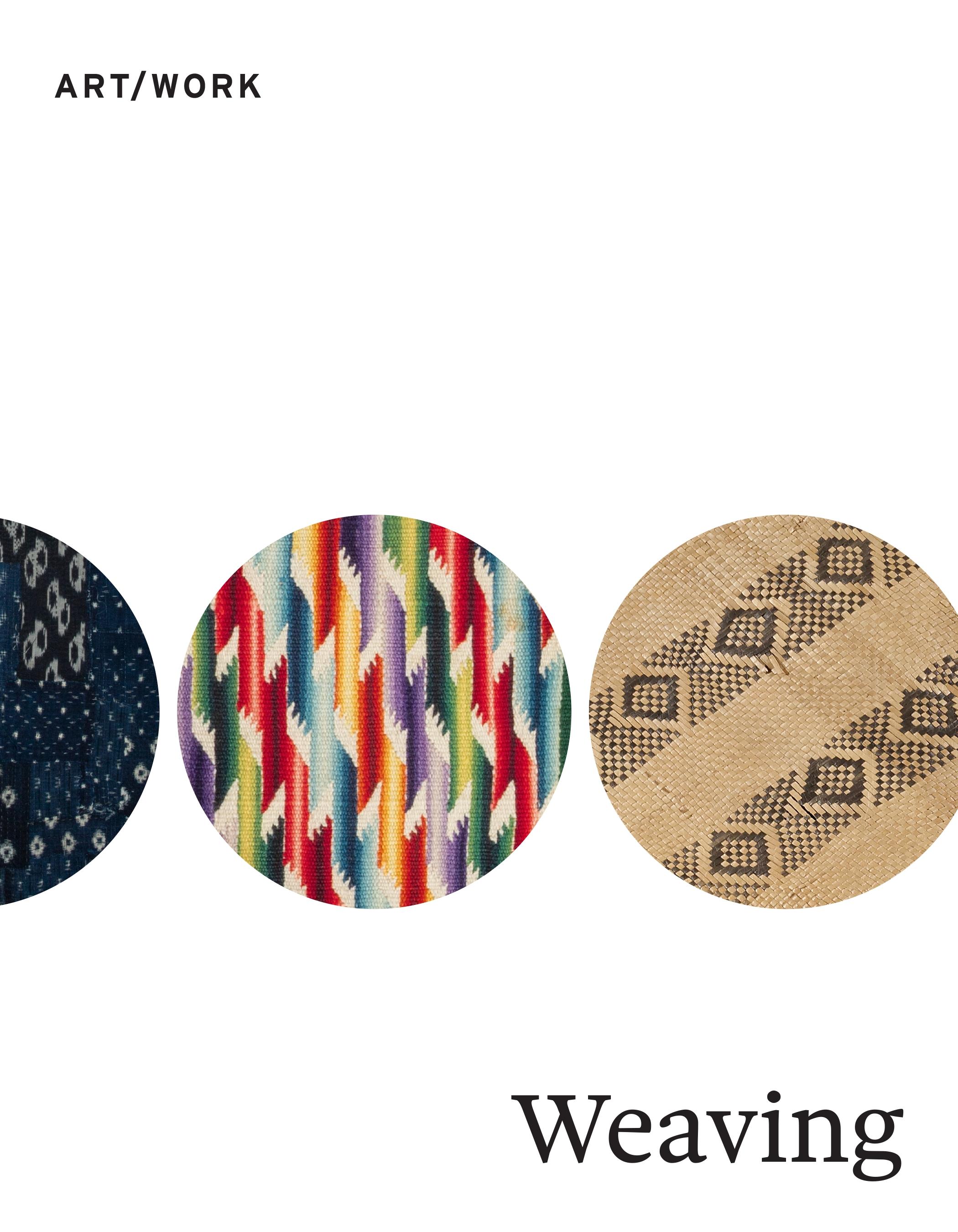
Weaving
A beautifully illustrated look at how weaving has influenced art, industry, and society worldwide
Weaving is one of humanity’s oldest technologies and remains central to our global economies. Yet because of the fragility of textiles and their association with women’s labor and craft, they have often been marginalized in art history. From the early-modern Andes to the contemporary artist’s studio, weaving has shaped artistic practice and raised important questions for conservators and museums responsible for preserving these delicate materials.
At its core, weaving is an act of material transformation in which discrete threads are organized into coherent cloth. This book brings together some of today’s leading conservationists and art historians to examines this process, highlighting the structural principles that underlie an art often assumed to be intuitive. The contributors explore how weaving reshaped material production and social life across cultures and historical periods, creating networks of skilled makers and new forms of exchange and shared knowledge.
Taking readers from the human labor of the handloom to the mechanized production of the industrial age, Weaving demonstrates how a practice at the intersection of art, science, and community has shaped social, technological, and economic histories around the globe.
Płać wygodnie kartą, Klarną, Apple Pay lub Google Pay. Nie jesteś zadowolony? Zawsze masz 14-dniową gwarancję zwrotu pieniędzy. Więcej przeczytasz w naszych warunkach. Masz pytania? Napisz do nas na hello@memmo.org.
Memmo ułatwia naukę – gdziekolwiek jesteś na świecie. U nas znajdziesz podręczniki i sprytne narzędzia do nauki w jednym miejscu: streszczenia, quizy, podcasty i fiszki. A do tego Ted, Twój kumpel do nauki, który odpowie na wszystko, co Cię nurtuje. Ponad 50 000 studentów już tu się uczy – stworzone, byś uczył się szybciej i mniej stresował.