
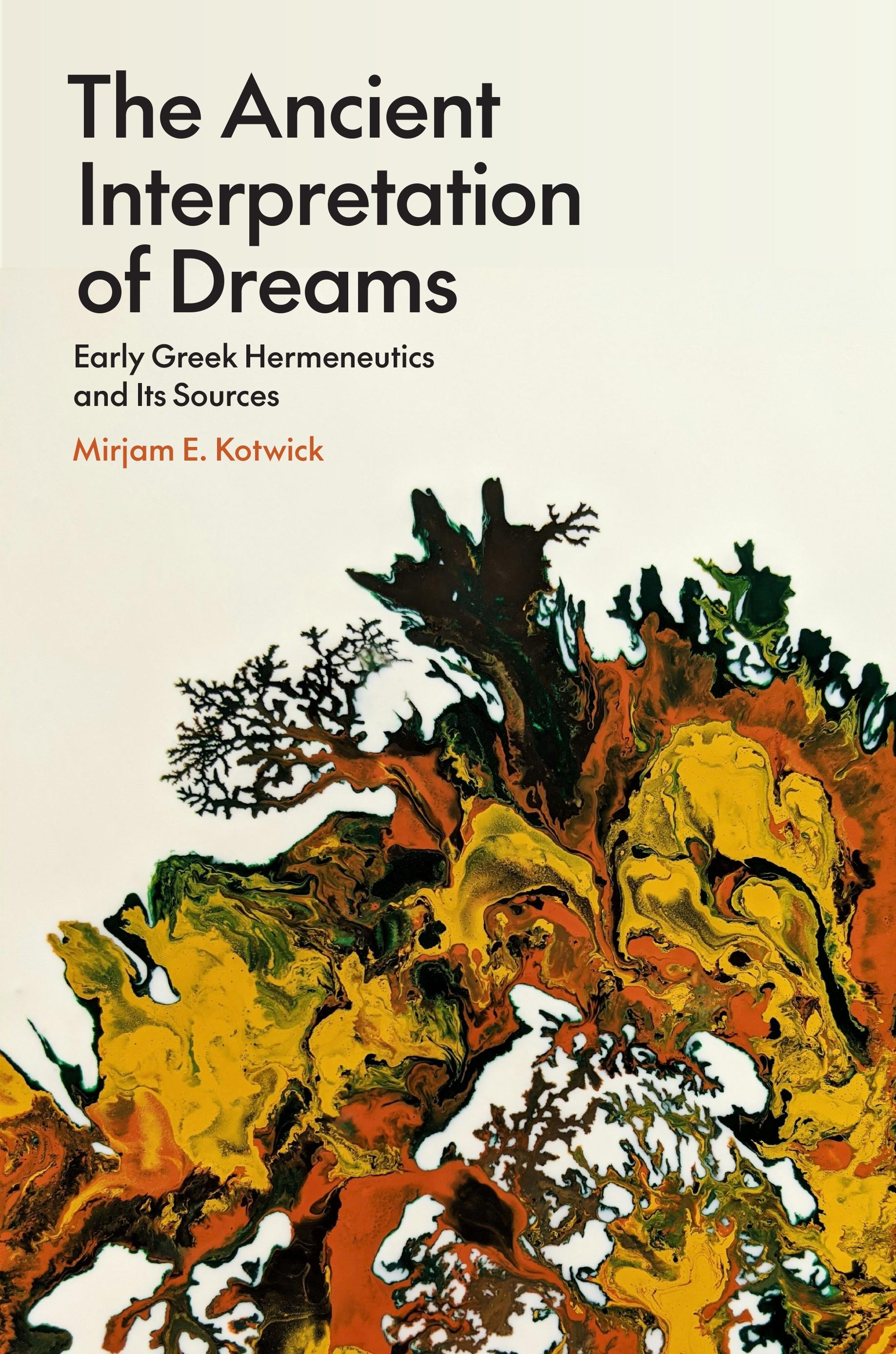
The first book-length study of dream interpretation in classical Greece
Long before Freud, dreams and how to make sense of them fascinated ancient thinkers. In The Ancient Interpretation of Dreams, Mirjam Kotwick traces a continuous intellectual practice of dream interpretation across a range of ancient Greek texts, including those from Homer, Aeschylus, Herodotus, Antiphon, the Hippocratic doctors, Plato, and Aristotle. In these works, dreams signify meaning in indirect, distorted, figurative, and metaphorical ways. The authors employ what Kotwick terms the “hermeneutics of similarity” to uncover the message of a dream by identifying (obvious or nonobvious) similarities between its literal expression and its hidden meaning. This method of interpretation remained consistent, whether authors understood dreams as messages from the gods or as results of physiological processes within the dreamer’s body.
Kotwick shows that ancient Greeks used their study of dreams to reflect on larger questions of interpretation, figurative language, and metaphor—before the concept of metaphor existed. Philosophers and scientists connected their interest in dreams to their own theories in ethics, cosmology, medicine, biology, linguistics, and literary criticism. It is in the interpretation of dreams, Kotwick argues, that we can see early Greek hermeneutic thought develop. In uncovering the ancient discourse on dream interpretation, this study also outlines an early history of interpretation.
Płać wygodnie kartą, Klarną, Apple Pay lub Google Pay. Nie jesteś zadowolony? Zawsze masz 14-dniową gwarancję zwrotu pieniędzy. Więcej przeczytasz w naszych warunkach. Masz pytania? Napisz do nas na hello@memmo.org.
Memmo ułatwia naukę – gdziekolwiek jesteś na świecie. U nas znajdziesz podręczniki i sprytne narzędzia do nauki w jednym miejscu: streszczenia, quizy, podcasty i fiszki. A do tego Ted, Twój kumpel do nauki, który odpowie na wszystko, co Cię nurtuje. Ponad 50 000 studentów już tu się uczy – stworzone, byś uczył się szybciej i mniej stresował.