
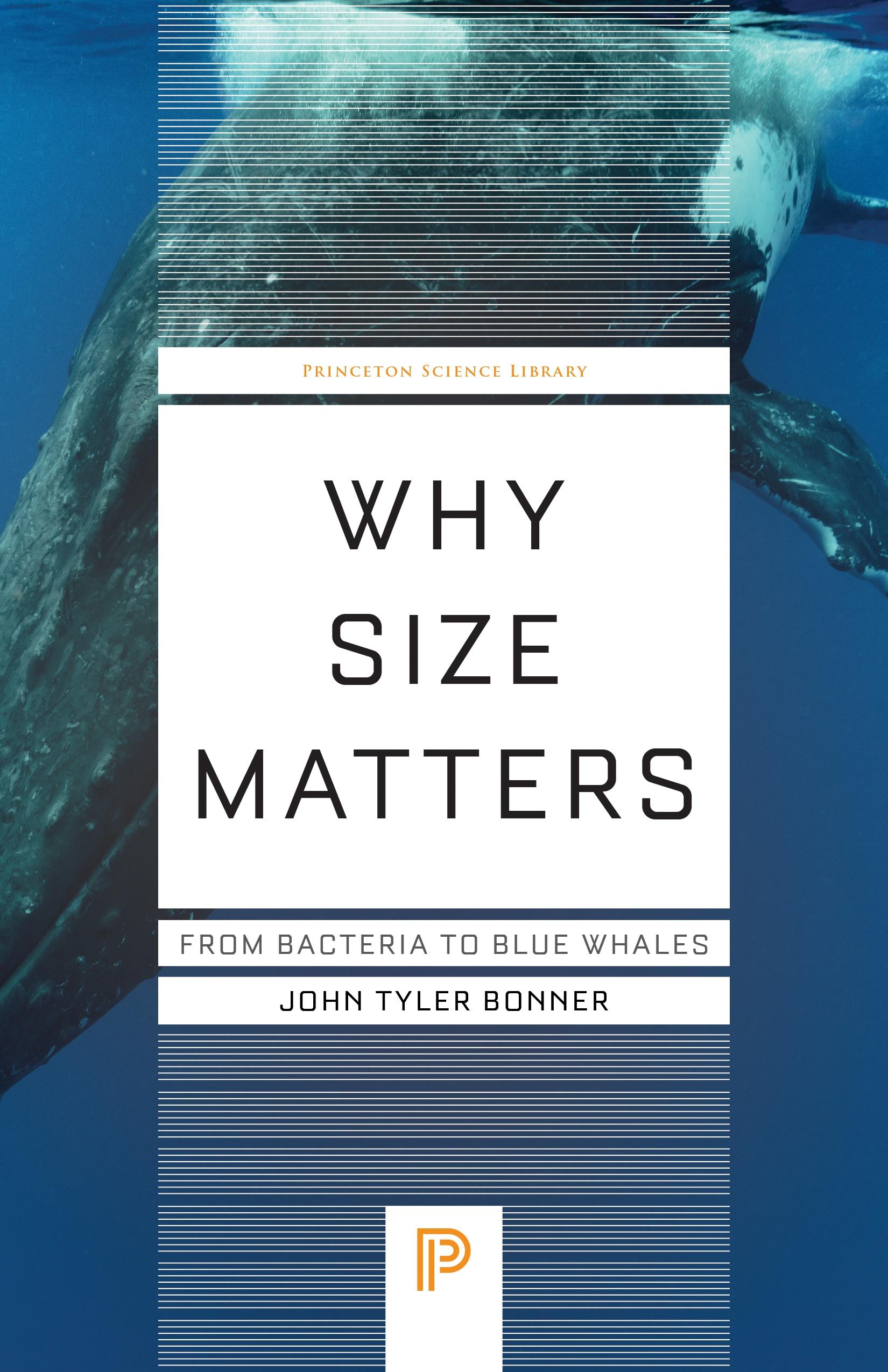
John Tyler Bonner, one of our most distinguished and creative biologists, here offers a completely new perspective on the role of size in biology. In his hallmark friendly style, he explores the universal impact of being the right size. By examining stories ranging from Alice in Wonderland to Gulliver's Travels, he shows that humans have always been fascinated by things big and small. Why then does size always reside on the fringes of science and never on the center stage? Why do biologists and others ponder size only when studying something else—running speed, life span, or metabolism?
Why Size Matters, a pioneering book of big ideas in a compact size, gives size its due by presenting a profound yet lucid overview of what we know about its role in the living world. Bonner argues that size really does matter—that it is the supreme and universal determinant of what any organism can be and do. For example, because tiny creatures are subject primarily to forces of cohesion and larger beasts to gravity, a fly can easily walk up a wall, something we humans cannot even begin to imagine doing.
Bonner introduces us to size through the giants and dwarfs of human, animal, and plant history and then explores questions including the physics of size as it affects biology, the evolution of size over geological time, and the role of size in the function and longevity of living things.
As this elegantly written book shows, size affects life in its every aspect. It is a universal frame from which nothing escapes.
Płać wygodnie kartą, Klarną, Apple Pay lub Google Pay. Nie jesteś zadowolony? Zawsze masz 14-dniową gwarancję zwrotu pieniędzy. Więcej przeczytasz w naszych warunkach. Masz pytania? Napisz do nas na hello@memmo.org.
Memmo ułatwia naukę – gdziekolwiek jesteś na świecie. U nas znajdziesz podręczniki i sprytne narzędzia do nauki w jednym miejscu: streszczenia, quizy, podcasty i fiszki. A do tego Ted, Twój kumpel do nauki, który odpowie na wszystko, co Cię nurtuje. Ponad 50 000 studentów już tu się uczy – stworzone, byś uczył się szybciej i mniej stresował.