
A boldly innovative study of nonverbal communication in the poetry and prose of Hellenic antiquity
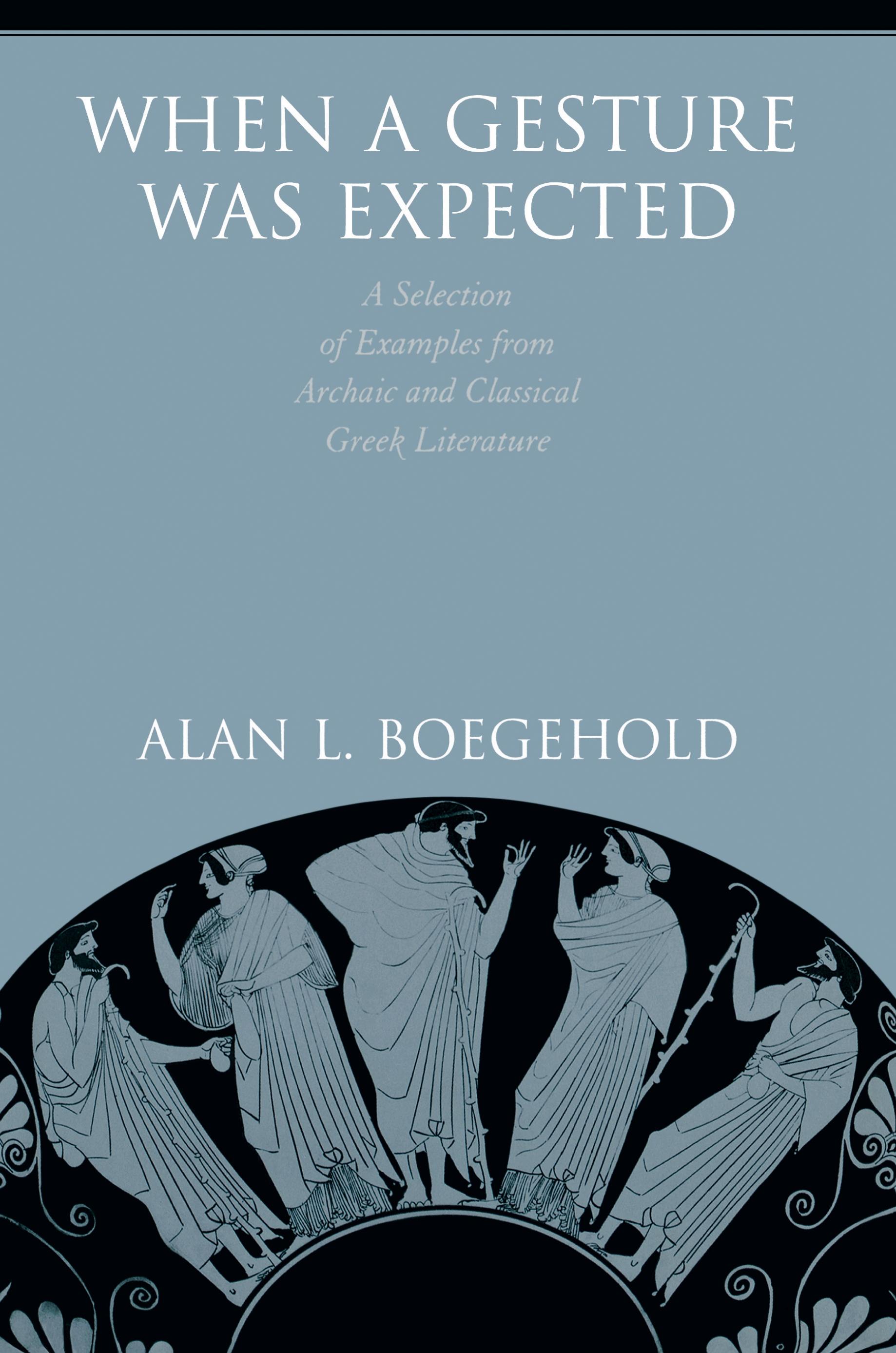
When a Gesture Was Expected encourages a deeper appreciation of ancient Greek poetry and prose by showing where a nod of the head or a wave of the hand can complete meaning in epic poetry and in tragedy, comedy, oratory, and in works of history and philosophy. All these works anticipated performing readers, and, as a result, they included prompts, places where a gesture could complete a sentence or amplify or comment on the written words. In this radical and highly accessible book, Alan Boegehold urges all readers to supplement the traditional avenues of classical philology with an awareness of the uses of nonverbal communication in Hellenic antiquity. This additional resource helps to explain some persistently confusing syntaxes and to make translations more accurate. It also imparts a living breath to these immortal texts.
Where part of a work appears to be missing, or the syntax is irregular, or the words seem contradictory or perverse—without evidence of copyists' errors or physical damage—an ancient author may have been assuming that a performing reader would make the necessary clarifying gesture. Boegehold offers analyses of many such instances in selected passages ranging from Homer to Aeschylus to Plato. He also presents a review of sources of information about such gestures in antiquity as well as thirty illustrations, some documenting millennia-long continuities in nonverbal communication.
Płać wygodnie kartą, Klarną, Apple Pay lub Google Pay. Nie jesteś zadowolony? Zawsze masz 14-dniową gwarancję zwrotu pieniędzy. Więcej przeczytasz w naszych warunkach. Masz pytania? Napisz do nas na hello@memmo.org.
Memmo ułatwia naukę – gdziekolwiek jesteś na świecie. U nas znajdziesz podręczniki i sprytne narzędzia do nauki w jednym miejscu: streszczenia, quizy, podcasty i fiszki. A do tego Ted, Twój kumpel do nauki, który odpowie na wszystko, co Cię nurtuje. Ponad 50 000 studentów już tu się uczy – stworzone, byś uczył się szybciej i mniej stresował.