
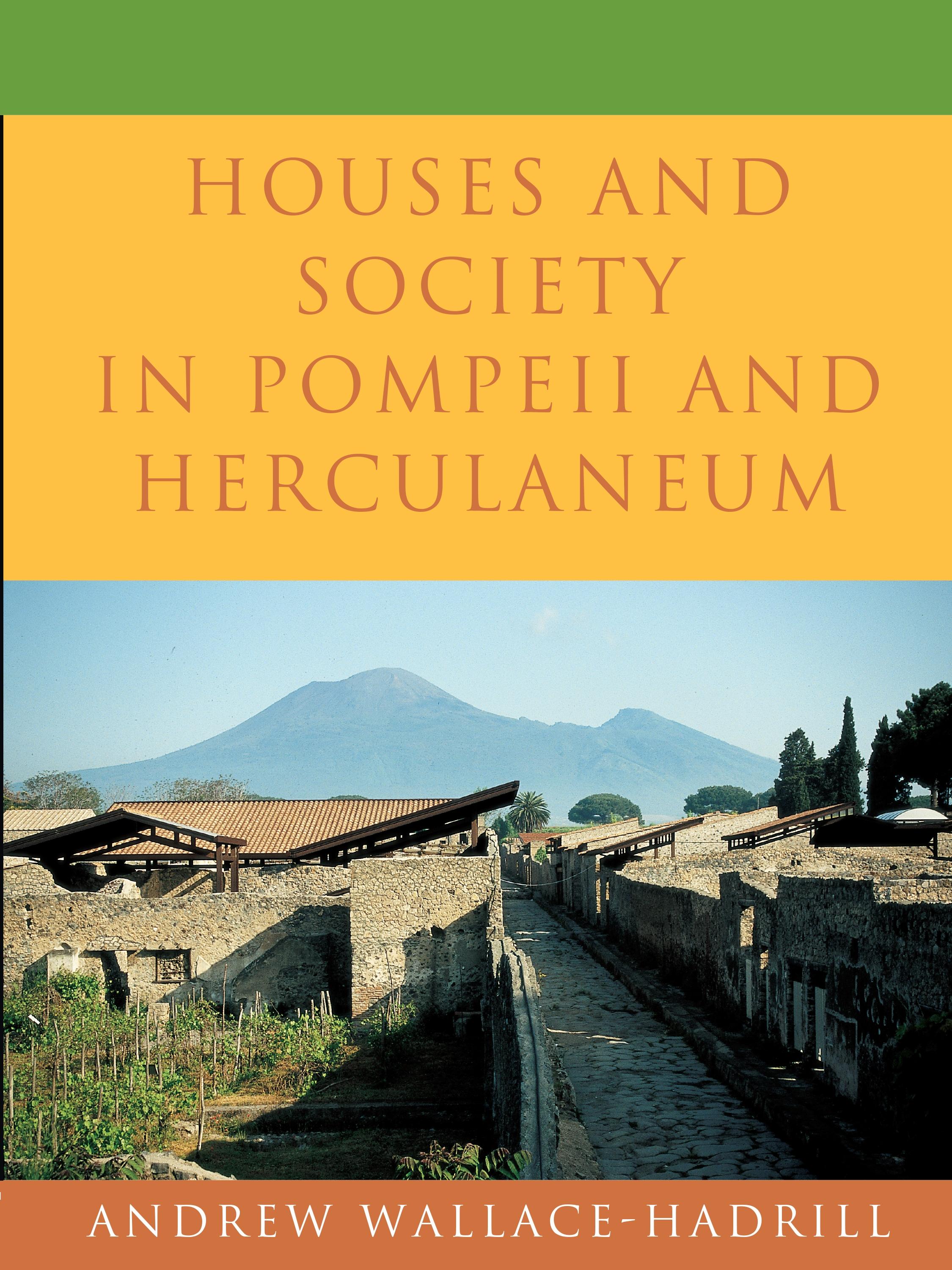
Few sources reveal the life of the ancient Romans as vividly as do the houses preserved by the eruption of Vesuvius. Wealthy Romans lavished resources on shaping their surroundings to impress their crowds of visitors. The fashions they set were taken up and imitated by ordinary citizens. In this illustrated book, Andrew Wallace-Hadrill explores the rich potential of the houses of Pompeii and Herculaneum to offer new insights into Roman social life. Exposing misconceptions derived from contemporary culture, he shows the close interconnection of spheres we take as discrete: public and private, family and outsiders, work and leisure.
Combining archaeological evidence with Roman texts and comparative material from other cultures, Wallace-Hadrill raises a range of new questions. How did the organization of space and the use of decoration help to structure social encounters between owner and visitor, man and woman, master and slave? What sort of "households" did the inhabitants of the Roman house form? How did the world of work relate to that of entertainment and leisure? How widely did the luxuries of the rich spread among the houses of craftsmen and shopkeepers? Through analysis of the remains of over two hundred houses, Wallace-Hadrill reveals the remarkably dynamic social environment of early imperial Italy, and the vital part that houses came to play in defining what it meant "to live as a Roman."
Płać wygodnie kartą, Klarną, Apple Pay lub Google Pay. Nie jesteś zadowolony? Zawsze masz 14-dniową gwarancję zwrotu pieniędzy. Więcej przeczytasz w naszych warunkach. Masz pytania? Napisz do nas na hello@memmo.org.
Memmo ułatwia naukę – gdziekolwiek jesteś na świecie. U nas znajdziesz podręczniki i sprytne narzędzia do nauki w jednym miejscu: streszczenia, quizy, podcasty i fiszki. A do tego Ted, Twój kumpel do nauki, który odpowie na wszystko, co Cię nurtuje. Ponad 50 000 studentów już tu się uczy – stworzone, byś uczył się szybciej i mniej stresował.